In this area
The Cairo issue
Dokki & Agouza, Cairo: the west bank where ordinary life meets the Nile
Across from Zamalek, Dokki and Agouza offer Cairo at street level: metro access, seafood institutions, riverfront walks and a working-city rhythm that feels lived-in rather than staged.
By Yasmine Abdel-FattahIslamic-quarter minarets to Zamalek galleries
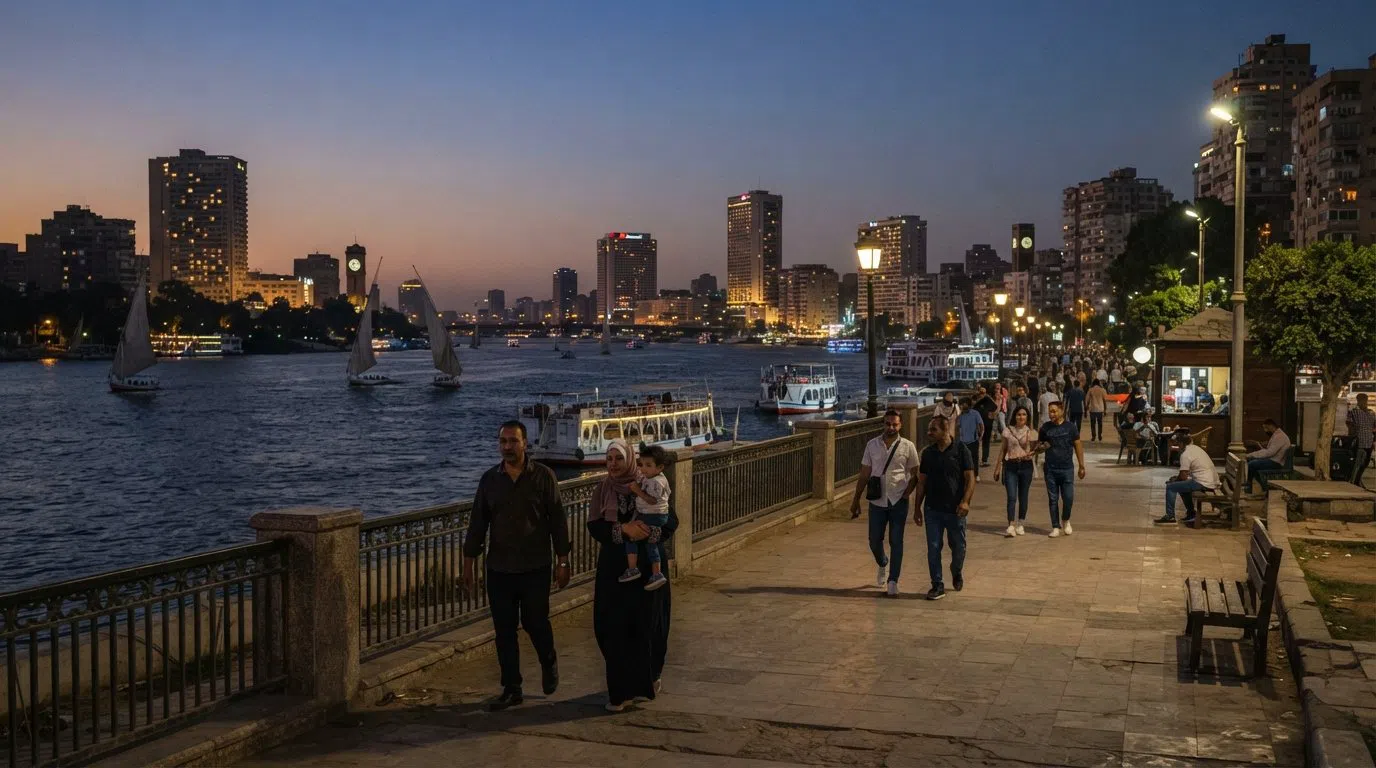
Two districts share the Nile's west bank across the water from Zamalek, and the first thing you notice is not a landmark but a rhythm: horns on 26th of July Street, the call to prayer bouncing off concrete, mango sellers on Soliman Gohar, and the low thump from Cairo Jazz Club after dark near the water. Dokki and Agouza are the practical side of Cairo with a river view — cheaper than the island, better connected than most of it, and almost entirely un-touristed. That is their charm. They are not built to impress you from a coach window. They are built to be lived in, crossed through, eaten in, and used to get somewhere else.
What Dokki & Agouza are known for
Dokki reads like a map of Cairo's postwar ambitions. Laid out in the 1960s and 70s for the city's rising professional class, it still feels that way: a grid of mid-rise apartment blocks, embassies, ministries, and the institutional gravity of Cairo University pressing against its southern edge. The Russian, Syrian, Jordanian and Pakistani missions sit here, and the whole district has the squared-off confidence of a place that was meant to function first and beautify itself later. That gives it an odd elegance, if you know how to look for it — not in façades, but in the way a neighborhood can make room for students, civil servants, families, and the daily errands of a city that never pauses.
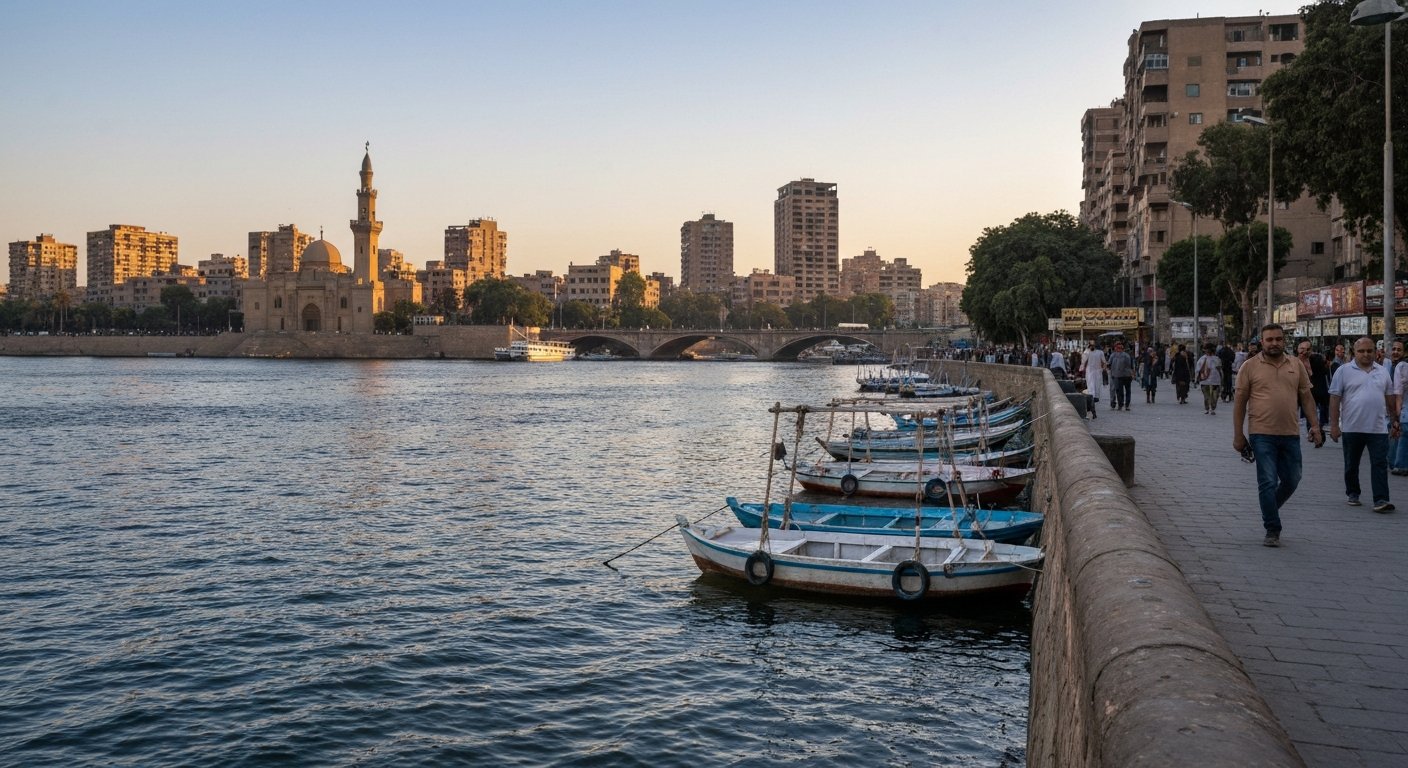
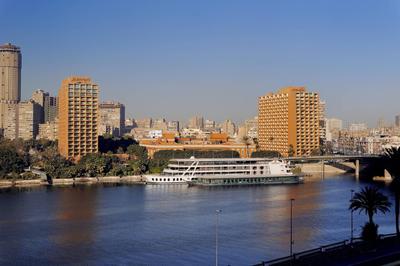
Agouza, by contrast, is the older river frontage: narrower, softer-edged, and wrapped along the corniche and the wide 26th of July artery that carries you straight onto the bridge to Zamalek. Here, the Nile is not a postcard backdrop but a working waterfront of felucca moorings, fishing skiffs and cafés that face the water as if they have every right to be there. This is where Cairo feels most like itself — a city that keeps moving even when the river slows the light.
The districts are also defined by connectedness. The metro, the bridges, the density of everyday commerce: all of it means you are never far from a juice bar, a bakery, or a way across the water. That practical ease is why repeat visitors and long-stayers keep coming back. You can live here like a resident, not a tourist, and still be in the centre of things by breakfast.
A morning in Dokki can be wonderfully strange. The Egyptian Agricultural Museum, in the former palace of Princess Fatma Ismail, reopened for trial operation in August 2025 after years shut for renovation, and it is exactly the sort of place that rewards curiosity over checklist tourism. One of the oldest agricultural museums in the world, it spreads through a sprawling 1930s complex with two Pharaonic-style gardens and exhibits that range from cotton and Nile ecology to dioramas of village life. It is not polished in the way a blockbuster museum is polished; it is more generous than that, and more peculiar. You leave with the sense that Cairo has hidden an entire second history in plain sight.
Just south of there sit the Orman Botanical Garden and the historic Giza Zoo, both closed since July 2023 for a top-to-bottom rebuild and now slated to reopen in 2026. They are worth keeping on your radar, but not your day plan until they are actually open. In this part of Cairo, timing matters more than intention.
Plan your Cairo trip
Live prices from our booking partners.
Guests & rooms
Free cancellation on many rooms. We may earn a commission when you book.
Where to eat & drink
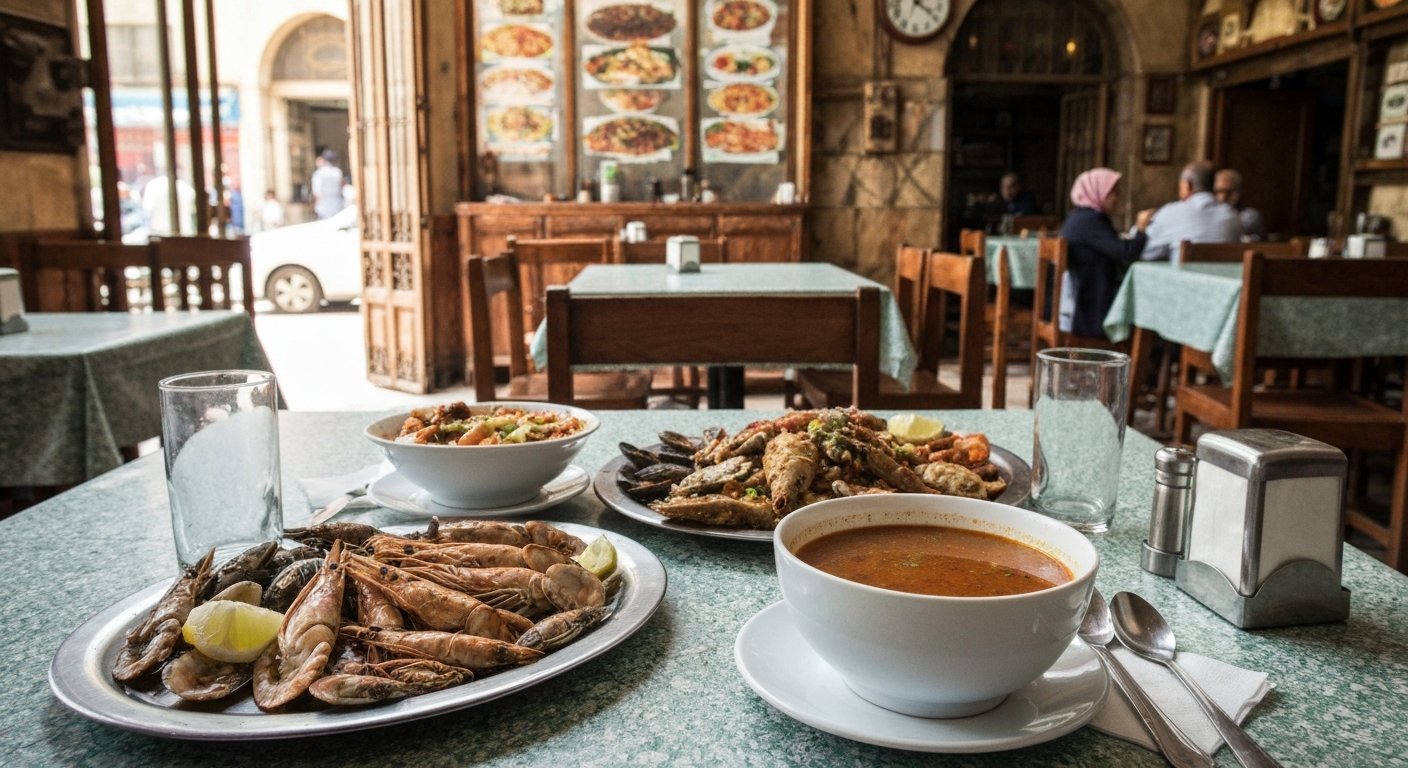
If Agouza has a culinary thesis, it is seafood. The district's great local trump card is Flying Fish at 166 El Nil Street, beside the Agouza police hospital, a 1979 institution that has been grilling shrimp and ladling its namesake fish soup ever since. The room hasn't changed much since, and that is part of the pleasure. The cleanliness is meticulous, the value famous, and the fish soup — packed with cod, calamari and shrimp — is the order to beat. It does not serve alcohol, but it has been known to let you bring your own bottle and pour it for you, which feels very much in keeping with the place: practical, unshowy, and slightly charming in its own refusal to fuss.
A short hop away near Ahmed Orabi Square, Samakmak works the classic Alexandrian model with satisfying clarity. You choose your fish from the ice at the entrance, they weigh it, you say grilled or fried, and then you head upstairs to family-packed floors to eat it with salads and fresh bread. Soft drinks only there, which keeps the mood anchored in lunch rather than lingering. It is the kind of place where the ritual is the point: the selection, the weighing, the upstairs bustle, the plates arriving with the confidence of a kitchen that has done this thousands of times before.
For Egyptian home cooking, the Abou El Sid branch in Dokki is the reliable pick. It is dim, old-world, and atmospheric, with oud on the speakers and the full canon done properly: molokhia, stuffed pigeon, koshari. In a city where restaurants can sometimes feel like theatre, Abou El Sid is useful because it knows the script and still believes in the meal. It is the kind of room that makes a visitor understand why Cairo's comfort food has such staying power.
Around Dokki metro station, the food map widens in a different direction. Here you find Cairo's Sudanese and East African cooking — kisra flatbread, okra stews, spiced coffee — alongside the usual dense run of foul-and-falafel counters, bakeries and juice bars that make eating cheaply here effortless. That everyday abundance is one of the district's quiet luxuries. You can spend very little and eat very well, and the food tastes of the neighborhood rather than the algorithm.
Going out
Nightlife here is real, but concentrated. The headline act is Cairo Jazz Club at 197 26th of July Street in Agouza, a landmark live-music venue that has anchored the west bank's independent scene for more than two decades. The nightly programme swings from Egyptian bands to jazz, blues, rock and electronic, typically from the early evening until around 2am. It is cash-friendly and fills up on weekends, so arrive early and check the line-up in advance. What makes it matter is not just the bookings but the continuity: this is one of those rooms that gives a district a pulse long after the offices have gone dark.
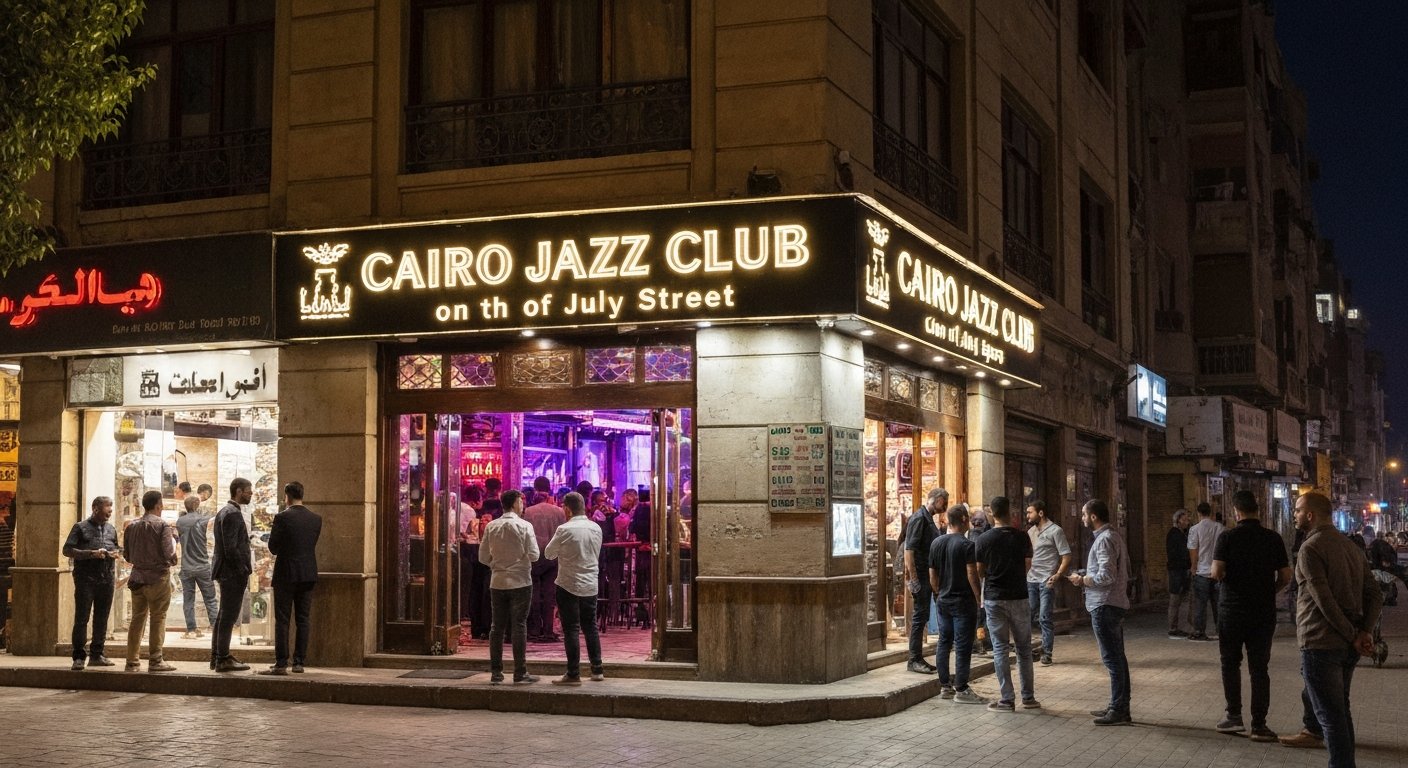
Beyond that, Agouza's after-dark life is gentler. The corniche gives you Nile-view cafés where the real currency is shisha and mint tea, and there is a scatter of hotel bars and floating restaurants moored along the water. It is not a dense bar strip, and that is worth knowing before you arrive expecting one. The scene is more dispersed, more local, and more dependent on the river's mood.
For a bigger night, you cross the bridge. Zamalek — a five-minute drive over the 26th of July or 15 May bridges — carries the denser bar-and-club scene, and the El Sawy Culturewheel, tucked under the 15 May Bridge on the Zamalek side, runs concerts, comedy and festivals almost nightly. It is one of the easiest cultural nights out you can reach from Dokki or Agouza, and the commute is short enough that you can treat the island as an annex rather than a destination.
Things to do / what to see
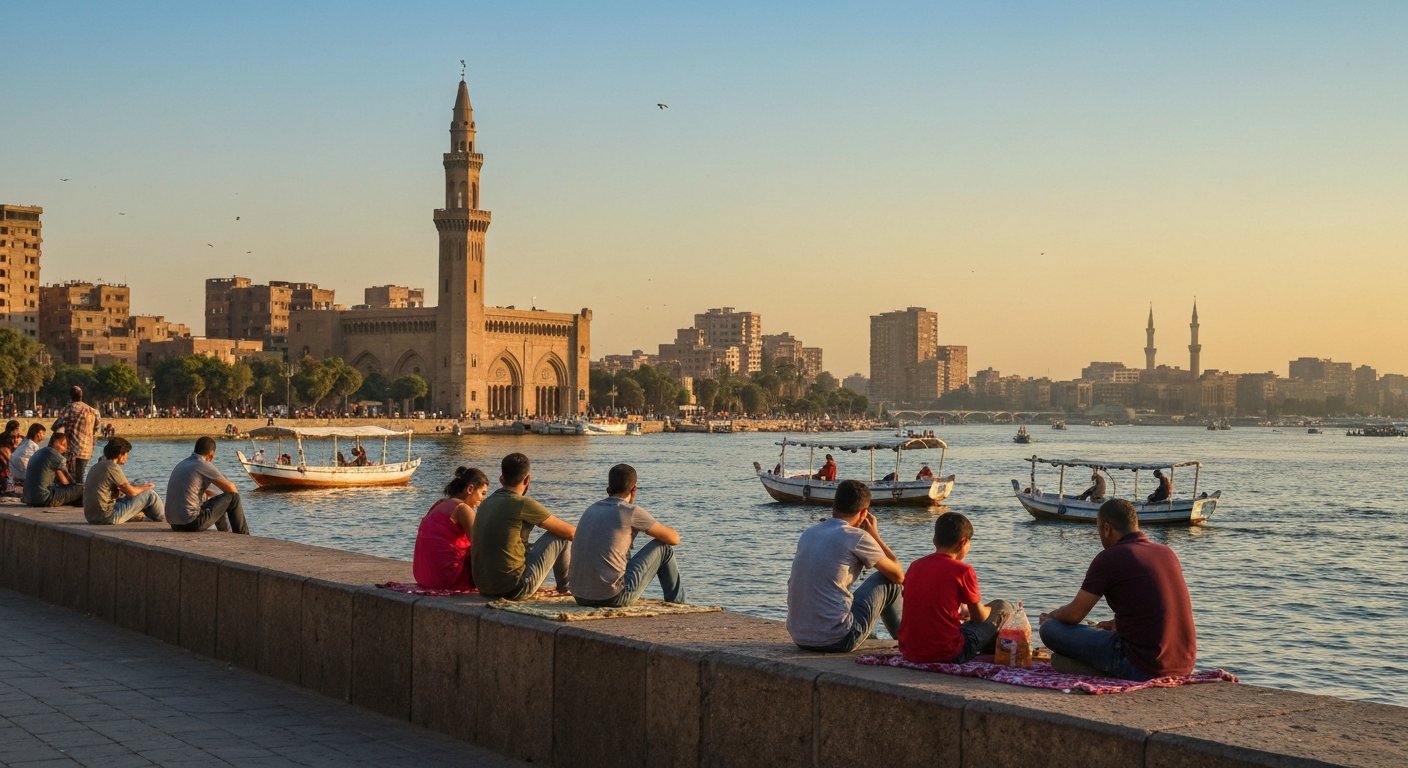
The single best thing to do here is walk the Agouza corniche. It is a long, unhurried stretch of riverfront where feluccas cast off, families picnic on the wall at sunset, and the whole of Zamalek's skyline sits across the water. Time it for golden hour and it becomes one of the more honest Nile views in the city, with none of the tour-boat production. The light is softer than the traffic, and the river seems to widen just enough to make Cairo pause.
Rent a felucca from one of the moorings for a cheap hour on the water, ideally late afternoon into dusk. It is not a grand excursion. That is the point. The boat slips away from the noise, the skyline shifts, and the city reassembles itself in pieces — island, bridge, bank, light.
On the culture side, the Egyptian Agricultural Museum in Dokki is the quiet surprise. Set in a former royal palace and gardens, it reopened for trial visits in August 2025, so confirm hours before going. The place covers everything from cotton and Nile ecology to village-life dioramas, and the two Pharaonic-style gardens lend it a stately oddness that suits Cairo beautifully. It is the sort of museum that reminds you how much of the city's story is about land, water and the systems that feed it.
Just south, the Orman Botanical Garden is a historic 28-acre green space on Dokki's edge, and the Giza Zoo is its neighboring landmark. Both are mid-reconstruction and aiming to reopen in 2026 as fully modernised attractions. Until then, they are part of the neighborhood's suspended promise — visible, known, but not yet available.
Because you are on the bank facing the island, the whole of central Cairo is a short crossing away. Zamalek's galleries and the Cairo Opera House complex, Downtown's cafés and the Egyptian Museum on Tahrir: all of it sits within a couple of metro stops or a bridge. That proximity is the real luxury here. You are never stranded in one Cairo.
Don’t miss in Dokki & Agouza
Agricultural Museum
Mahmoud Mukhtar Museum
Shopping & markets
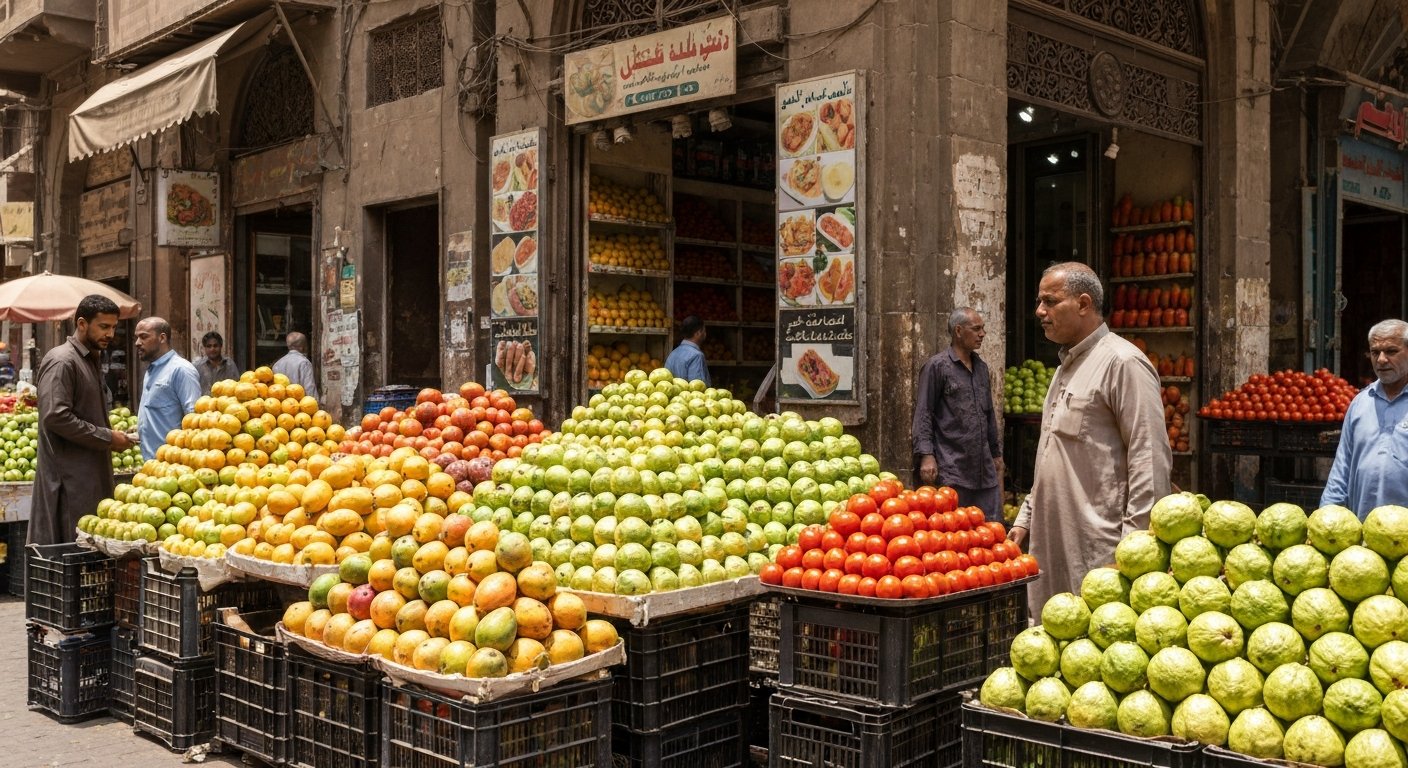
Shopping in Dokki and Agouza is neighbourhood shopping, and it is all the better for it. The signature spot is Soliman Gohar Street in Dokki, an open-air fruit-and-vegetable market that runs cheap and lively, with neighbouring vendors happy to point you next door if their own stall is short of what you want. This is where locals actually buy their mangoes, guavas and tomatoes rather than a curated tourist bazaar, and it makes for a genuinely good stroll even if you are only buying a bag of fruit for the room.
Beyond the produce, the two districts are wall-to-wall with the small commerce that makes Cairo tick: bakeries, pharmacies open late, phone-repair holes-in-the-wall, spice and grocery shops, and the odd homeware or crafts store. There is no glossy mall culture to speak of within Dokki and Agouza themselves, which is precisely why the street-level shopping feels so grounded. Bring cash and small notes; haggling is expected at the market and unremarkable elsewhere.
Where to stay in Dokki & Agouza
Base yourself here for value plus a Nile address. The most sought-after rooms are the Nile-facing ones along the Agouza corniche, where you get the water view and the sunset without paying Zamalek-island rates. It is worth asking for specifically, since a river room and a back-facing room can be a big gap in feel for a small gap in price. The corniche and the streets off 26th of July put you closest to the seafood houses, Cairo Jazz Club and the fastest bridges over to the island.
On the Dokki side, staying near Dokki metro station, El Messaha Square or the Tahrir Street spine is the smart move for anyone who plans to use the metro. You are two stops under the river from Tahrir and the Egyptian Museum, and surrounded by everyday restaurants and shops. Expect mid-range hotels, serviced apartments and a good stock of short-let flats rather than luxury towers; the overall price feel is noticeably softer than Zamalek or the corniche hotels closer to the centre. Families and longer stays do especially well here on apartments.
Hotels in Dokki & Agouza
Our best-rated stays in this neighbourhood. Prices are approximate “from” rates — confirmed at the provider when you continue. We may earn a commission if you book through our partners — at no extra cost to you.
In this area
In this area
In this area
In this area
In this area
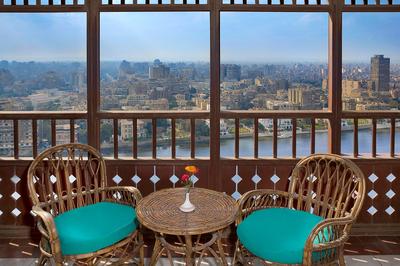
Dokki & Agouza
Cairo World Trade Center Hotel & Residences
8.8· 2,225 reviews
approx. from£170 / nightSee prices
In this area
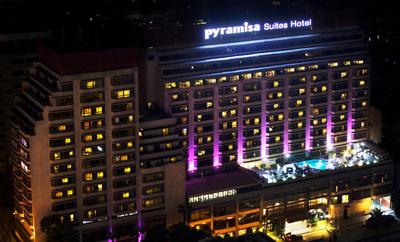
In this area
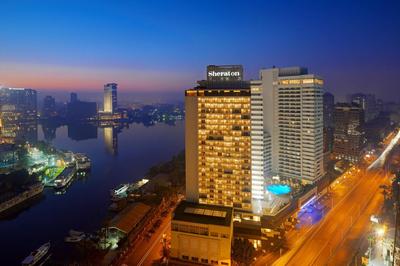
In this area

In this area
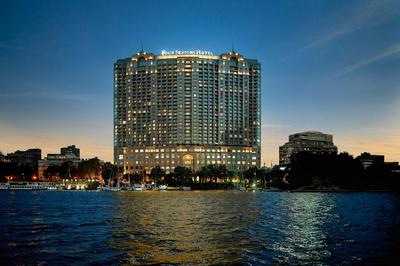
Dokki & Agouza
Four Seasons Hotel Cairo at Nile Plaza
9.2· 1,824 reviews
approx. from£721 / nightSee prices
In this area
In this area
Getting around
This is one of the best-connected parts of the west bank. Dokki station sits on Metro Line 2, which famously became the first line to tunnel beneath the Nile. From Dokki, you are roughly two stops east to Sadat at Tahrir Square for the Egyptian Museum and Downtown, and a short ride the other way to Cairo University, where Line 2 meets Line 3. A single metro ride is cheap and skips the traffic entirely, which matters here more than almost anywhere.
Agouza has no metro of its own but leans on the same network via short taxi or ride-hail hops to Dokki station. Above ground, 26th of July Street is the main artery, feeding straight onto the bridges to Zamalek and, beyond, to Downtown. The island is a five-minute drive when traffic behaves. Uber and Careem are cheap, plentiful and the easiest option for door-to-door or late nights, though ordinary Cairo traffic means you should still budget generous time in rush hour.
For the airport, reckon on roughly 45 minutes to an hour by car in normal traffic, and considerably more when the roads are jammed. Within the districts, walking works for short hops, but pavements are patchy, so comfortable shoes and a bit of Cairo road-crossing nerve are required.
Why come here at all
Because Dokki and Agouza give you Cairo without the performance layer. You get the Nile, real neighbourhood food, and a bridge to everything. You get a metro that takes you two stops under the river instead of a taxi queue. You get seafood institutions that have survived since 1979, a jazz club that still matters after two decades, and a corniche where sunset feels like a local habit rather than a packaged experience. This is working Cairo with a waterfront. For the right traveller, that is the whole point.
Gallery
Dokki & Agouza in pictures
Dokki & Agouza — your questions
Is Dokki or Agouza a good area to stay in Cairo?
Yes, if value and local flavour matter more than being able to walk to the big sights. You get a Nile-side base, genuinely good everyday food, and a fast metro-and-bridge link to Downtown, Tahrir and Zamalek, usually at lower prices than Zamalek island. It is a poor fit if you want to stroll straight to monuments, since the antiquities are across the river or out at Giza.
Is Dokki & Agouza safe for tourists?
Broadly yes. These are dense, ordinary residential-commercial districts where daily life carries on around you, and violent crime against visitors is rare. Use the same common sense you would anywhere in a big city: watch your belongings in crowds and at the market, use Uber or Careem at night rather than unmarked cars, and be careful crossing the busy roads and corniche, where traffic is the main hazard.
How do I get from Dokki to central Cairo and the Egyptian Museum?
The metro is the fastest option. Dokki is on Line 2, and it is about two stops east under the Nile to Sadat station at Tahrir Square, right by the Egyptian Museum and Downtown. A ride is very cheap and avoids traffic entirely. By car or ride-hail it is a short crossing over the bridges, but allow extra time in rush hour.
What is the best thing to do in Agouza at sunset?
Walk the Agouza corniche. It is the most satisfying riverfront experience here: feluccas on the water, families on the wall, and Zamalek across the Nile in the evening light. If you want to linger, rent a felucca from one of the moorings for an hour on the water.