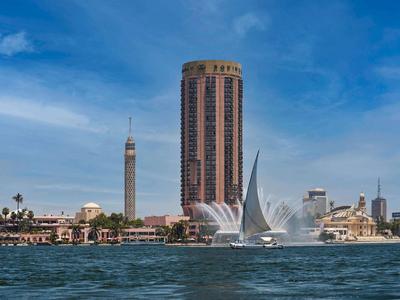
 In this area
Downtown (Wust El-Balad)
Sofitel Cairo Nile El Gezirah
9.0· 5,233 reviews
approx. from£427 / nightSee prices
The Cairo issue
A walk through Cairo’s Khedivial quarter, where Belle Époque facades, koshari counters, old bars and literary cafes keep the city’s pulse stubbornly alive.
By Yasmine Abdel-FattahIslamic-quarter minarets to Zamalek galleries
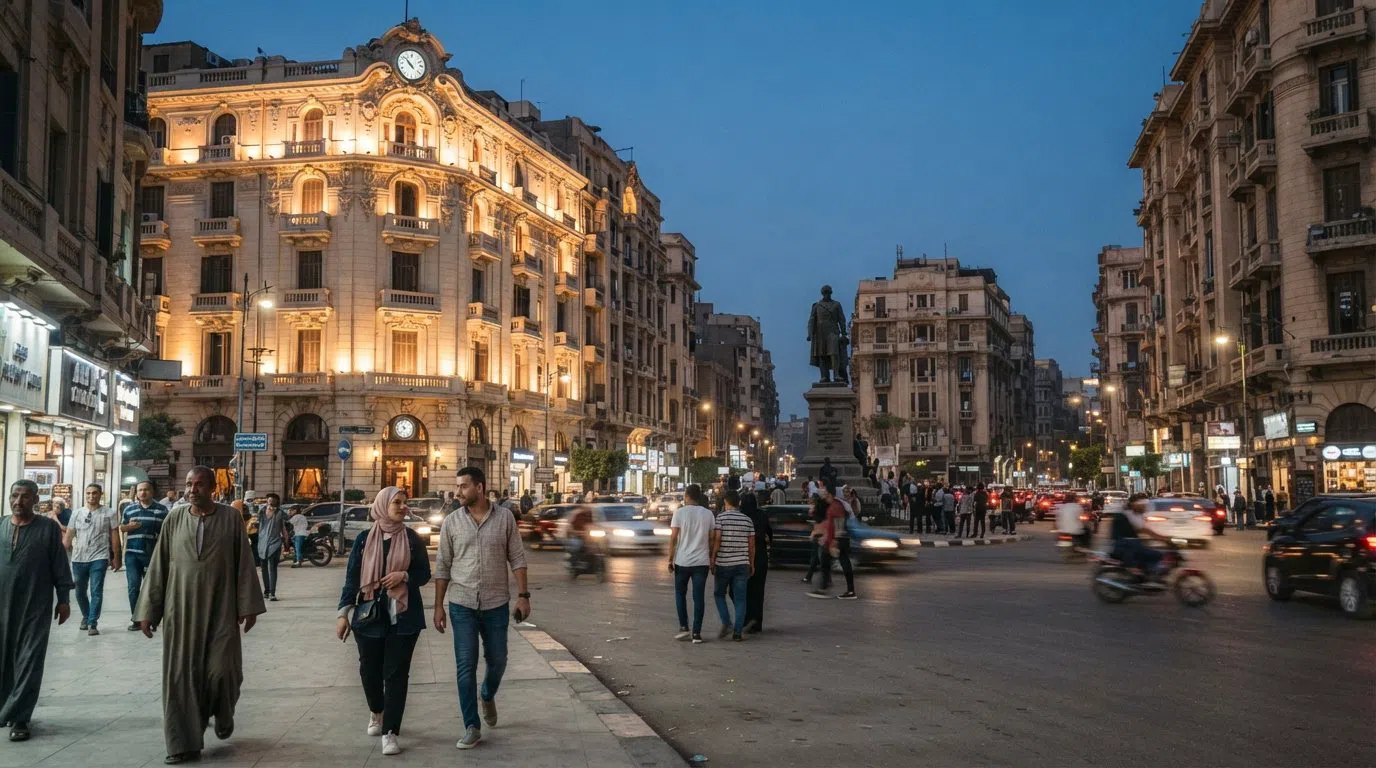
The first thing you notice in Downtown Cairo is not a monument but a rhythm: the clatter of backgammon dice from an ahwa, the hiss of traffic at Tahrir, and the way a five-storey Beaux-Arts facade can sit above a shawarma cart as if that arrangement had been planned all along. Khedive Ismail imagined this district in the 1860s as a Paris on the Nile; what survived is less polished, more persuasive. Wust El-Balad is Cairo with its collar open, the grand Khedivial grid still visible beneath the peeling plaster and the constant horn-blast chorus. It is loud, cramped, a little grubby, and completely alive.
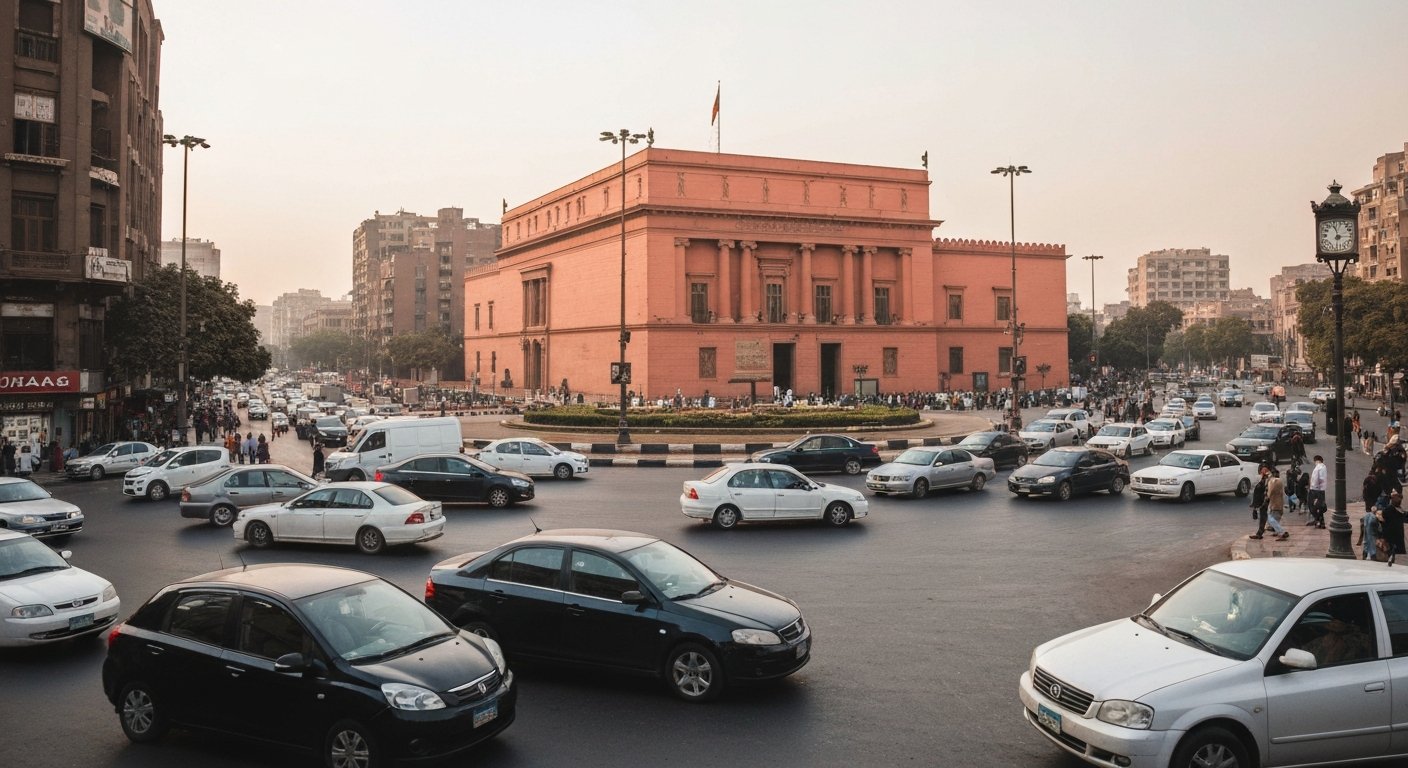
Downtown is Cairo’s Khedivial quarter, laid out in the 1860s and 70s when Khedive Ismail wanted a modern capital with broad streets and European airs. That ambition still reads clearly in the bones of the place. The district’s two magnets are Tahrir Square and Talaat Harb Square: one a vast, chaotic roundabout that carried the country’s 2011 revolution and still fronts the old salmon-pink Egyptian Museum; the other a few blocks north, ringed by Belle Époque facades and anchored by the statue of the economist who founded Banque Misr. Between them, Downtown feels like a city built to be walked, then repeatedly interrupted by life.
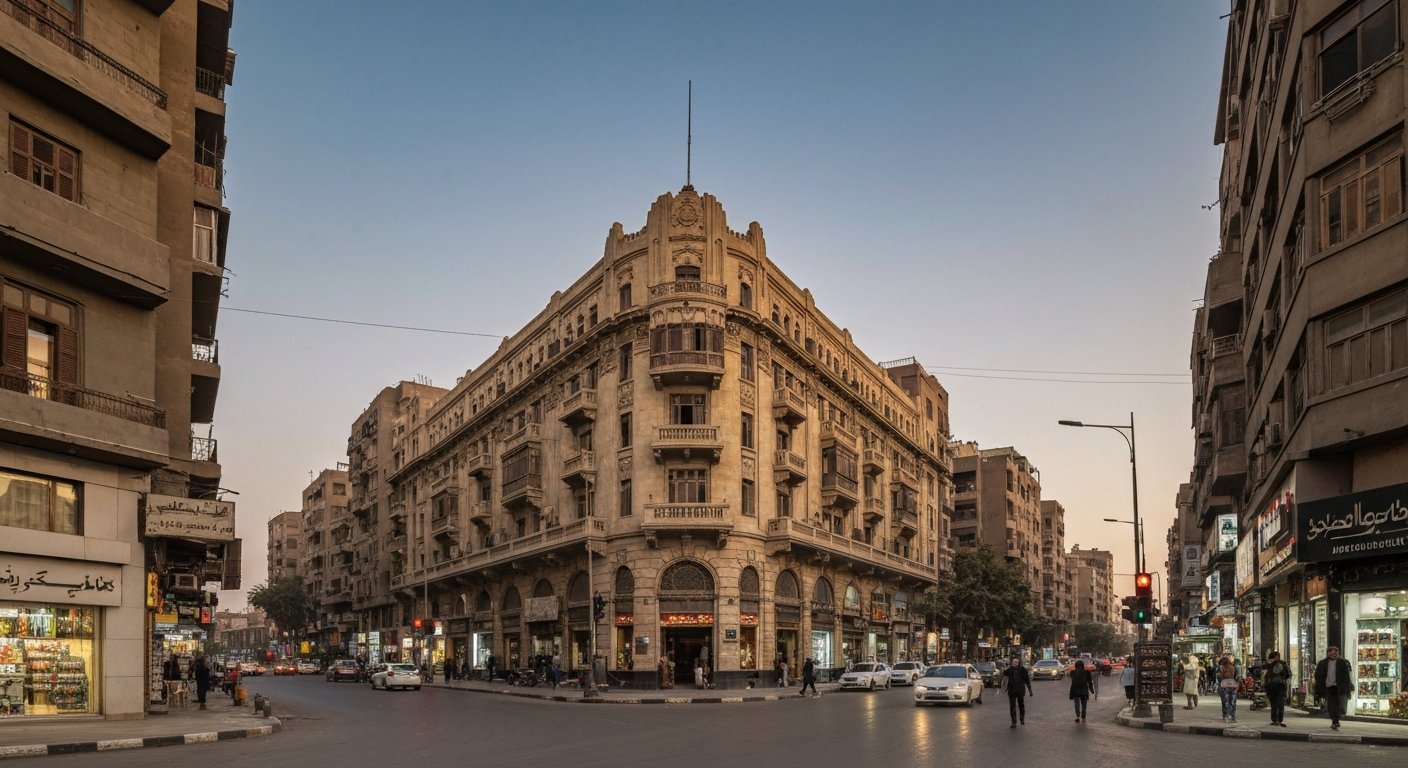
The great pleasure here is not ticking off landmarks but noticing how the district’s set-pieces keep surfacing in ordinary life. The 1937 Yacoubian Building on Talaat Harb Street is still one of the area’s defining silhouettes, its fame borrowed from Alaa Al Aswany’s novel and returned to the street in a thousand glances upward. The Banque Misr headquarters stands nearby as a showpiece of Neo-Pharaonic art-deco, all that assertive geometry and national self-belief translated into stone. And then there are the cinemas, those old Downtown beacons that once turned going out into an event: Cinema Metro on Adly Street, opened in 1938 as the first air-conditioned cinema in Egypt; Cinema Radio on Talaat Harb; and the art-deco Cinema Diana near Alfy Street. Even when the city is in a hurry, Downtown insists on looking back.
This is also a neighborhood of atmospheres rather than checklists. Students, poets, office workers, off-duty musicians and travellers who came for the real city rather than a softened version of it all seem to converge here. The soundtrack is not subtle: car horns, shop radios leaking Umm Kulthum, the call to prayer bouncing between tall facades. Yet the district’s energy is strangely inclusive. You can wander for an hour with no plan and still feel you have understood something essential about Cairo: its appetite, its impatience, its refusal to be embalmed.
Live prices from our booking partners.
Free cancellation on many rooms. We may earn a commission when you book.
Downtown is Cairo’s street-food heartland, and the argument begins, as it should, with koshari. Koshary Abou Tarek, on the corner of Marouf and Champollion streets, has been serving the national dish since 1935, and it wears its legend lightly — or at least efficiently. The five-floor operation is always packed, the plates assembled at speed, the bowls of rice, lentils, macaroni, chickpeas and fried onions under garlicky tomato sauce disappearing almost before they reach the table. It is one of those places that explains a city better than any museum label. You eat quickly, you sweat a little, you leave converted.
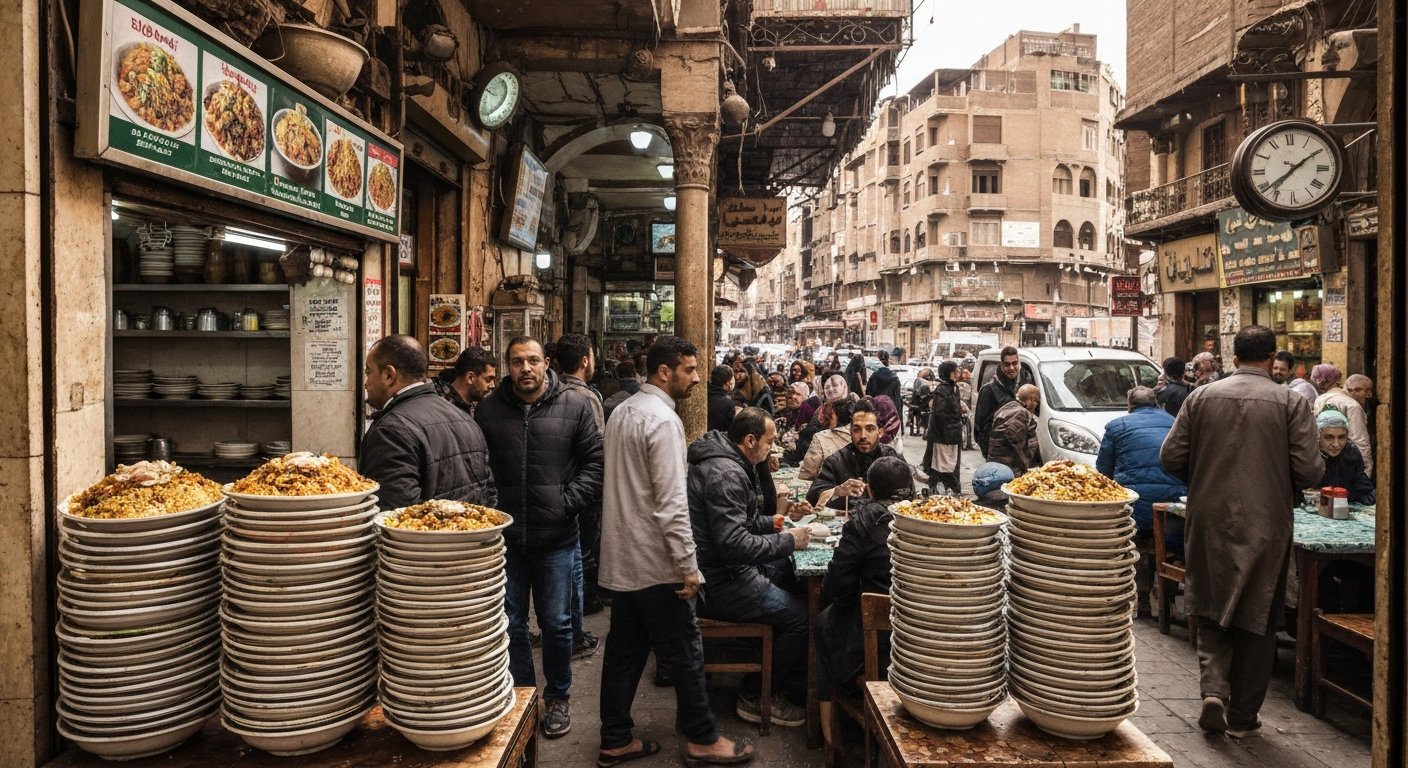
Its rival, Koshary El Tahrir, has a busy Downtown branch near Talaat Harb Street, and the rivalry is part of the fun. Loyalists will tell you one bowl is superior to the other; the only sensible response is to try both and choose your camp. That is the Downtown way: opinionated, slightly chaotic, never precious.
For a more seated, more settled meal, Felfela has been serving fuul, taameya and grills since 1959. The dining rooms are dim and cluttered, which in this neighborhood reads as reassurance rather than neglect. It is the kind of place where you can linger over breakfast or lunch and feel the city moving around you without ever quite entering the room. Nearby, Eish + Malh offers a newer, gentler polish: wood-fired pizza, baked eggs and homemade pasta behind tall French windows made for people-watching. Zooba takes a different route, reworking Egyptian street food into a contemporary register with whole-grain koshari, hawawshi and taameya sandwiches. Downtown has room for all of it — the old and the updated, the quick bowl and the slower plate.
Then there is the coffee, the grease, the small rituals that keep the district running after dark. A mint tea at a pavement ahwa can feel as essential as dinner. A thick Turkish coffee can steady you for another round of walking. And because Downtown’s prices sit a fraction below Zamalek or Maadi, the temptation is to keep ordering one more thing. That is how the neighborhood gets under your skin: not through luxury, but through repeatability.
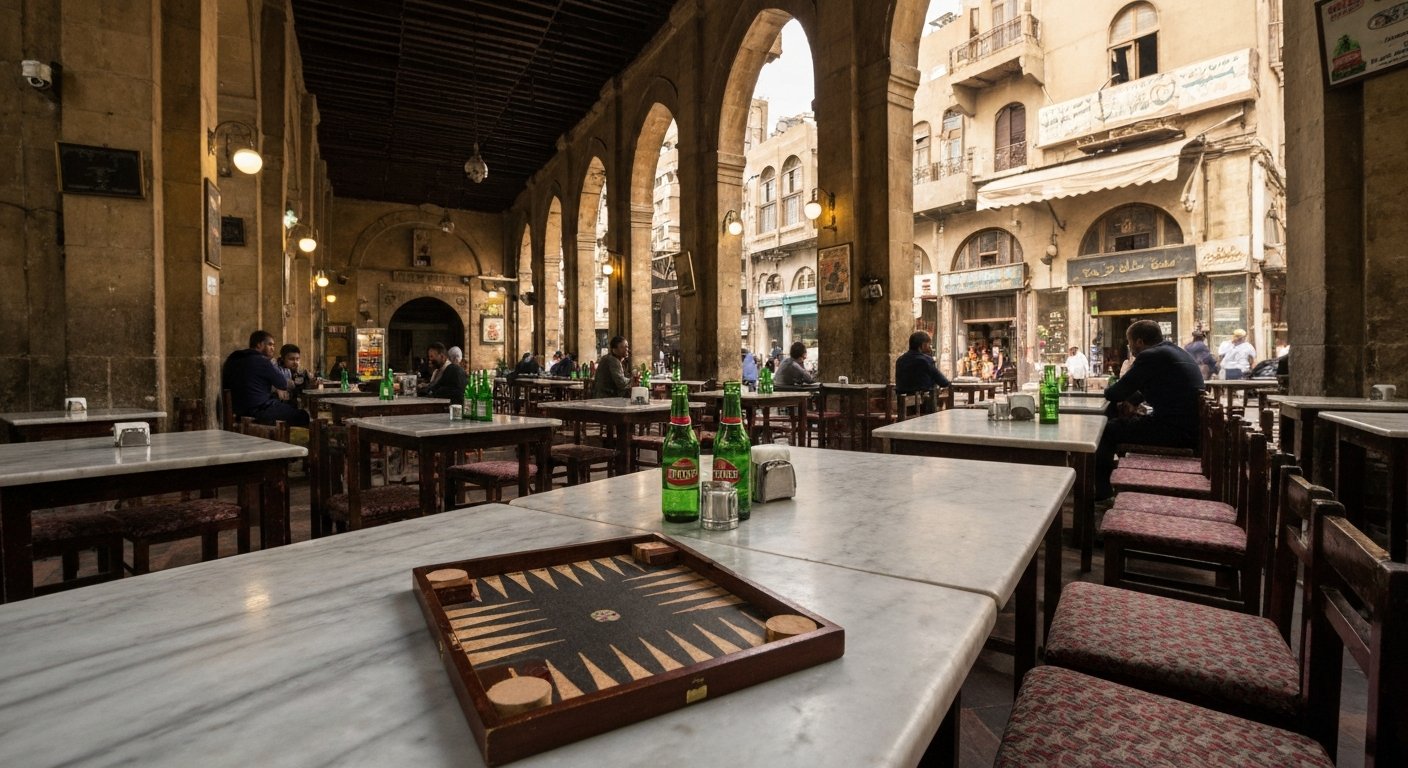
Downtown nightlife is old, cheap and gloriously unpretentious. This is baladi-bar country, not a rooftop-cocktail scene, and the difference matters. The institution is El Horreya, a cavernous, brightly lit cafe-bar near Falaki Square that has been open since the 1930s. Students, poets, expats and old regulars share long marble tables over ice-cold Stella, chess and backgammon; one side still functions as a coffee-and-shisha ahwa, so the room feels porous, crossed by all ages and all kinds of Cairo. It pours beer until around 2am, but the larger truth is that it never fully stops being a living room for the city.
For a different kind of late-night perch, the Odeon Palace Rooftop Bar runs 24 hours atop the shabby-charming Odeon Hotel off Talaat Harb. It has long been a haunt of Cairo’s film and art crowd, and it feels exactly like that: practical, worn-in, slightly improvised, good for a late beer and shisha under the water tanks. Order the fries and little else, then let the view do the work.
If you want something truly vintage, Cap d'Or has been pouring beer and free termis since 1908. It is tiny, baladi, and the opposite of polished, which is precisely why it matters. And inside the 1893 Windsor Hotel on Alfy Street, the Barrel Bar remains a wood-and-barrel time capsule that once served British officers. These are not places that chase trends. They survive by being themselves, and Downtown is richer for it.
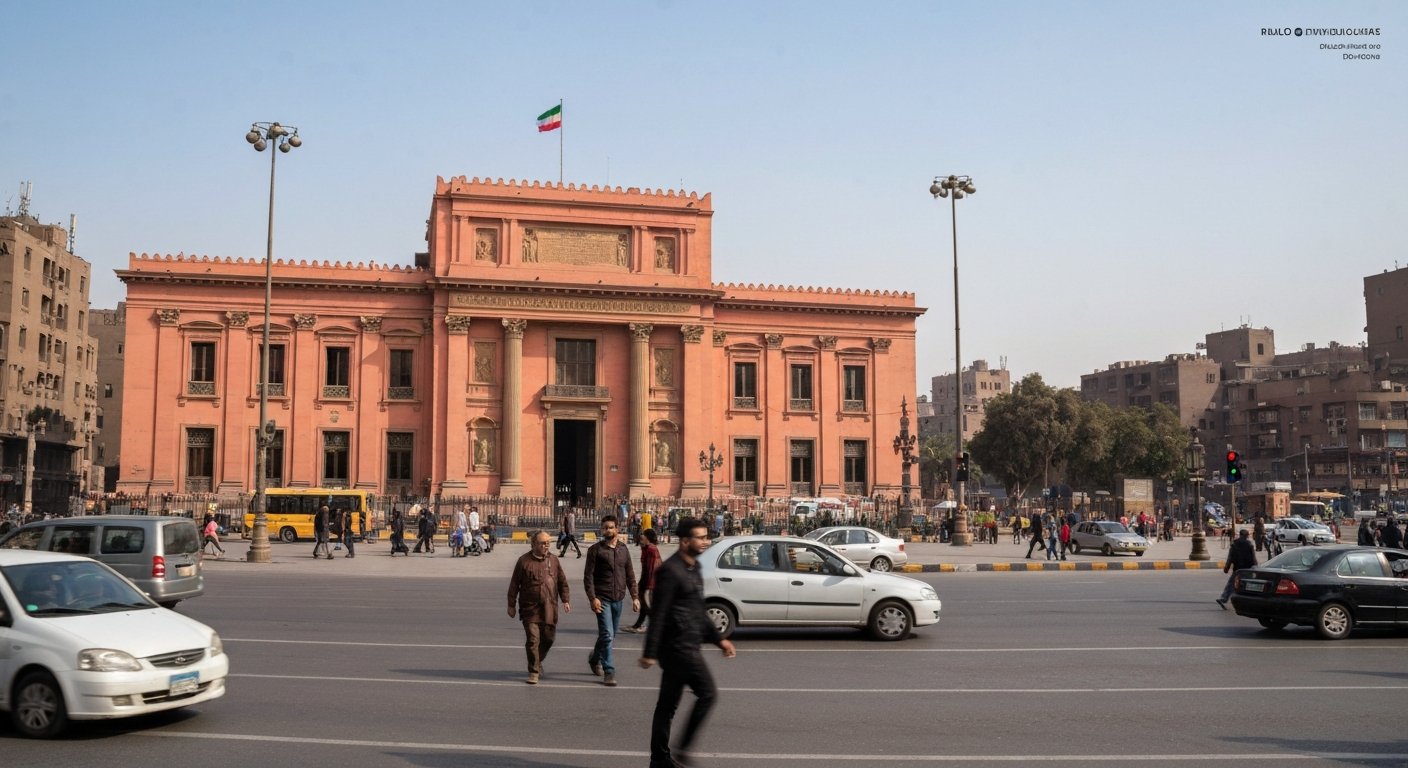
The single best thing to do in Wust El-Balad is walk it slowly. Start at Tahrir Square and the old Egyptian Museum. Even as the headline collections move to the Grand Egyptian Museum out at Giza, the 1902 building itself is worth an hour on its own. It is crammed, creaking and gloriously unmodern, a salmon-pink relic that remains one of the district’s essential landmarks. Stand there long enough and you begin to understand Downtown’s particular form of beauty: not pristine, but persistent.
From there, wander north up Talaat Harb Street and let the neighborhood unfold in layers. The covered arcades and passages between the blocks are where Downtown’s daily life becomes most legible — little shocks of commerce, repair, and gossip tucked beneath old facades. For a literary pilgrimage, stop at Café Riche at 17 Talaat Harb Street, open since 1908. It has long been a meeting place of revolutionaries and the model for Naguib Mahfouz’s Karnak Café, and that history sits in the room as naturally as the tables and cups.
A few steps away, Groppi on Talaat Harb Square offers a different kind of memory. This century-old patisserie and tearoom once represented “the Paris of the Nile” in a cup, and even now it carries a faint echo of that old cosmopolitan confidence. Nearby, Zahret El Bustan, in an alley just off Talaat Harb, is the intellectuals’ ahwa: coffee, shisha and the sort of unpretentious conversation that makes a city feel intellectually alive rather than merely busy.
Downtown is also Cairo’s contemporary-art engine. Access Art Space, the former Townhouse Gallery, remains an anchor for rotating exhibitions, while the revitalised Kodak Passage hosts exhibitions and screenings between Adly and Abdel Khaleq Tharwat streets. These spaces matter because they keep Downtown from becoming a museum of itself; they remind you that the district is still producing culture, not just preserving it. In autumn, the Cairo International Art District festival takes over old buildings across the neighborhood, and the streets briefly feel as though they have been handed back to artists.
Tahrir Square
The Egyptian Museum
Cafe Riche
Shopping in Downtown is not about glossy retail therapy. It is street-level, idiosyncratic and gloriously uncurated. Talaat Harb and Qasr El-Nil streets are lined with old-school clothing, shoe and fabric shops, gold sellers and stationers, while the pavements host informal stalls selling phone cases, lupin beans and whatever else the street can absorb that day. You browse here the way you walk: alert, slightly improvisational, willing to be sidetracked.
The real pleasure is in the passages, the covered arcades cut between the blocks, where you will find hole-in-the-wall tailors, vintage bric-a-brac, camera and watch repairers, and the occasional gallery pop-up in a restored art-deco corridor like Kodak or Philips. Book lovers should drift toward the streets around Talaat Harb and Abdel Khaleq Tharwat, long Cairo’s publishing district, where second-hand booksellers and the odd modern bookshop-café still keep the printed word in circulation. Bring cash. Haggle gently outside fixed-price shops. Treat the whole grid as a browse rather than a list.
Downtown is where you stay if you want to be in the thick of it on a budget, steps from the Egyptian Museum and within a short walk of the Nile. The backpacker classic is Dahab Hostel, a rooftop warren of whitewashed huts near Tahrir that has been running since 1998 and repeatedly wins best-in-Egypt awards. It is social, cheap and central — a very Downtown combination.
For old-world character, the 1893 Windsor Hotel on Alfy Street trades on faded colonial charm and its famous Barrel Bar. Around Talaat Harb and Tahrir there is also a spread of small, cheap central hotels, plus a handful of larger mid-range names near the river. The trade-off is noise. Rooms facing Talaat Harb, Tahrir or the main squares get the full horn-and-crowd soundtrack, so ask for a back or upper room and pack earplugs if you are sensitive.
If you want quiet, a pool and polish, cross into leafy Zamalek — a 15–20 minute walk or a short taxi over the Qasr El-Nil bridge.
Our best-rated stays in this neighbourhood. Prices are approximate “from” rates — confirmed at the provider when you continue. We may earn a commission if you book through our partners — at no extra cost to you.
In this area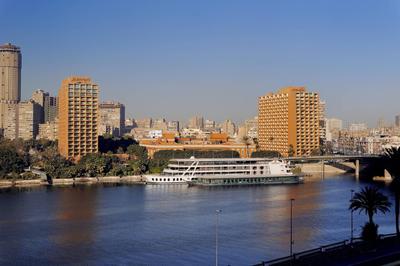 In this area
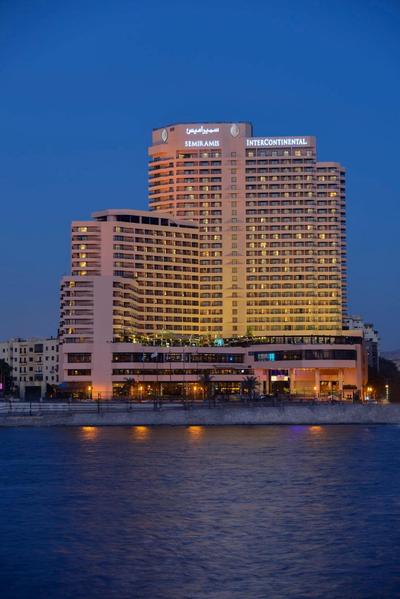 In this area
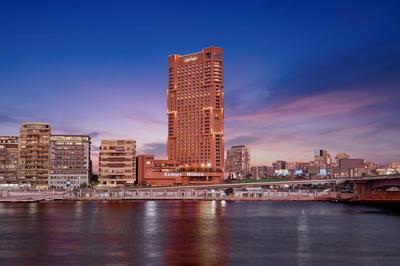 In this area
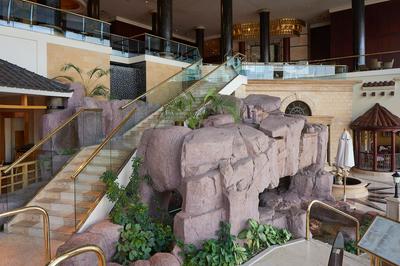 In this area
 In this area
 In this area
 In this area
 In this area
 In this area
 In this area
 In this area
Downtown is the most walkable district in Cairo, laid out on a European grid, and most of the eating, drinking and sightseeing sits within a 15-minute stroll. Walking is genuinely the best way to see it, because the district reveals itself in fragments: a cinema marquee here, a stairwell smelling of cats and cardamom there, a sudden arcade opening onto a square.
The metro is your friend for going further. Sadat station sits directly under Tahrir Square and links Line 1 and Line 2. Nasser station is a few blocks north on Line 1 and Line 3, while Attaba on the eastern edge links toward Islamic Cairo. Metro runs from around 05:00 to near midnight, with trains every few minutes and fares a few Egyptian pounds; note that the front carriages are reserved for women.
Above ground, the traffic is relentless, so ride-hailing apps such as Uber and Careem are the simplest way to take the haggling out of taxis. Zamalek and the Nile are a 10–20 minute walk over the bridges; the Pyramids of Giza are roughly 45–60 minutes by car depending on traffic, and Cairo International Airport is about 45 minutes to an hour northeast.
Downtown is busy, loud and generally safe, with a strong police presence and heavy foot traffic. The real hazards are scams, overcharging and pickpocketing in crowds rather than violent crime. Solo travellers are fine by day; at night, stick to lit main streets and travel in twos where you can.
Gallery
Yes, if you want the real, central Cairo on a budget. It is walkable to the Egyptian Museum, Tahrir Square and the Nile, and the food and drinks are among the city’s cheapest. The catch is noise and grit: it is loud, crowded and unpolished, so it suits atmosphere-seekers more than anyone wanting quiet, a pool or a lobby bar.
Broadly yes. Downtown has a strong police presence and stays busy late, and the main risks are scams, overcharging and pickpocketing rather than violence. Keep to well-lit main streets like Talaat Harb and Qasr El-Nil, agree taxi prices in advance or use Uber/Careem, and watch your bag in crowds.
Start with koshari: Koshary Abou Tarek and Koshary El Tahrir are both Downtown legends and cost only a few pounds a bowl. For sit-down Egyptian classics go to Felfela; for a lighter, modern take try Eish + Malh or Zooba. Round it off with coffee at Groppi or literary Café Riche.
Street food, cheap old-school bars, Khedivial architecture, people-watching and budget beds. It is the district for walking, lingering and seeing Cairo as it is rather than as a polished version of itself.