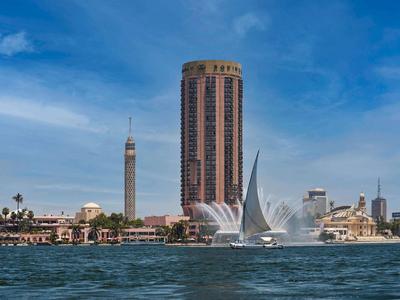
 In this area
The Cairo issue
Garden City, Cairo: the quiet Nile-side maze of embassies, villas and hotel terraces
A curving, embassy-lined pocket south of Tahrir, Garden City is Cairo at its most hushed: belle-époque streets, riverfront five-stars, sunset feluccas and a walkable path to the Egyptian Museum.
By Yasmine Abdel-FattahIslamic-quarter minarets to Zamalek galleries
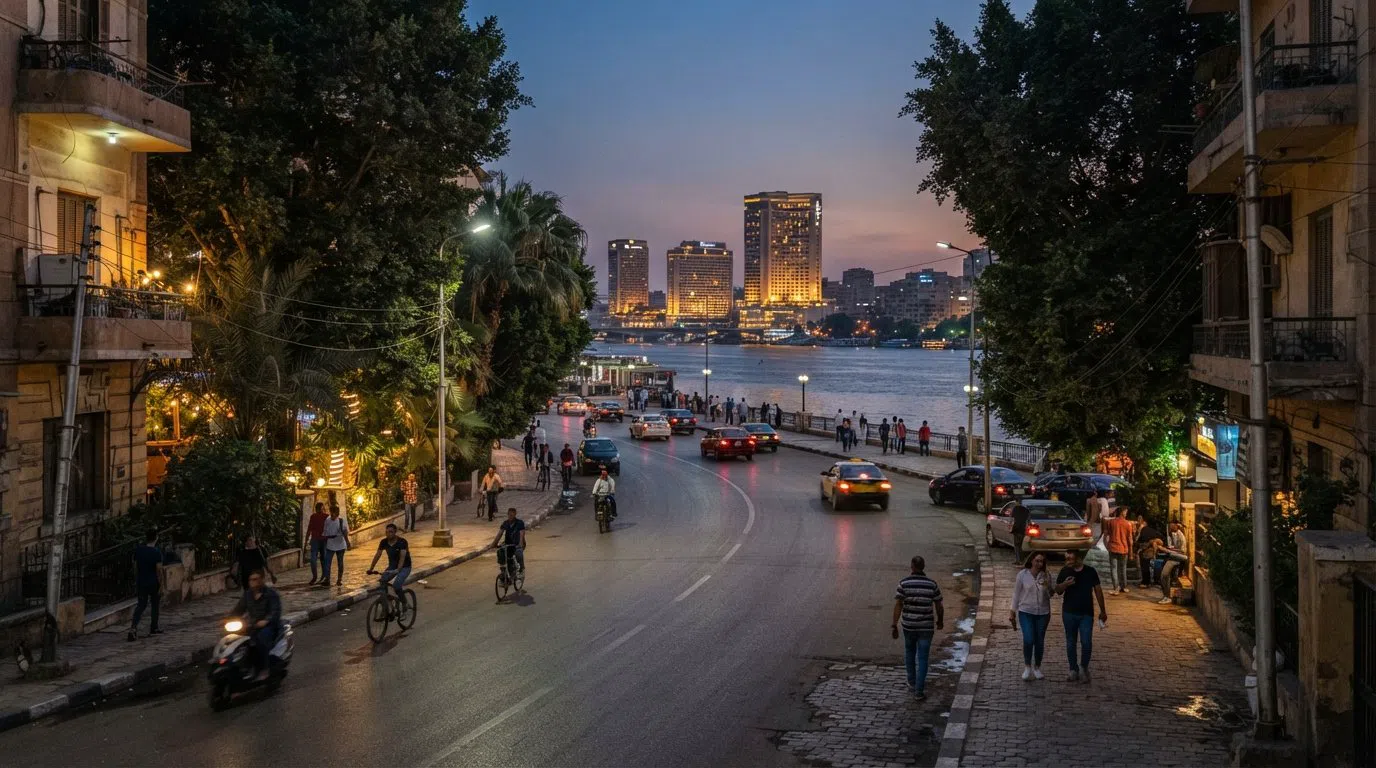
The first thing Garden City gives you is silence, and then, almost immediately, the river. Step off the Corniche and the city folds in on itself: a loop of curving streets where ficus and jacaranda shade the pavement, embassy walls rise behind razor wire, and old villas in flaking Art Nouveau and Art Deco disappear into gated compounds. It was drawn from 1906 by the French agricultural architect Jose Lamba with a compass rather than a ruler, and the geometry still feels mischievous. Taxi drivers lose their way here. So will you. That is part of the charm.
What Garden City is known for
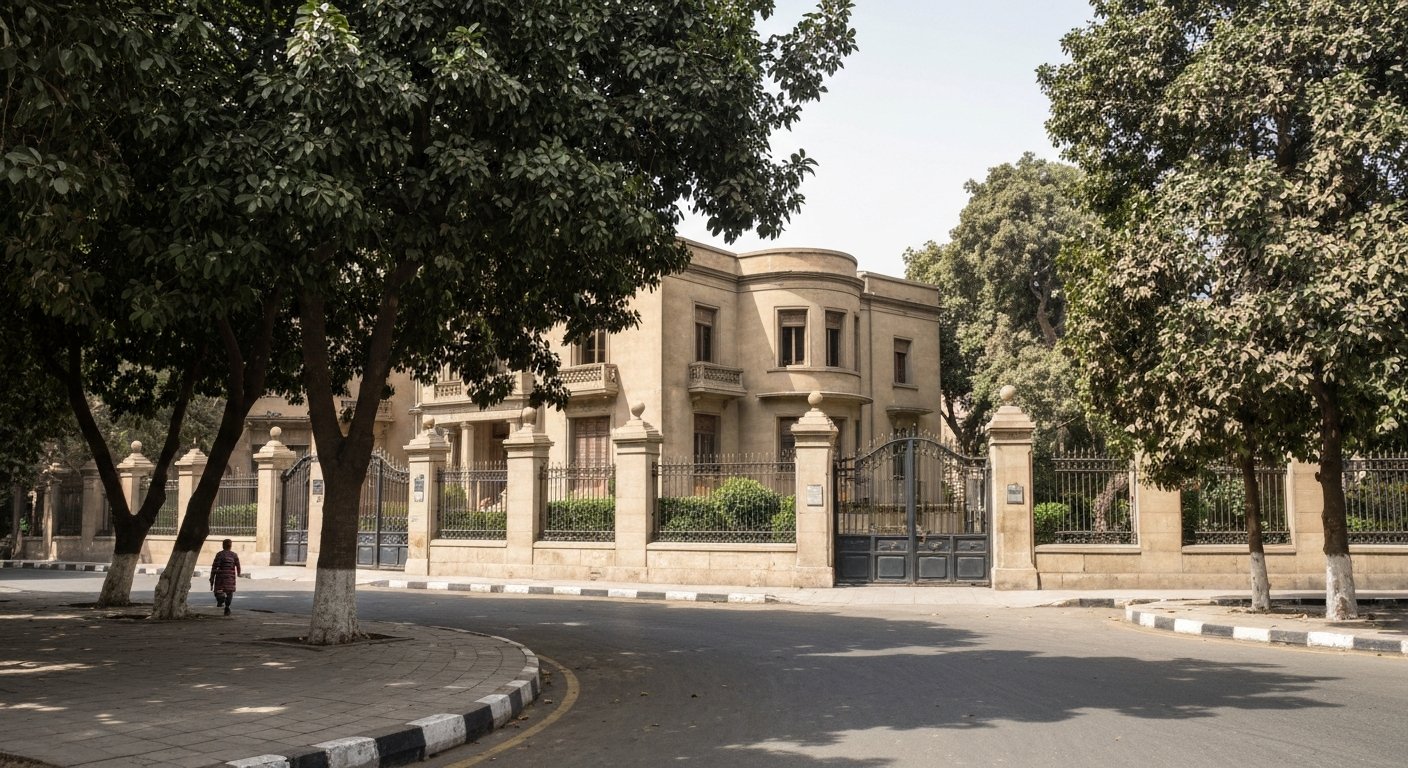
Garden City is known first for the idea of it: an early-20th-century garden suburb laid out for Cairo’s pashas and princes, with no grid, no straight roads, and a deliberate sense of retreat. Lamba’s looping, hexagon-based streets were meant to create calm, and they still do. Behind the gates, the surviving villas and mansion blocks run from Art Nouveau to Art Deco, with the occasional grand house now serving as an embassy or ministry. It is not a neighbourhood that performs for you; it is one that reveals itself as you walk, slowly, and let the curves do their work.
The second thing is the diplomatic gravity. Garden City is Cairo’s embassy quarter, and you feel it in the heavy but oddly reassuring police presence, the checkpoints on corners, the streets that seem to end without warning. The British Embassy sits on Ahmed Ragheb Street, the United States Embassy anchors the area, and the Italian, Canadian and other missions are scattered through the maze. Tawfik Diab Street, once Latin America Street, runs between the US and British compounds and has been closed to traffic for two decades. It is one of those urban oddities that tells you everything about the place: this is a district where security has become part of the architecture.
The third thing is the water. Garden City’s western edge is the Corniche el-Nil, and the mood changes the moment you reach it. The streets stop whispering and the river takes over: families out in the evening, felucca touts calling from the docks, roasted-corn carts smoking in the dusk, the low gold light that Cairenes seem to reserve for the Nile. For all its embassies and five-star polish, Garden City still belongs to the waterfront. It is where people come to look out, not to be seen.
And then there is the scale. Residentially, it is thin now, with barely five thousand people living here, which means the neighbourhood goes sleepy once offices close and the hotel terraces take over. That is why Garden City works so well as a base. It gives you quiet, river views, and a ten-minute walk to Tahrir when you want Cairo’s noise back.
Plan your Cairo trip
Live prices from our booking partners.
Guests & rooms
Free cancellation on many rooms. We may earn a commission when you book.
Where to eat & drink
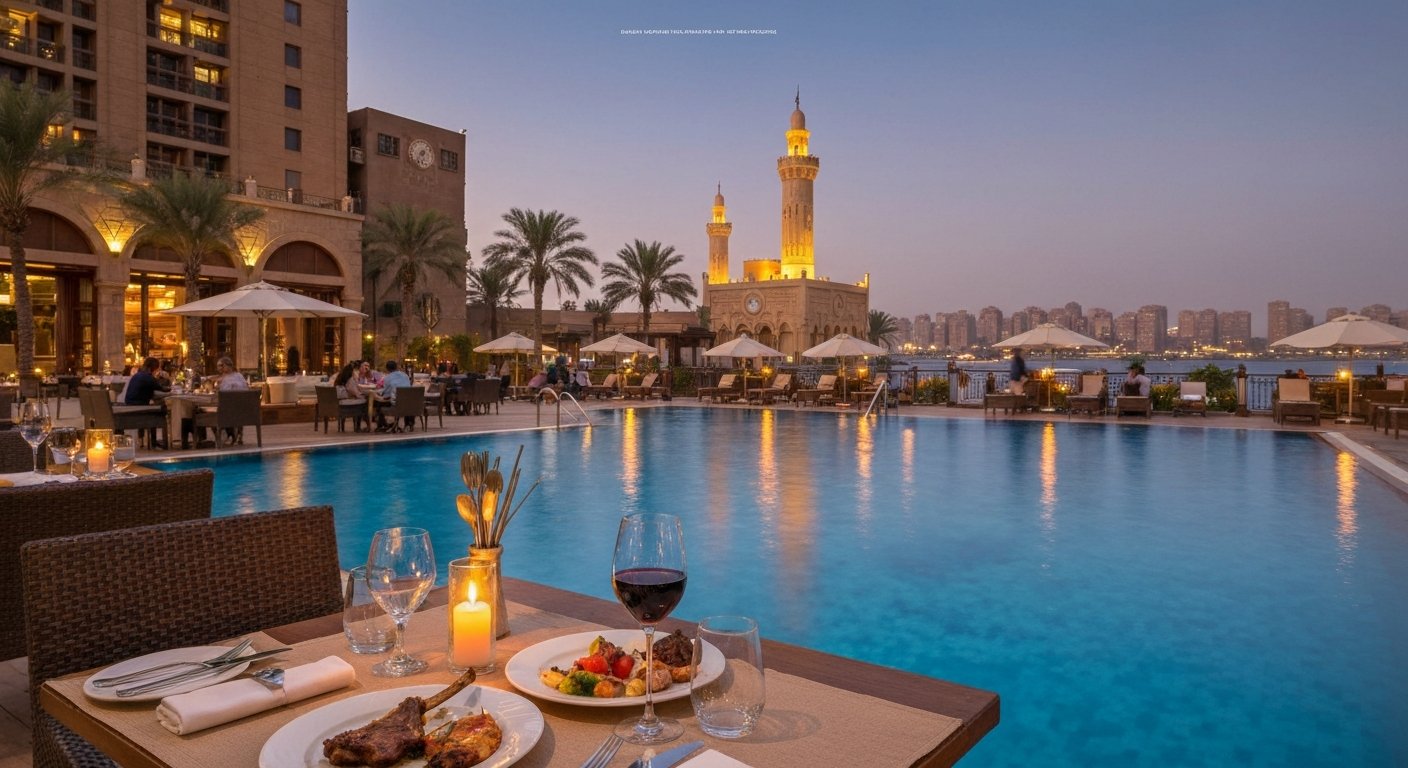
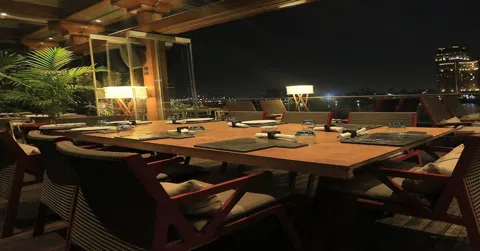
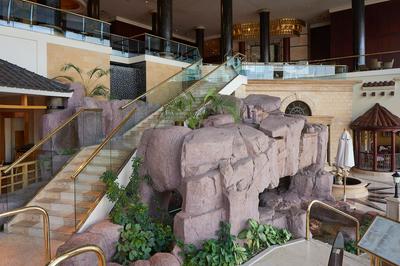
Garden City’s dining life is led by its hotels, and in this case the hotel dining is the point, not the compromise. At the Four Seasons Cairo at Nile Plaza, the spread is almost a miniature city of its own. Byblos is the room people speak of in Cairo’s Lebanese circuit: mezze, charcoal-grilled lamb, seafood, and a poolside setting that makes dinner feel suspended between water and skyline. 8 turns toward Cantonese and dim sum with Nile views. Riviera leans into handmade pasta and seafood, while Bullona brings a more modern Mediterranean energy, with a DJ-led evening buzz that feels calibrated for the river. And then there is Zitouni, open 24 hours, where the Egyptian kitchen is the whole argument: shish barak dumplings, homemade keshta ice cream, and a Nile terrace that makes even a late-night meal feel ceremonial.
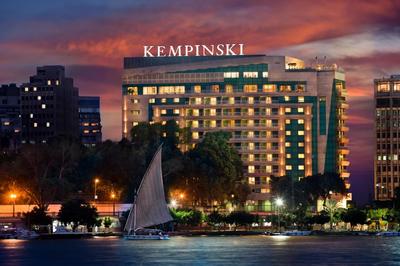
A few doors along, the Kempinski Nile Hotel on Ahmed Ragheb Street offers a slightly different mood. Osmanly is the one to know if you want Ottoman-Turkish cooking done with real confidence; its signature hünkar beğendi — lamb over smoked-aubergine purée — is the dish that stays in the memory. The Blue Restaurant & Grill is the hotel’s Italian-Mediterranean answer, more relaxed, more broadly useful, and still anchored in the same riverfront luxury.
Not everything here is sealed behind a lobby. Taboula, at 1 Latin America Street next to the Canadian Embassy, is the independent name that Garden City locals and in-the-know diners keep returning to. It is casual, Lebanese, long-running, and a sister of Amman’s Fakhr El Din, with a mezze spread that regularly puts it among the city’s best. It has the easy confidence of a place that does not need to shout.
Right on the Corniche in front of the Four Seasons, Il Nilo offers something more modest and, in its way, more endearing: reasonably priced Italian, Nile views, and a genuinely eccentric garden of wandering peacocks. In a district of polished dining rooms and security barriers, that detail matters. It reminds you that Cairo still has room for a little theatre that is not entirely scripted.
For breakfast, Garden City’s most beloved ritual is not plated at all. It is Mahrous, the legendary sidewalk ful and taameya cart at 4 El Haras Street by the US Embassy garage. Go early, join the queue, and eat standing up like the city intends. For a quick coffee and sandwich on the Downtown edge, Hegazy is the long-running stop that keeps the neighbourhood connected to the city beyond its gates.
Going out
Nightlife in Garden City is less about a scene than a vantage point. The best perch is the Jazz Bar on the tenth floor of the Kempinski Nile Hotel, a clubby, low-lit room with full Cairo-skyline windows and live music. It has the feeling of a place where the evening is meant to be stretched rather than spent. On the same hotel’s roof, The Rooftop opens the whole river out in front of you, a late-running terrace where the city looks calm enough to believe in.
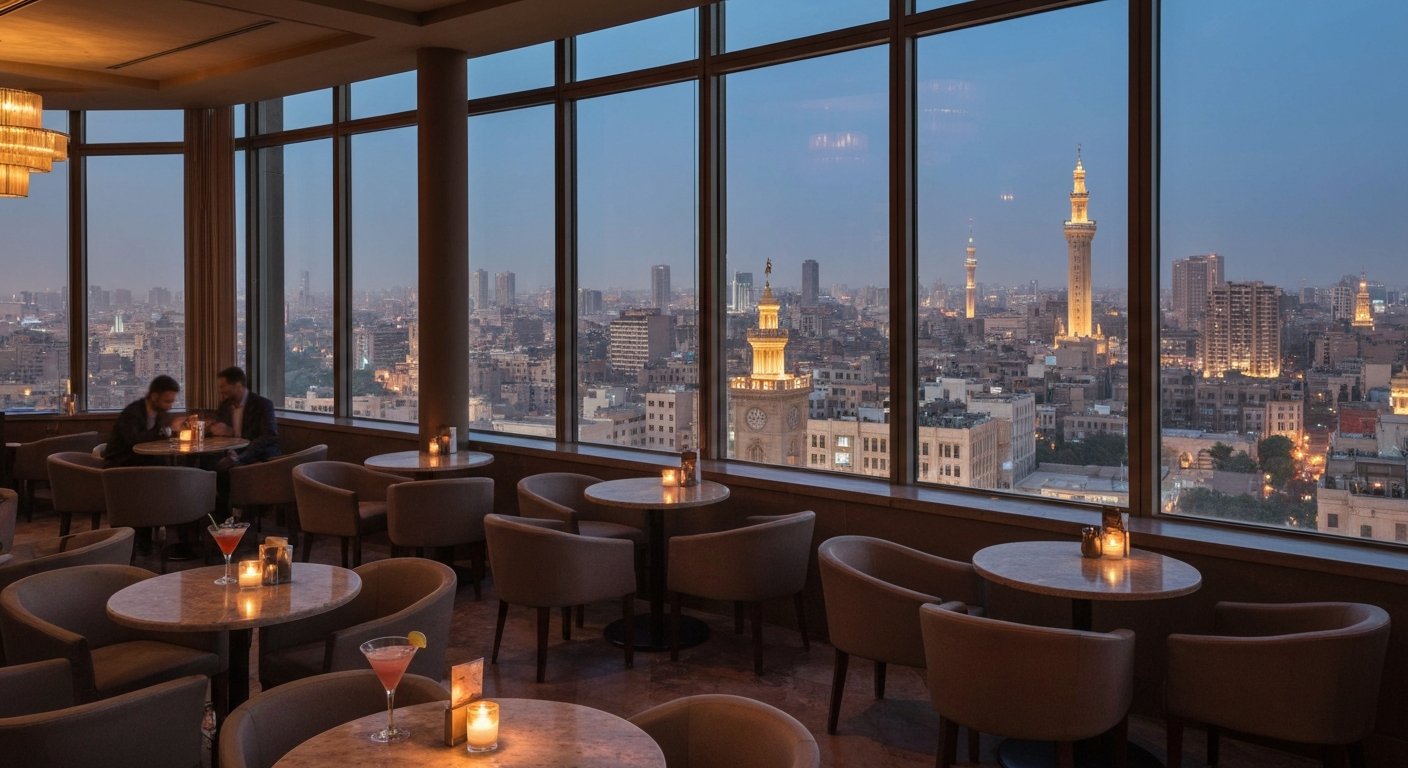
At the Four Seasons Nile Plaza, The Bar is the elegant counterpoint: Art-Deco styling, nightly live piano, and cocktails that belong to a more formal hour. La Galerie is softer, part cafe-lounge, part nightcap room, with Egyptian art around you and the feeling that you have wandered into the hotel’s quieter memory.
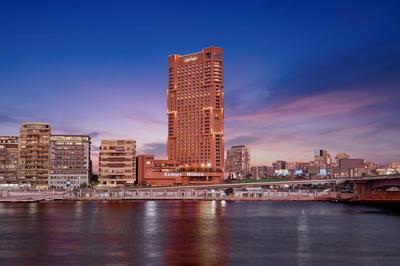
The Grand Nile Tower, formerly the Grand Hyatt and now the Hilton Cairo Grand Nile, adds another angle on the water. Sitting at the tip of the river island, it offers an all-Nile-view outlook and a rotating restaurant high up the tower, worth it for the panorama at sunset. But Garden City is not a bar-hopping neighbourhood. After the hotel terraces, the real night out is usually a short cab or a walk across the Nile to Zamalek’s bars and Downtown’s old cafes and koshari joints. Here, you start the evening gently, with the river in front of you and the city somewhere beyond the glass.
Things to do / what to see
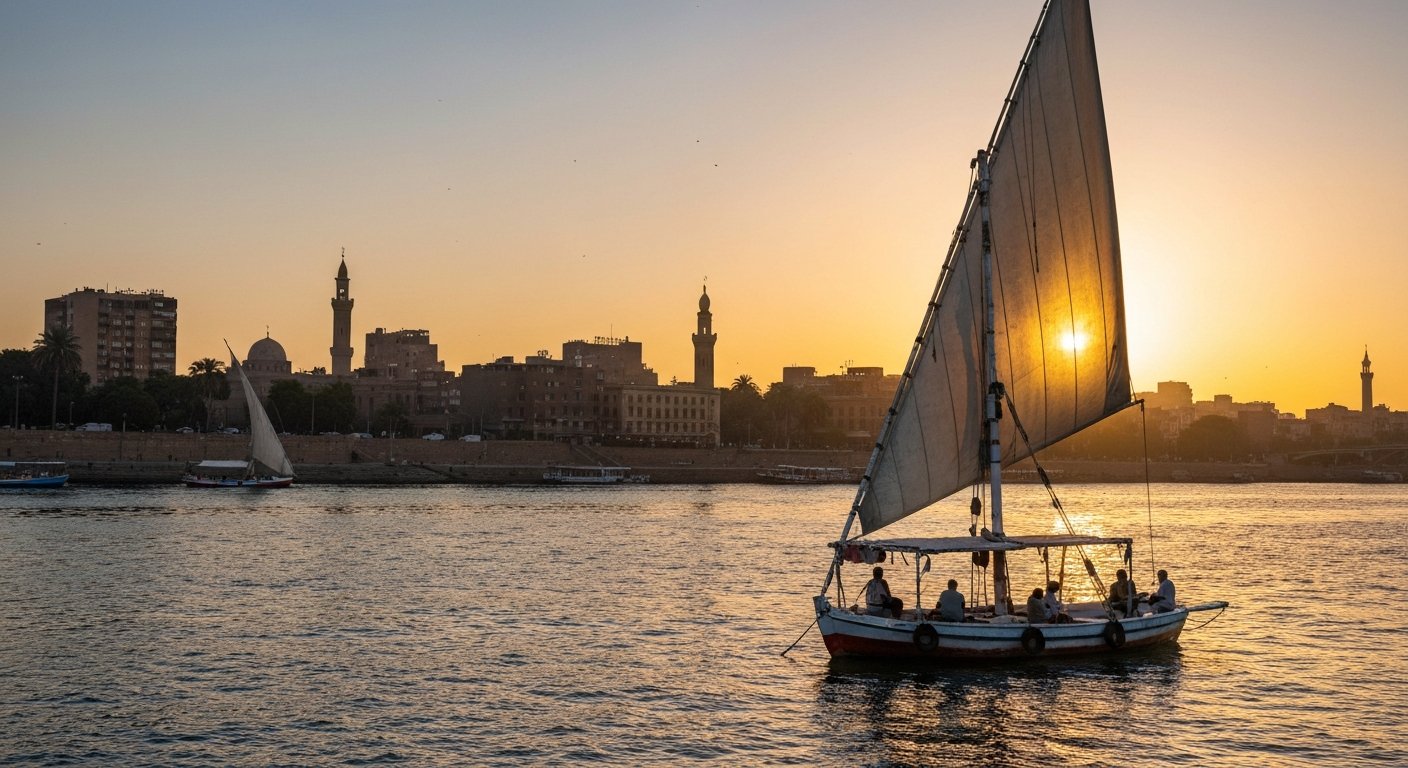
The signature Garden City experience begins on the water. Sunset feluccas moor right on the Corniche in front of the Four Seasons and the Grand Nile Tower, and the ritual is beautifully uncomplicated: hire the boat and captain by the hour, agree the price and duration before you step aboard, and drift. Roughly EGP 300–600 an hour for the whole boat, split across your group, is the grounding figure here. Bring your own snacks and drinks. Go late afternoon, when the river catches the gold and the skyline starts to soften.
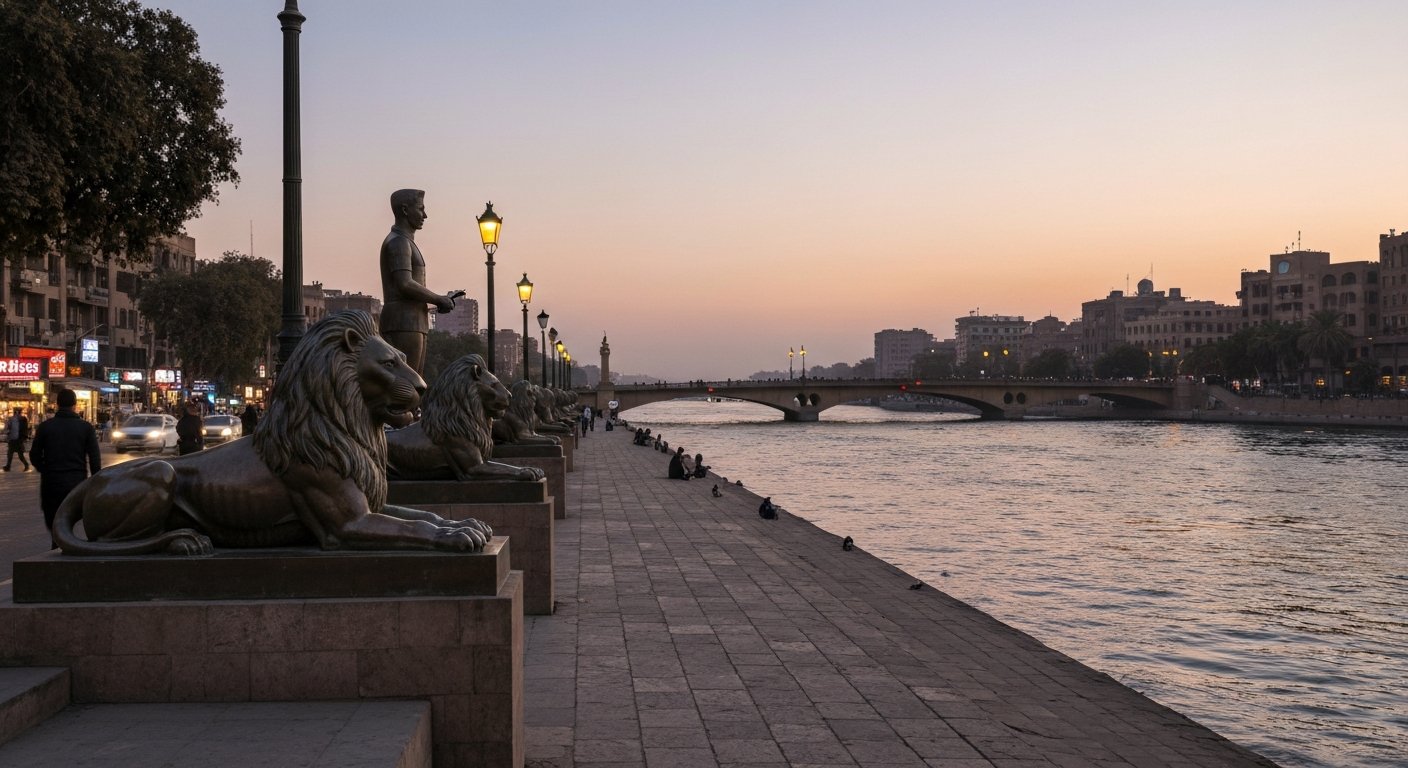
The second pleasure is free and better still: the Corniche el-Nil walk at dusk. This is where Garden City loosens its tie. The riverfront fills with movement, with corn carts and roasted-nut carts, with strollers and families and the steady drift toward the Qasr al-Nil Bridge. At the bridge itself, the four bronze lion statues are a classic Cairene gathering point, and the whole scene has that particular Cairo mix of romance and traffic, spectacle and routine.
Inside the neighbourhood, keep walking. Beit El-Sennari, a restored 1794 Ottoman-era house near Harat Monge, is worth the hunt, not least because it was once tied to Napoleon’s scientific expedition. It is one of those places that gives Garden City more depth than its hotel frontage suggests. The learned-society museums along Qasr al-Ainy — the old Geographical and Ethnological collections — reward the curious as well. They are not flashy stops, but they fit the neighbourhood’s temperament: cultured, slightly hidden, and more interested in continuity than display.
And then there is the neighbourhood itself, which is really the main attraction. Lamba’s plan was meant to be a maze, an English-garden-suburb idea for Cairo’s elite, and the best way to understand it is to walk without trying to control it. Follow the curves. Notice the shuttered old mansions, the embassy grand houses, the villas that still hold themselves upright with a kind of faded authority. Garden City is not a set-piece, but it is full of scenes.
Don’t miss in Garden City
Nile Corniche walks
Historic mansions
The final must-see is almost too obvious to mention, except that it is so useful: Tahrir and the Egyptian Museum are effectively on your doorstep. From the northern edge of Garden City, it is a ten-minute walk to the museum; go early, before the crowds and the heat thicken. That proximity is part of Garden City’s quiet genius. You can spend the morning among antiquities and be back on the river by sunset.
Shopping & markets
Garden City is not a shopping district, and that is one of the reasons it remains so pleasant. There is no market street, no mall to browse, no retail drag to turn the neighbourhood into an errand. What it does have is the practical strip along Qasr al-Ainy Street on the eastern edge, where pharmacies, bakeries, small grocers and everyday shops keep the district functioning. For anything more polished, the boutiques and gift shops inside the Four Seasons and Kempinski will cover the basics.
For real shopping, you move. Downtown is a few minutes north, where the old arcades around Talaat Harb and Qasr al-Nil Streets still sell everything from vintage stationery and books to leather and belly-dance costumes, and the famous Groppi cafe keeps trading at Talaat Harb Square. If you want the full bazaar experience — spices, brass, lanterns, souvenirs — take a short taxi to Khan el-Khalili in Islamic Cairo. Garden City is the quiet base you return to after shopping, not the place you do it.
Where to stay in Garden City
Garden City’s real draw is that it lines up three major Nile-front five-stars almost shoulder to shoulder, each with river views and each within a ten-to-fifteen-minute walk of the Egyptian Museum and Tahrir. The Four Seasons Cairo at Nile Plaza is the polished, restaurant-heavy flagship, with two pools and the strongest dining concentration in the neighbourhood. The Kempinski Nile Hotel on Ahmed Ragheb Street is the smaller, more intimate luxury option, known for its rooftop, its tenth-floor Jazz Bar and the kind of personal service that makes a short stay feel more tailored. The Grand Nile Tower, formerly the Grand Hyatt and now the Hilton Cairo Grand Nile, sits dramatically at the tip of the river island so that essentially every room faces water.
Ask specifically for a Nile-view room in any of them. The sunset over the river is the entire point of staying here, and a city-facing room would waste the address. Prices are firmly at the luxury end, and there is very little true budget or mid-range stock inside Garden City itself, which is why bargain-hunters usually look north to Downtown. For comfort-seekers, though, this is one of Cairo’s most satisfying bases: central, quiet, and lined with water.
Hotels in Garden City
Our best-rated stays in this neighbourhood. Prices are approximate “from” rates — confirmed at the provider when you continue. We may earn a commission if you book through our partners — at no extra cost to you.
In this area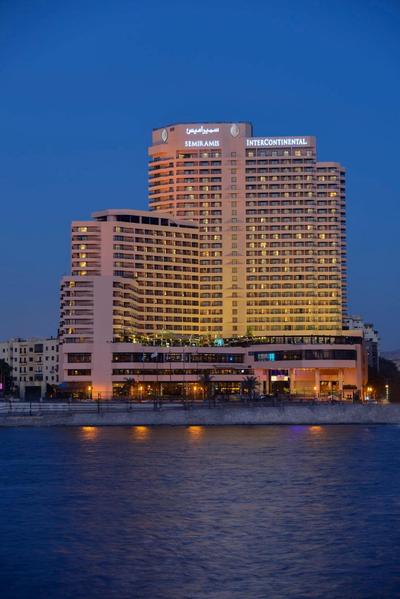 In this area
Garden City
InterContinental Cairo Semiramis by IHG
8.6· 3,658 reviews
approx. from£333 / nightSee prices
 In this area
 In this area
 In this area
Garden City
Four Seasons Cairo At The First Residence
9.2· 1,630 reviews
approx. from£692 / nightSee prices
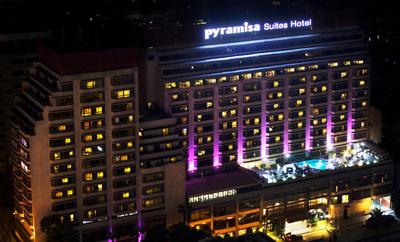 In this area
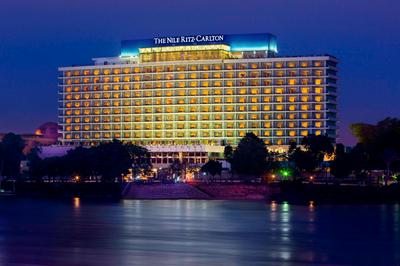 In this area
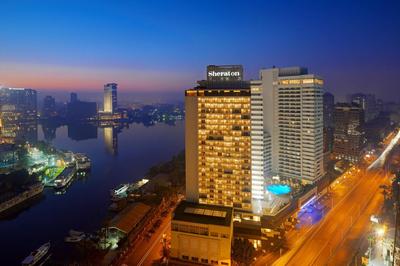 In this area
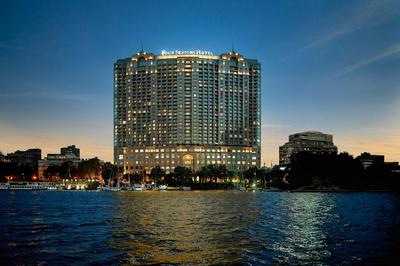 In this area
Garden City
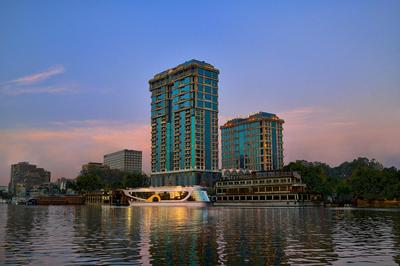
Four Seasons Hotel Cairo at Nile Plaza
9.2· 1,824 reviews
approx. from£640 / nightSee prices
 In this area
 In this area
 In this area
Getting around
Garden City is compact and central, but it is made for walking rather than driving. The curving one-way streets, the embassy-gated blocks and the occasional road closure can turn even a short hop into a small puzzle, so navigate by the Corniche and Qasr al-Ainy Street rather than by house numbers. Even taxi drivers get turned around here. That is not a flaw so much as a feature of the plan.
The Egyptian Museum and Tahrir Square are a flat 10–15-minute walk north along the river, and Zamalek is either a walk or a short cab ride across the Qasr al-Nil Bridge. For the metro, Sadat at Tahrir — the interchange of Lines 1 and 2 — is the most reliable stop, and Saad Zaghloul on Line 1 sits just to the south. Uber and Careem work well and remove the guesswork; if you use street taxis, agree the fare in advance. Expect roughly 45–75 minutes by car to the Pyramids of Giza and around 45 minutes to an hour to Cairo International Airport, both heavily traffic-dependent. You do not need a car here. Walk the neighbourhood, walk the Corniche, and let the city expand outward from the river.
Gallery
Garden City in pictures
Garden City — your questions
Is Garden City a good area to stay in Cairo?
Yes — if you want Nile-view luxury with a central, walkable base. It has three riverside five-stars, the Egyptian Museum and Tahrir about a 10–15-minute walk away, and it is noticeably quieter and greener than Downtown. The trade-off is that most of the best dining sits inside the hotels, with very little budget stock or street-level nightlife.
Is Garden City safe?
It is among the safest neighbourhoods in Cairo. The embassy concentration brings a visible police presence, checkpoints and gated streets, so the area feels secure and controlled. Use normal big-city care on the Corniche at night, but most visitors notice how calm it is.
Where do you eat in Garden City if you do not want a hotel restaurant?
Taboula at 1 Latin America Street is the standout independent choice, especially for Lebanese mezze. Il Nilo on the Corniche does value Italian with Nile views, and Mahrous at 4 El Haras Street is the essential sidewalk breakfast stop for ful and taameya. Hegazy on the Downtown edge is handy for a quick sandwich, juice or coffee.
How do you get a felucca ride from Garden City?
Go to the Corniche docks in front of the Four Seasons or the Grand Nile Tower, where the traditional sailboats moor. Hire the whole boat with captain by the hour — roughly EGP 300–600 split across your group — and agree the price and duration before boarding. Late afternoon into sunset is the best time, and it helps to bring your own snacks and drinks.