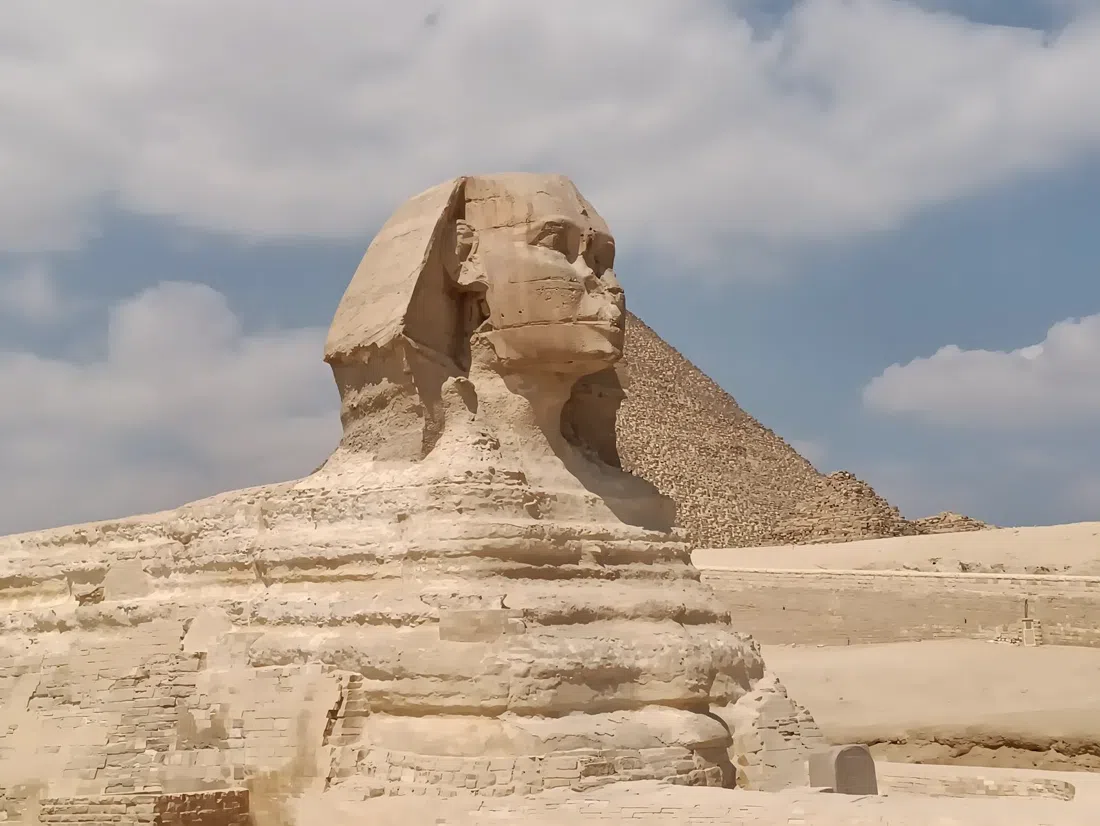
At ten past eight in the morning the low sun comes straight down the causeway and the face is lit like a portrait. Every tool mark on the chin is legible, the limestone is the colour of weak tea, and the patched shoulders throw their own shadows. Two hours later the same face is flat, grey and fenced off behind three coach parties taking the same photograph. The Great Sphinx does not reward a late start, and most of what is written about reaching it is now out of date.
What you are actually looking at
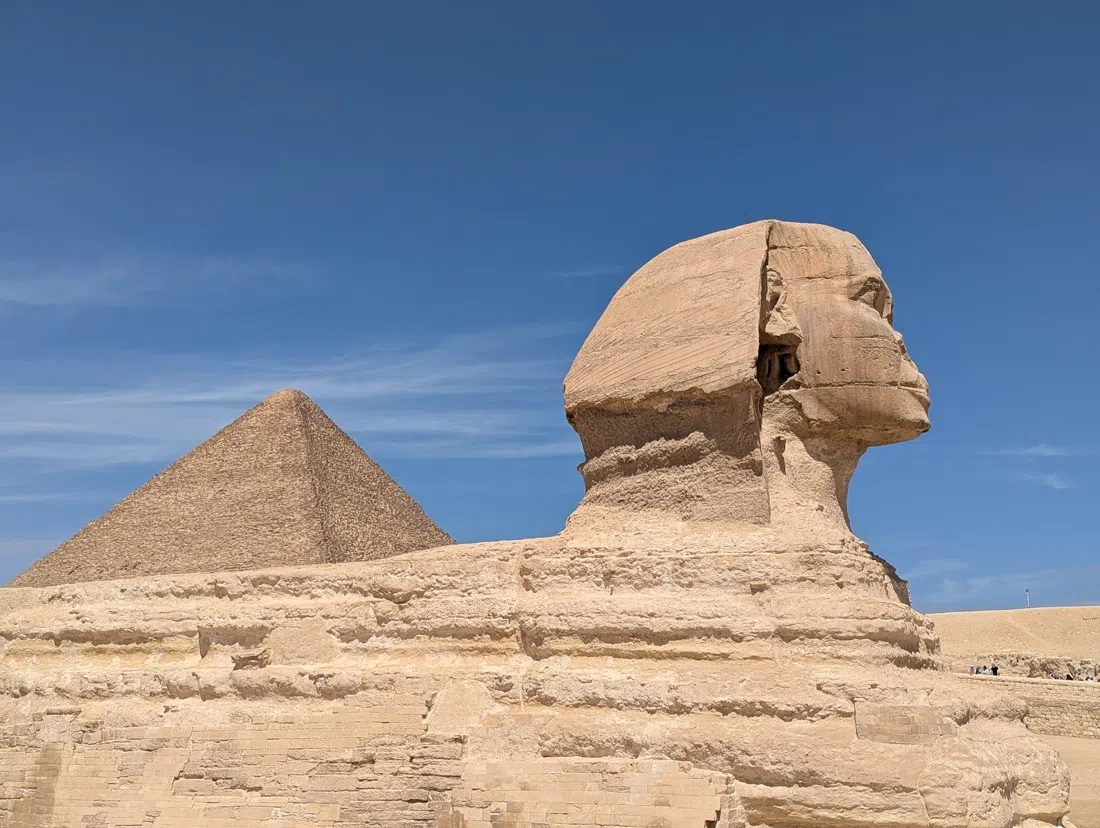
The Great Sphinx of Giza (east end of the plateau, above Nazlet El-Semman) is roughly twenty metres of lion cut from the bedrock it still sits in, dropped into a quarried hollow that works like a dry moat. You see it from a narrow railed terrace at the north-east corner, looking down the length of the body towards the paws. You cannot walk into the enclosure, you cannot stand at the paws, and you cannot touch it. That has not been possible for years, and no guide, however well connected, will get you in.
The terrace is the whole viewing experience and it is small. When two or three groups land together it congests badly, which is why guided parties are walked through quickly rather than left to linger. Plan for ten minutes if it is busy, fifteen if you have the rail to yourself. The Sphinx is included in the EGP 700 plateau ticket (EGP 350 student, EGP 60 for Egyptians) and there is no separate Sphinx fee. The ticket covers everything on the plateau, so nobody is overcharging you.
Orientation is the thing that matters. The Sphinx faces due east, so the face is only properly lit in the first couple of hours after the 08:00 opening, and by late morning you are photographing a silhouette with the sun behind the head. If the lit face is why you came, the gate time is not negotiable.
The fifteen minutes nearly everybody skips
Directly beside the paws sit the Sphinx Temple and Valley Temple of Khafre (east end of the plateau, below the terrace), and this is the single most-missed thing at Giza. There is no ticket gate; the plateau ticket covers it. Most coach itineraries leave it out, so it stays quiet while the terrace above is three deep. The walkways are wide stone, so groups move through it easily.
What you get is tactile: huge red-granite pillars, squared and polished, standing where Fourth Dynasty masons set them. It is the closest you come to touching stonework of that age anywhere on the plateau, and the route takes you past the Sphinx's paws at ground level, which reads as a completely different monument from the terrace view. Fifteen minutes, no queue, no extra cost. Do it immediately after the terrace while you are already at that end.
Where the day actually starts now
The Giza Plateau Visitor Centre (Fayoum Road entrance, south side of the plateau) is the change that trips up every older guide. This is now the main gate: private cars and tour coaches no longer drive up onto the plateau at all. There is a large car and coach park, security screening lanes, step-free shuttle boarding and wheelchair access, and you buy the EGP 700 plateau ticket here by card. Entry to the centre itself is free, and there is an air-conditioned orientation film, the obvious shelter if sand or heat turns your visit.
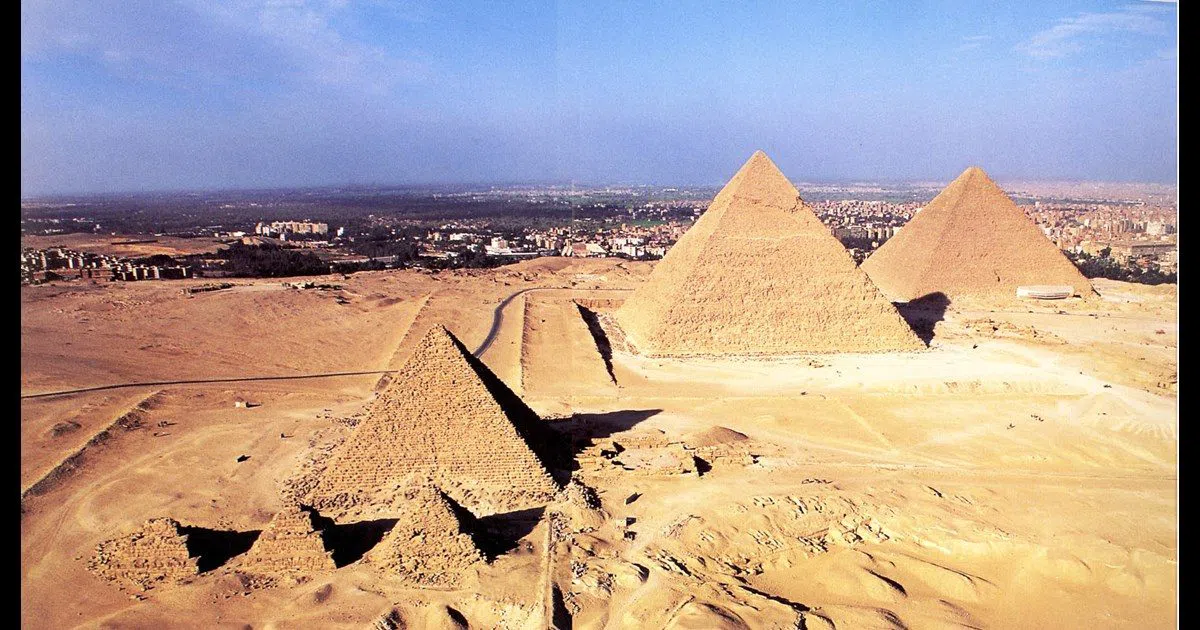
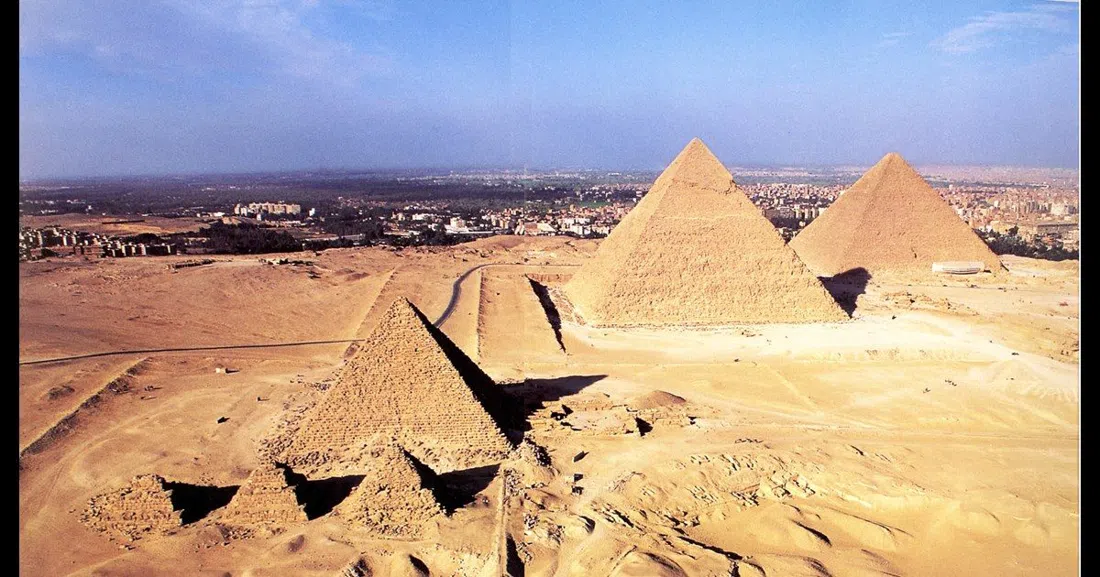
From the gate, everyone moves by electric shuttle, included in the ticket. The loop reaches Panorama Point (southern plateau viewpoint) before it reaches the Sphinx end, and that is the argument for not sprinting straight to the Sphinx. Panorama is the shot everyone actually wants, the pyramids stacked in one frame, and it is both best lit and least crowded in the first hour. It is also the only piece of real infrastructure out on the sand: toilets, an ATM, a café and souvenir stalls, all free to use with plateau entry.
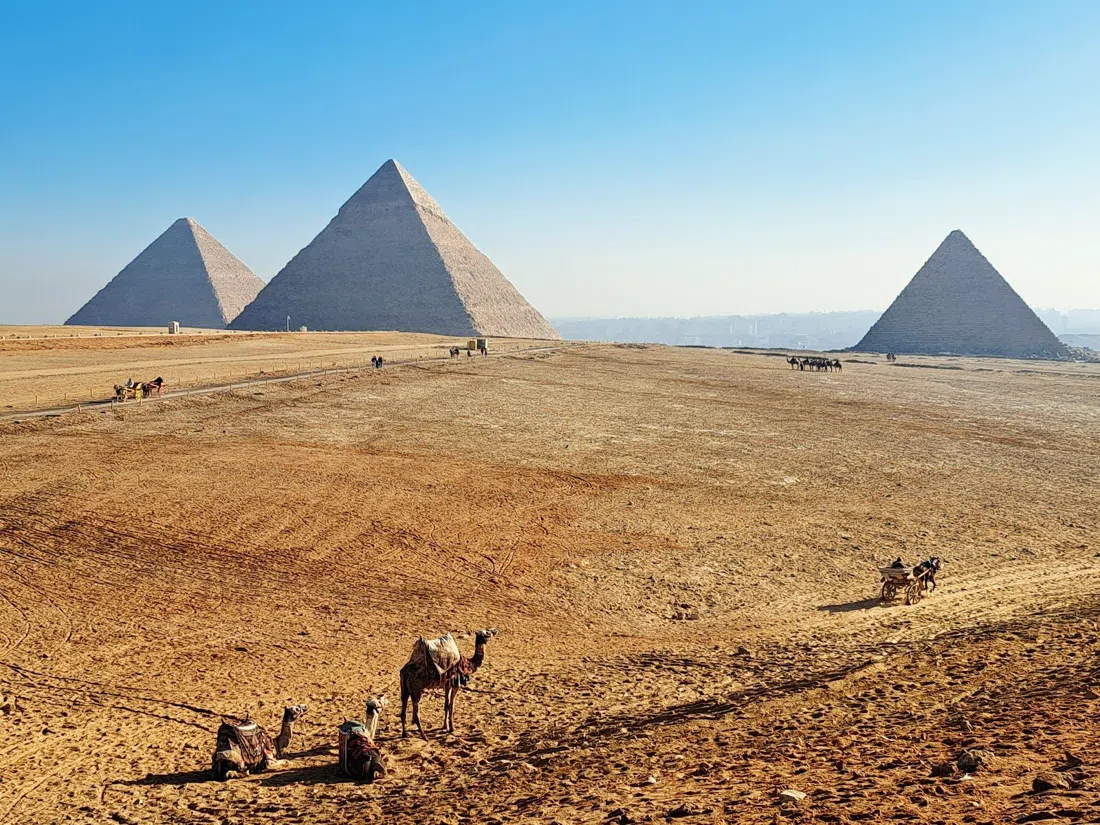
The efficient opening sequence is therefore gate at 08:00, shuttle to Panorama, ten or fifteen minutes there, then shuttle to the east end and stand at the Sphinx terrace by around 09:00 while the face is still properly lit. Both things happen inside the good light.
Going inside the stone
The interiors are separate tickets and the only part of a Giza day that genuinely sells out. The Great Pyramid of Khufu (interior passages, central plateau) costs EGP 1,000 adult or EGP 500 student on top of the plateau ticket, and roughly 300 tickets a day are released in two batches, at about 08:00 and about 13:00. A large group cannot all go in; guides usually send willing members in pairs. Know what you are buying: a stooped climb through still, hot air, with no photography worth the effort at the end of it. It is the wrong purchase for anyone claustrophobic, anyone with bad knees, and anyone who wants pictures.
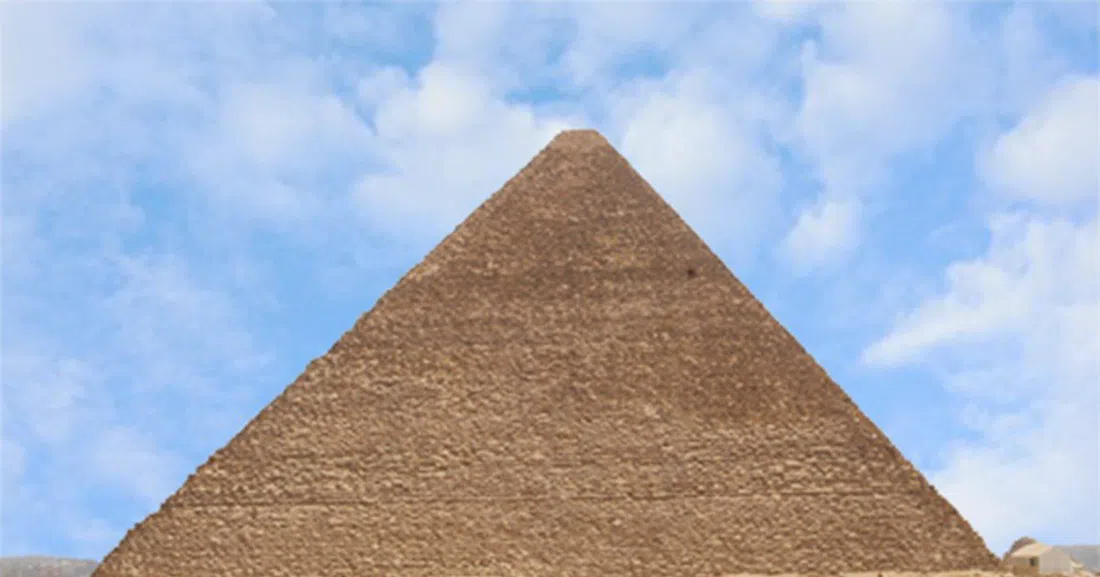
The Pyramid of Khafre (interior passage, central plateau) is the cheap alternative at EGP 100-280 on top of the plateau ticket, and it takes small groups fine, because the passage is single-file and a coach party queues in rotation. One caveat catches people out: the authorities keep only two of the three pyramid interiors open at a time, so Khafre or Menkaure may simply be shut on the day you turn up. Ask at the visitor centre rather than walking across the sand on faith.
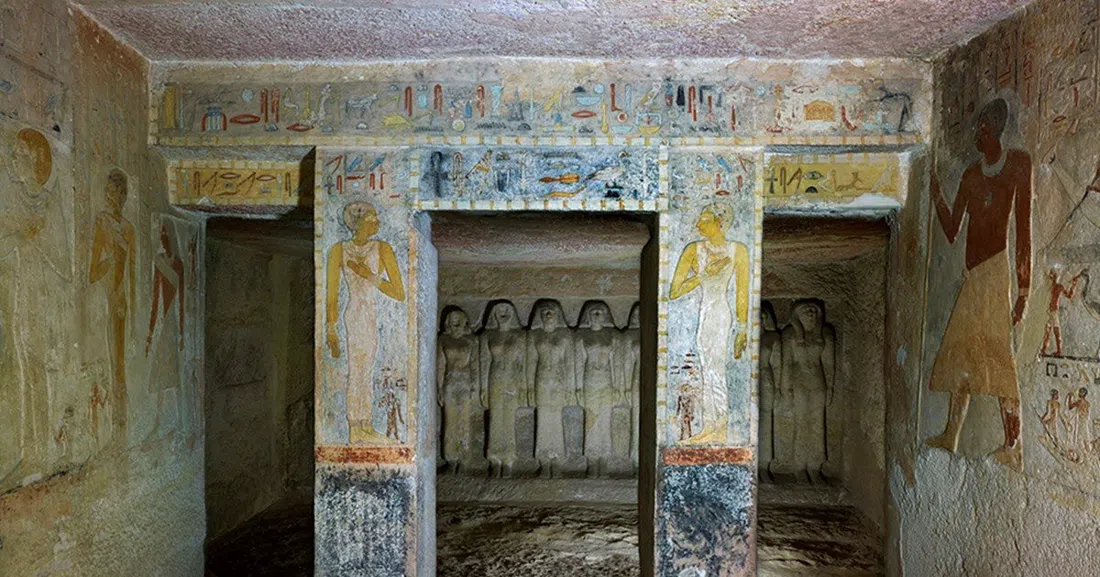
The Tomb of Queen Meresankh III (rock-cut tomb, eastern plateau) is the one to add. EGP 200 adult, EGP 100 student, plus the plateau ticket, sold as its own ministry ticket. The chambers are small, so it works for a handful of people at a time and not for a full coach. It is fully indoors and cool, and it is the only place at Giza where you see Old Kingdom painted relief in situ rather than behind museum glass. That makes it both the best midday-heat option and the best wet-weather option actually on the plateau.
What to do when the weather wins
Giza is a dust-and-limestone plateau with no shade, so the planning question is where you go when the heat, the spring sand or a rare hour of rain makes the open ground pointless.
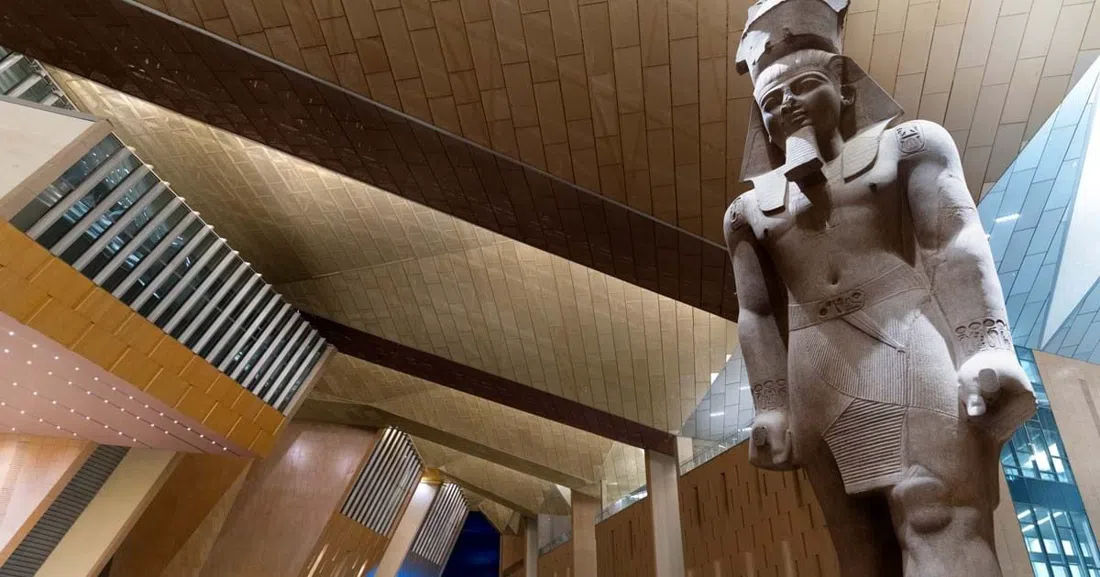
The heavyweight answer is the Grand Egyptian Museum (Fayoum Road side, two kilometres from the Sphinx). It runs on timed two-hour entry slots and has restaurants and cloakrooms, so it absorbs groups without strain, and it is comfortably half a day. Two practical traps. First, the on-site ticket office is shut and entry is online only, with a dated time slot and a QR code, so you must buy before you arrive. Second, the Tutankhamun galleries bottleneck from mid-morning, so take the earliest slot you can or a later afternoon one. Reckon on about EGP 1,450-1,590 for a foreign adult, all galleries included.
The Grand View Cafe & Restaurant (opposite the museum) is the obvious hold spot between a morning on the plateau and an afternoon museum slot, because it is open 24 hours every day of the year with both indoor and roof seating. Most dishes run EGP 70-200, and they do set packages from about EGP 150 a head for parties, which is why tour leaders park groups here.

At the other end, Pizza Hut Giza (Sphinx entrance branch, Nazlet El-Semman) earns its place in an honest guide. It sits directly opposite the Sphinx gate, needs no ticket and no booking, has air conditioning, and the view from the upstairs window genuinely is one of the best in Giza. Seating is limited, so a coach party will not all get a window. I do not hand out verdicts on a kitchen you already know. You are buying a window, and when the site has shut or the weather has turned, it is the cheapest one in the city.
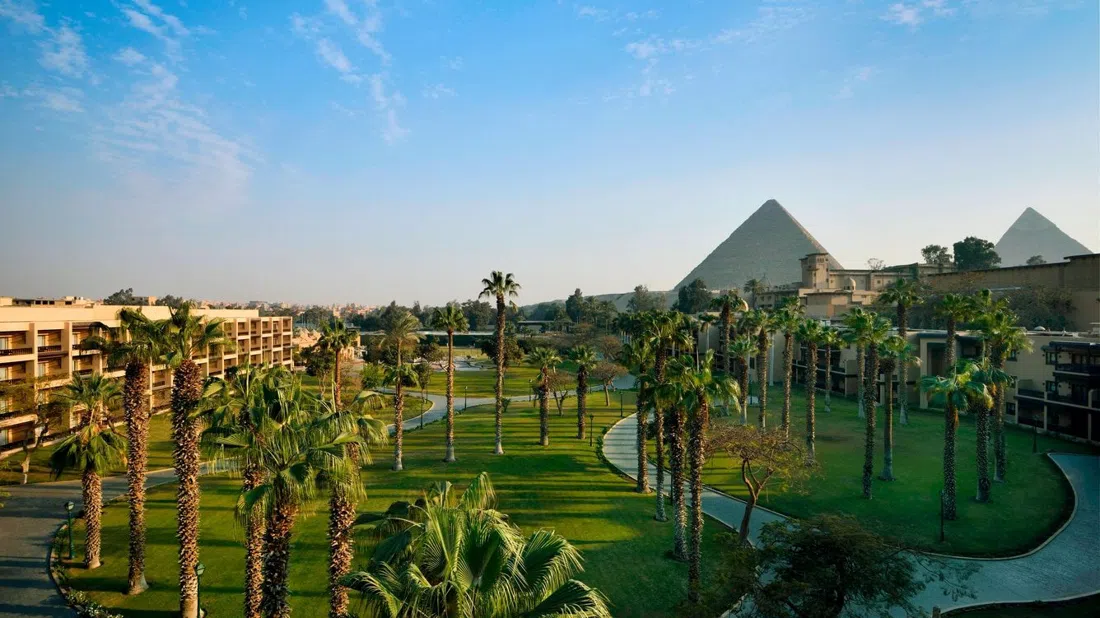
The Marriott Mena House Cairo (139 Pavilion, five-minute walk from the old Sphinx-side gate) is the dependable fallback at any hour. Non-residents are welcome, groups routinely eat here, and 139 Pavilion runs around the clock with indoor and terrace seating, which makes it the one safe answer for a wet afternoon or a late arrival. Buffet breakfast and à la carte lunch and dinner sit mid to high; rooms are premium.
Eating with the monument in the frame
Khufu's (on the plateau, near the Sphinx end) is the serious meal: Michelin-recognised cooking by Mostafa Seif and the only indoor, air-conditioned sit-down on the site with a pyramid in the glass. Reservations are strongly advised and effectively required for groups, you need a plateau ticket to be there at all, and you arrive by the Fayoum gate shuttle like everyone else. It is expensive, around EGP 1,500 a head for breakfast and set lunch from about EGP 1,950, and there is a hard stop: last orders 15:00, no dinner at this site. I will not grade a kitchen off a single sitting, so take it as this. It is the one place on the plateau where lunch is a reason in itself rather than refuelling, and the 15:00 cut-off means you build the morning around it, not the other way round.
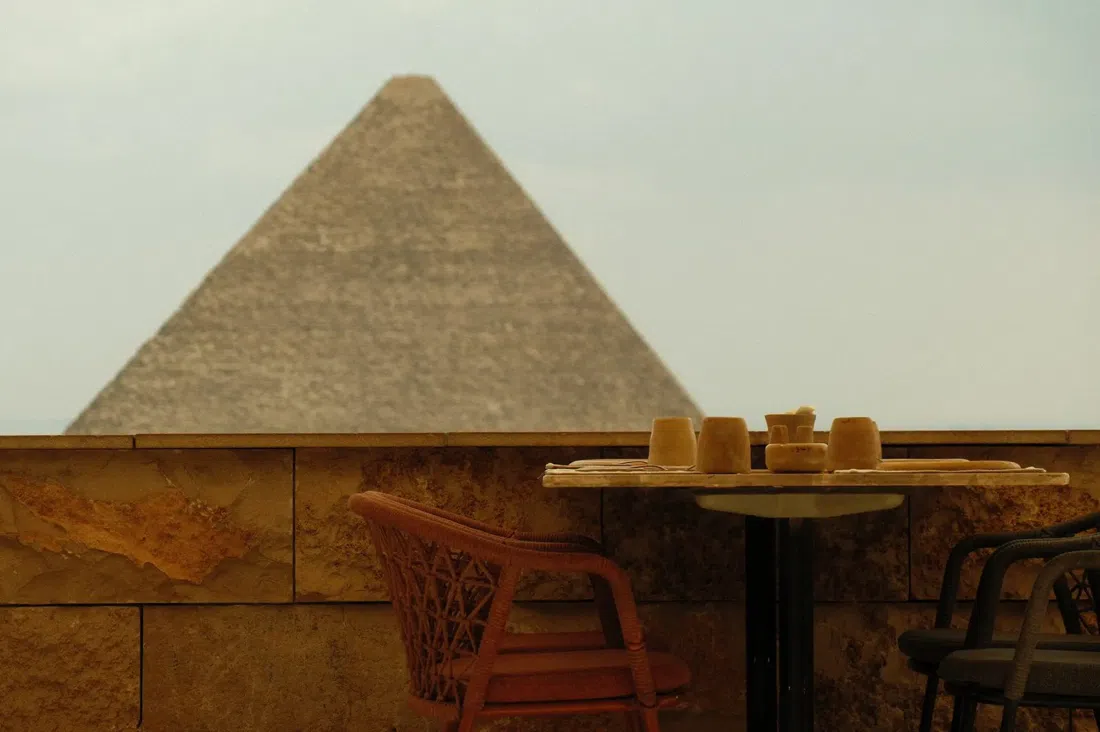
9 Pyramids Lounge (on the plateau, southern side) was the first restaurant ever built up here and remains the cheapest way to sit down with the nine-pyramid sightline, at roughly EGP 300-600 a head. It takes groups and walk-ins, and phone booking is normal for larger parties. The food is ordinary and the view is extraordinary. It closes with the site at around 17:00, so it is a lunch, never an evening.
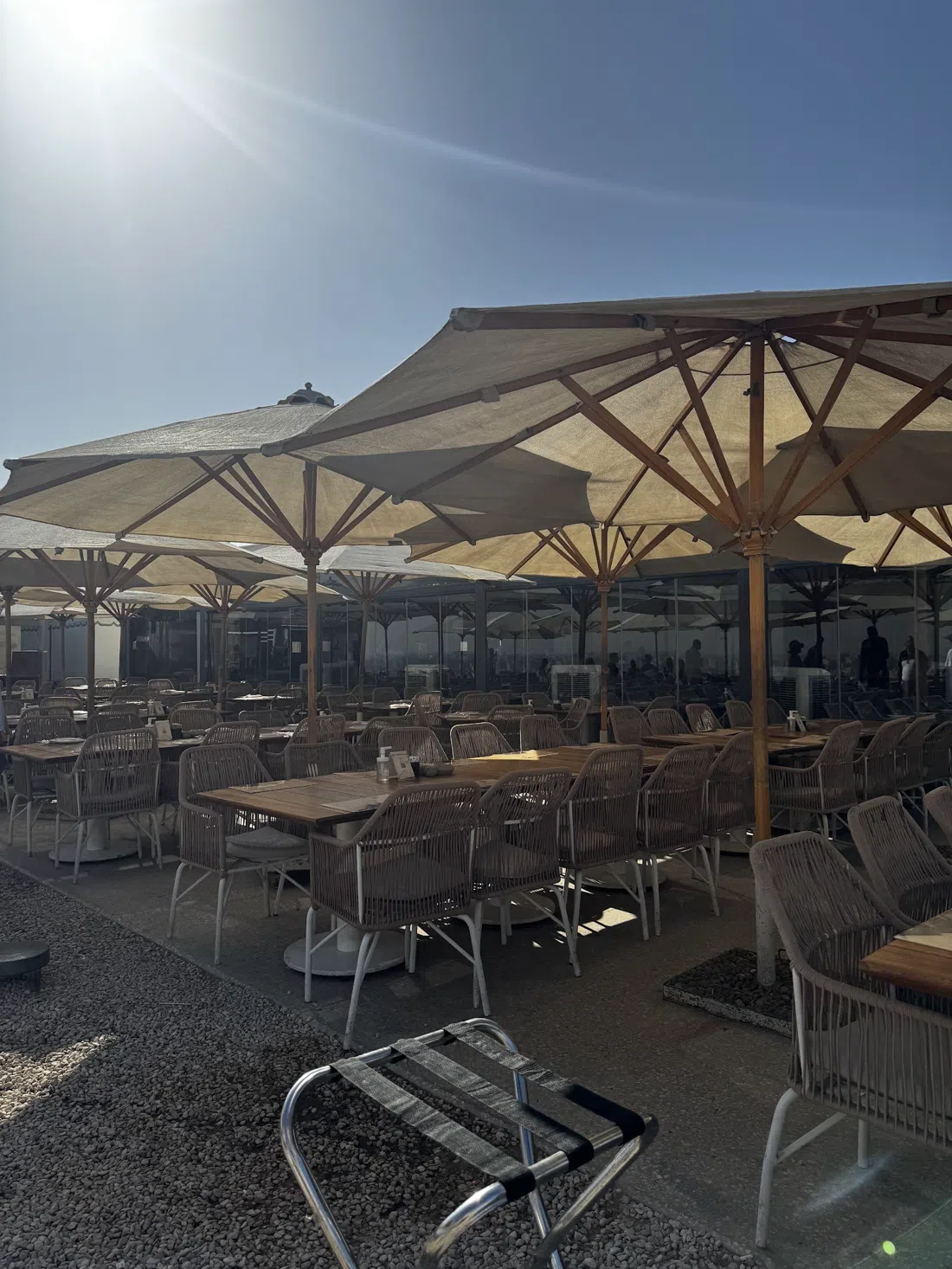
Mamlouk Pyramids Hotel rooftop restaurant (Nazlet El-Semman, four minutes' walk from the Sphinx gate) is worth naming for one reason: it is one of the very few vantage points that puts the Sphinx and all three pyramids in the same frame. Almost every rooftop advertised as a pyramid view shows only the pyramids. It is cheap to mid-range, walk-in friendly, and takes groups on the roof, but call ahead if you want a sunset table. Street level nearby is where Cairo's standing breakfast lives: ful medames (فول مدمس, slow-stewed fava beans, usually with cumin and good oil) and ta'meya (طعمية, the herb-green fava fritter Egypt makes instead of chickpea falafel). It is a better first meal than anything you will eat inside the gate.
Seeing the Sphinx after dark
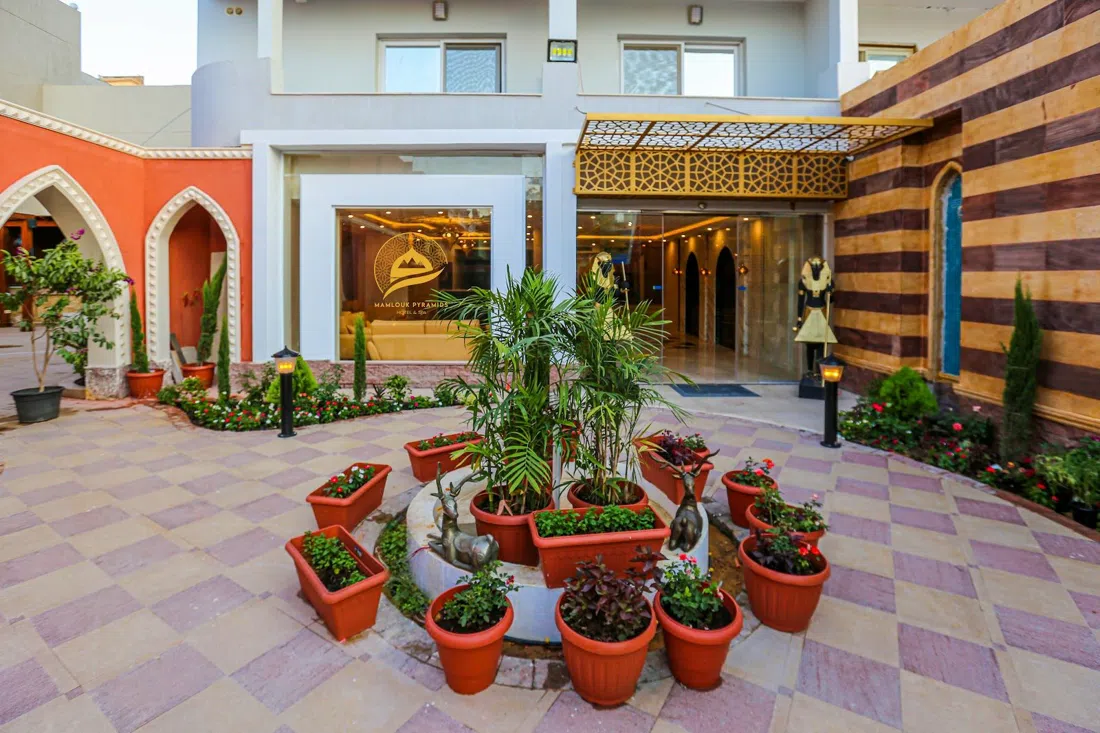
The Pyramids Sound and Light Show (amphitheatre at the east gate, Abu al-Hol Square) is the only way to see the Sphinx lit after dark, and it is the obvious answer to what you do with the evening. Tickets run about USD 20 standard, USD 26 VIP and USD 11 for children aged 6-12, with multiple language sessions nightly. Two honest caveats: the later session only runs if a minimum number of tickets are sold, except on Thursday, which is a full show regardless; and the seating is open-air, so this is the one item here that a cold or windy night actually ruins. The schedule also shifts with the season and during Ramadan, so confirm the sitting for the exact date rather than trusting a printed timetable.
The Sphinx's own neighbourhood
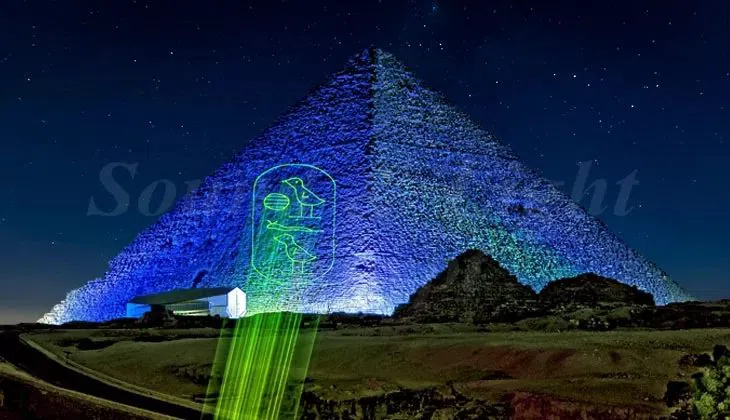
Nazlet El-Semman and Abu al-Hol (Sphinx) Square (immediately east of the plateau) is where the Sphinx actually lives. The east gate, the show amphitheatre and the cheap rooftops are all here, and it is free to walk. It is also worked hard by shop and ride touts, and independent walkers get noticeably more hassle than guided parties; that difference is real and worth factoring in if you are travelling alone or with children.
The ride situation is changing. Camel and horse rides here are being phased out in favour of the electric shuttles, operators have been pushed back into designated zones, and nothing is fixed-price. If you want a ride anyway, settle the price, the duration and whether the figure is per person or per animal before anyone gets on, and expect to haggle. For where to sleep, this area puts you minutes from the gate while central Cairo puts you near everything else. Compare both on the Cairo hotel search before you commit, because the trade-off is an early gate time against evenings with something to do.
Best time to go
By hour, the day runs itself. Be at the Fayoum Road gate for the 08:00 opening; shuttle to Panorama first while the light is low and the crowds are thin; be on the Sphinx terrace by about 09:00 for the lit face; then the Sphinx and Valley Temples at ground level. If you want Khufu's interior, you are aiming at the 08:00 or the 13:00 ticket batch and nothing else. From around 11:00 to 15:00 the open plateau is a grind, which is exactly when the Meresankh tomb, the visitor-centre film, lunch at Khufu's and a museum slot earn their keep. Late afternoon turns the western faces gold; after dark, the show.
By day of week, availability is not the issue, because the guided options here run seven days a week, so pick for crowds instead. The Egyptian weekend is Friday and Saturday, so the plateau carries more domestic visitors then, and Thursday is the night to choose if you want the full later show.
By season, this is an evergreen monument with a brutal summer. In the hot months anything outdoors after 11:00 is punishing and the indoor chain above becomes the plan rather than the backup. The cooler months are straightforwardly comfortable. Spring brings the khamsin sand, which flattens visibility and makes photography pointless for hours at a stretch, and that is the day the air-conditioned film and the museum save the trip. Rain is rare, but it kills the light and makes the limestone dust slick underfoot.
Is it worth it
Yes, but not as a ten-minute photograph. Judged purely on the terrace, the Sphinx is a short, fenced, crowded look at something you have seen a thousand times in print. Judged as a morning (Panorama in first light, the lit face at nine, the granite pillars at the paws, one interior, the painted tomb when the heat lands, the museum in the afternoon) it is one of the few sights that survives its own fame.
The numbers back that up without any need to rush: there are 14,819 traveller reviews across the bookable tours here, with the top tour rated 4.9 out of 5 from 6,168 reviews. That volume tells you the experience is delivered reliably, not that it will vanish tomorrow. On cost, the door route is EGP 700 for the plateau plus whatever interiors and tombs you add, while guided options start from 185 USD per person; the gap buys transport, a guide who knows which interiors are open today, the museum's online-only ticketing handled for you, and markedly less tout friction. If you are confident with ride-hailing and happy to buy your own museum slot, the door route is better value. If this is your first day in Egypt, or you are travelling with family or on a tight single day, the guided route removes exactly the frictions that spoil Giza.
It suits first-timers, photographers who can get up early, and anyone with mobility needs, since the step-free shuttle and the visitor centre have made the plateau far more manageable than it was. It does not suit anyone claustrophobic (skip the interiors entirely, you lose nothing essential) or anyone hoping for solitude at the terrace.
Practical notes
Transport. Use ride-hailing and name the Fayoum Road visitor centre, not "the pyramids". Drivers still default to the old Sphinx-side gate in Nazlet El-Semman, which is fine on foot from the Mena House end but wrong if you have a coach park and ticket desk in mind. Once inside, the electric shuttle loop is included in your ticket and is the only way to move around.
Cash. The plateau ticket is bought by card at the visitor centre. Everything else (stalls, rooftops, rides, the small tomb and interior tickets) runs smoother with Egyptian pounds in small notes, and there is an ATM at Panorama Point if you arrive short. Haggling is expected outside the gate and nowhere inside it.
Timing. Three to four hours is the realistic minimum for the plateau done properly; a full day if you add the Grand Egyptian Museum, and the museum slot must be bought online before you set out. Build around the 08:00 opening, the 13:00 interior ticket batch and the 15:00 last orders at Khufu's.
Budget. A lean day is EGP 700 for the plateau, EGP 200 for the Meresankh tomb and EGP 100-280 for Khafre's passage, with lunch at 9 Pyramids Lounge at EGP 300-600. A full day adds the EGP 1,000 Khufu interior, roughly EGP 1,450-1,590 for the museum, and about USD 20 for the evening show. For where this fits in a wider trip, see the Cairo guide.