Cairo's tourist maps insist the city was founded in 969 AD, but that date is a political claim dressed as history. Three centuries of Muslim settlement already stood on this stretch of the Nile before a Shi'a general planted his standard on the ground that became al-Qahira. What he and the caliphs who followed him built afterward is still legible today: a walled palace-city, laced with propaganda carved directly into stone, that a Sunni sultan and centuries of quiet gentrification only partly erased. This walk follows the seams: where the myth was written, where it was later scrubbed out, and what survived into 2026 against long odds.
Where Cairo's Islamic story actually begins
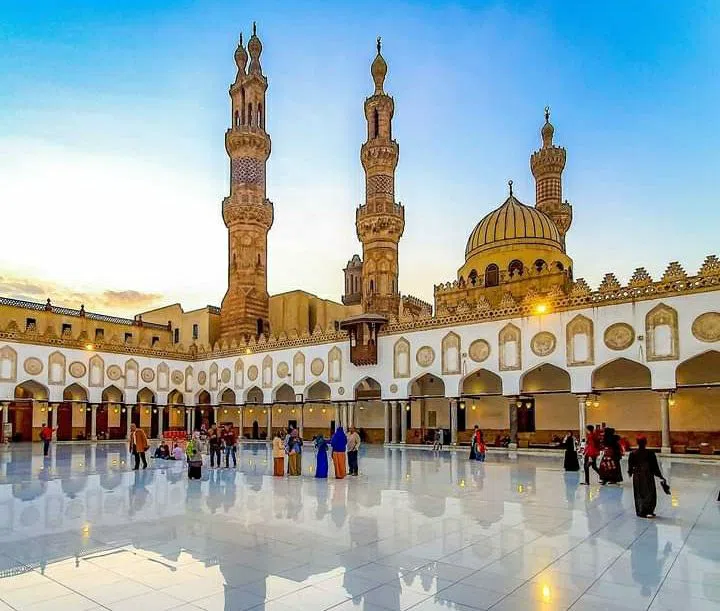
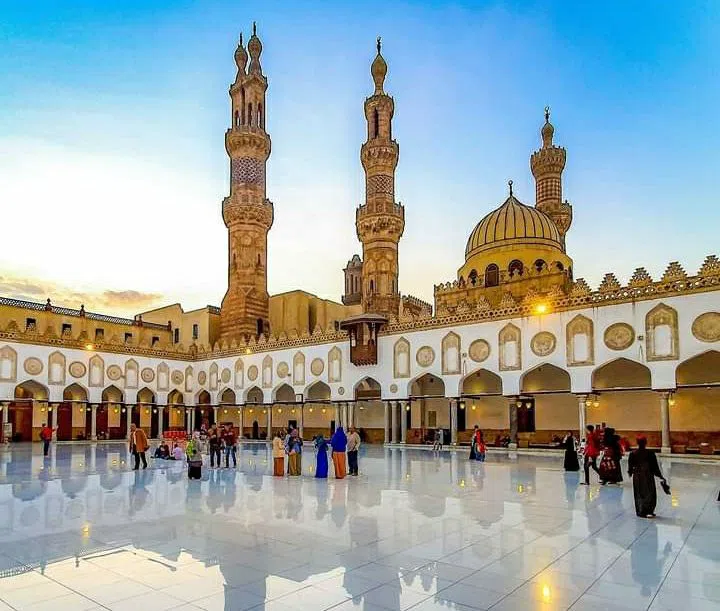
The plaque outside Al-Azhar Mosque and University [Al-Hussein / Islamic Cairo] calls it the founding congregational mosque of Cairo, and in one narrow sense that's true. The Fatimid general Jawhar al-Siqilli laid it out in 970 AD, a year after his caliph Al-Muizz claimed the new city, and it opened as the teaching seat of the Ismaili Shi'a mission that gave the dynasty its name. Entry is free and it welcomes visitor groups outside prayer times, but skip the Friday midday slot, roughly noon to 2pm, when it closes to tourists entirely. What almost no plaque mentions is that Al-Azhar has been a Sunni institution for over 800 years: Saladin flipped it after ending Fatimid rule in 1171, and it's now the most influential seat of Sunni orthodoxy anywhere. The building is Fatimid; the theology it teaches today is the dynasty's opposite number. That reversal sums up the whole walk.
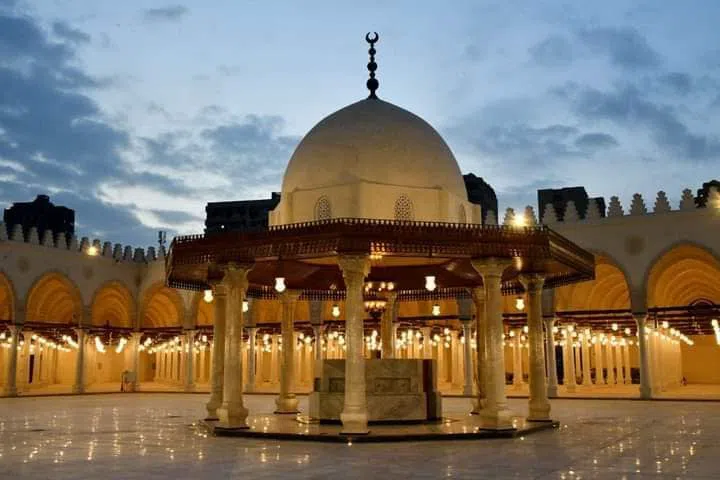
For the real starting point, head south to Fustat and Amr ibn al-As Mosque [Old Cairo], which the Fatimids' own propaganda conveniently left out of the founding story. Built in 641 AD by the Arab general who conquered Egypt for the Rashidun caliphate, it predates Al-Muizz's arrival by 328 years. Cairo's Islamic history didn't start with the Fatimids; it started here, three centuries earlier, under a different caliphate entirely. Entry is free and the courtyard is large enough to absorb full tour groups without anyone feeling herded. See it first if you can. It deflates the "Fatimids founded Cairo" line before you've spent an afternoon absorbing it as settled fact elsewhere.
The walls and gates a vizier built to defend a new capital
By the late 11th century the original mud-brick Fatimid walls were obsolete, so the powerful Armenian vizier Badr al-Jamali rebuilt them in stone between 1087 and 1092, and enough of that circuit survives that you can still walk the edge of Fatimid Cairo exactly where it stood. Bab al-Futuh and Bab al-Nasr [northern walls, Islamic Cairo], the Gate of Conquest and the Gate of Victory, anchor the northern stretch, joined by a rampart walk along the top of the wall itself. Entry is free or nominal depending on the day, hours run roughly 9am to 5pm, and the walk suits small groups of six to ten comfortably, with enough room to spread out on the ramparts without a bottleneck at either gate.
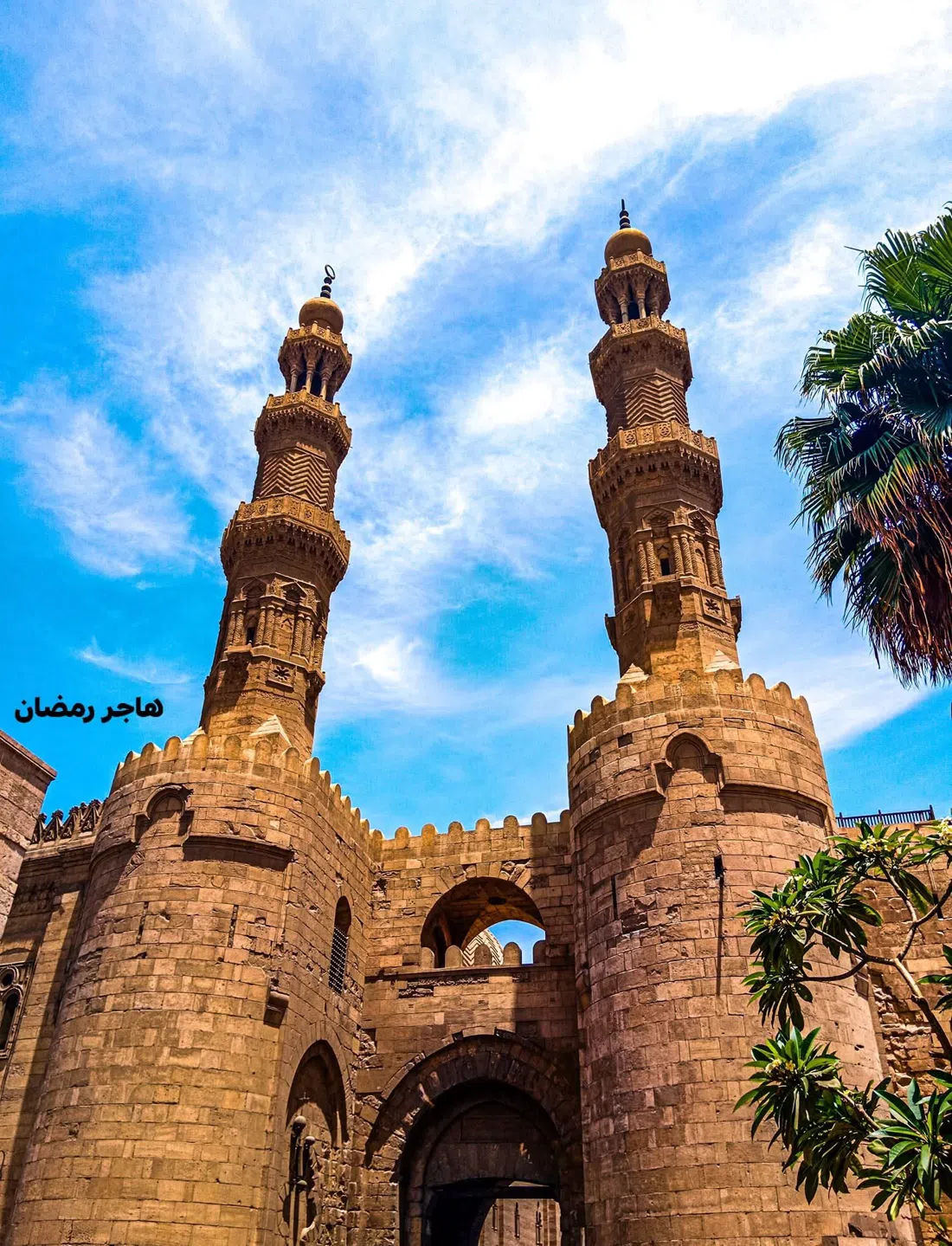
The southern counterpart, Bab Zuweila [Darb al-Ahmar], is the payoff of the whole itinerary: a working city gate with a climbable minaret, for around 40 EGP (roughly $1). The stairs up are a tight spiral, so cap your group at pairs going up at a time. It isn't built for a coach party to file through, and you'll queue behind whoever's ahead of you on the steps. From the top, the view lines up the length of what was once the Fatimid capital's main thoroughfare, and it's the clearest vantage point on this whole route for understanding how compact and fortified the original city was.
Walking the spine of Fatimid Cairo along one street
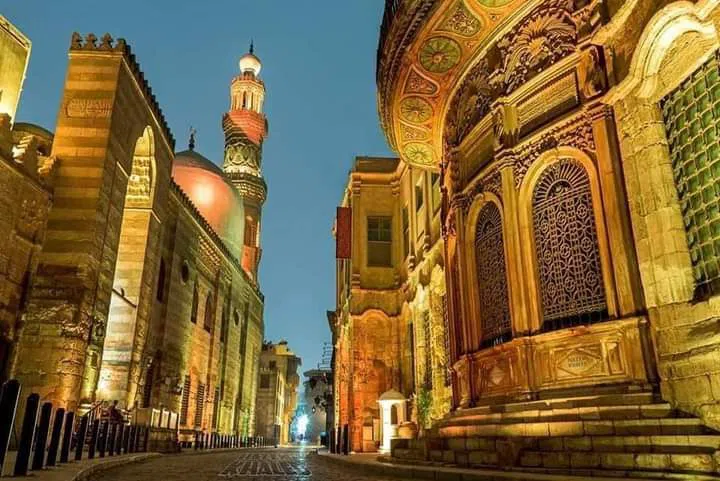
Al-Muizz li-Din Allah Street [Islamic Cairo] is named for the caliph who founded the city and, unusually for an 11th-century street name, still runs along more or less its original Fatimid alignment. It's free to walk and good for groups, though it gets genuinely crowded on weekend evenings once the shops light up. Treat it as the spine the rest of this route hangs off, and budget at least half a day to cover it at a pace that lets you actually read the buildings rather than just pass them.
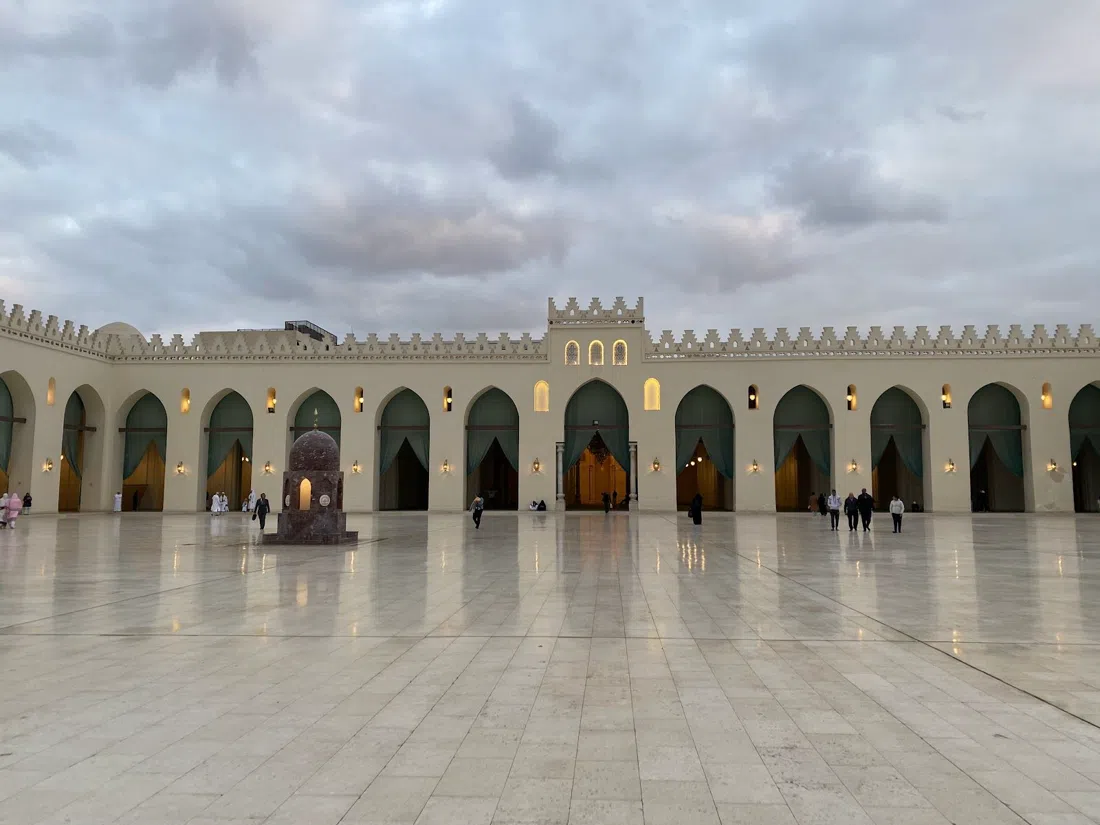
Near its northern end sits Al-Hakim Mosque (Al-Jami' al-Anwar) [Gamaliya], named for the caliph whose eccentric and occasionally violent decrees (banning certain foods, dictating shop hours, eventually vanishing into the Muqattam hills and being deified by followers who became the Druze) supply most of the "myth" half of this story. The mosque itself is plain, free, open daily 9am to 5pm, with a courtyard wide enough to handle a full tour group without crowding. Its polished current state owes more to a 1980s restoration funded by the Dawoodi Bohra, an Ismaili Shi'a community from India who still consider it, and Fatimid Cairo generally, a living pilgrimage site rather than a ruin. That's arguably the most direct thread of continuity anywhere on this walk: a Shi'a community from another continent actively maintaining a Fatimid mosque in 2026.
A short walk south, Al-Aqmar Mosque [Gamaliya] is easy to underrate. The interior is small and some recent visitors have found it locked outright, so treat it purely as a facade stop rather than an interior visit. That facade is the reason to come: carved directly into the stone is the phrase "Muhammad and Ali," an open, public declaration of Shi'a doctrine on the caliphate's veneration of the Prophet's family. Almost nothing else that survives in Cairo states Fatimid theology this plainly. It's free to see and needs no more than a pause on the pavement outside.
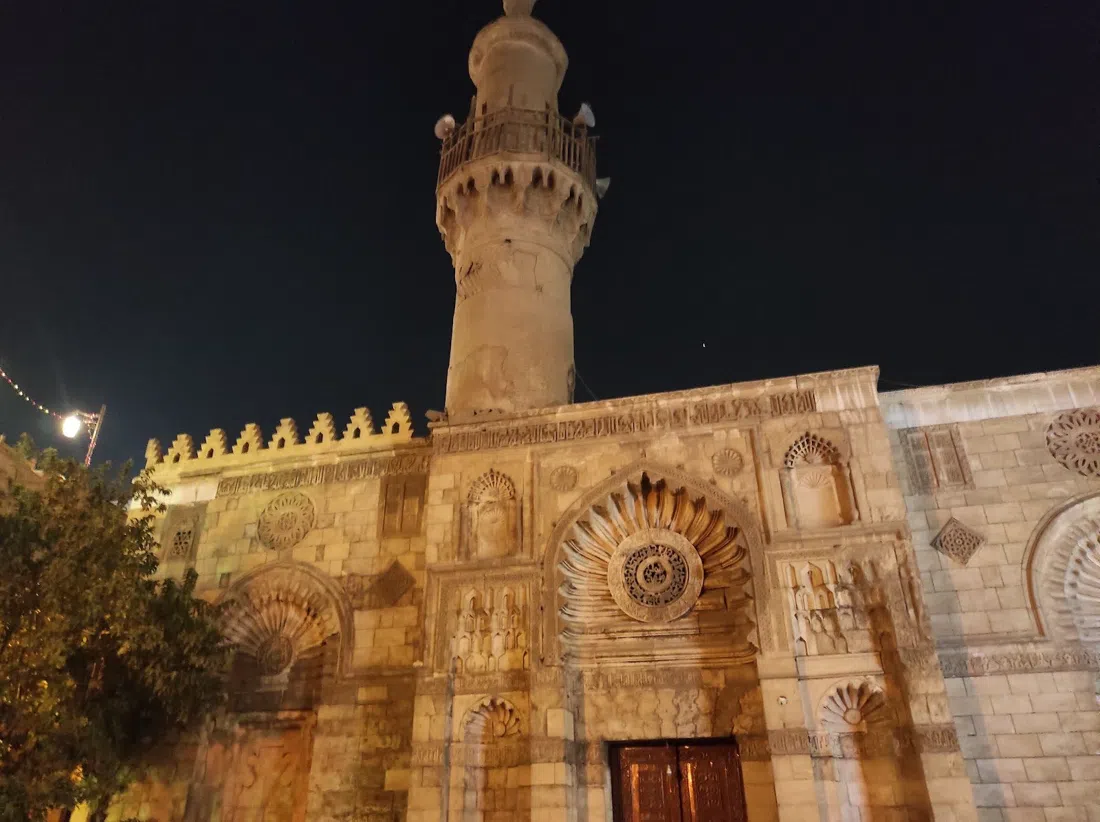
Shrines that kept the family's memory alive after the dynasty fell
South along the same corridor, close to Al-Azhar, sits the Mashhad of Sayyida Ruqayya [Islamic Cairo], one of the very few Fatimid mausoleums to survive more or less intact rather than being rebuilt beyond recognition by later dynasties. It's dedicated to a daughter of Ali. Accounts differ on exactly which Ruqayya is buried here, and the Fatimids weren't always precise about it either, since veneration mattered more to them than archival certainty. It's small and quiet, free to enter, and works best for a group of two to six rather than anything larger; there isn't room, and the atmosphere doesn't suit a crowd. If you want to feel the Shi'a devotional current running under the dynasty's politics, this is the stop, not the grand mosques.
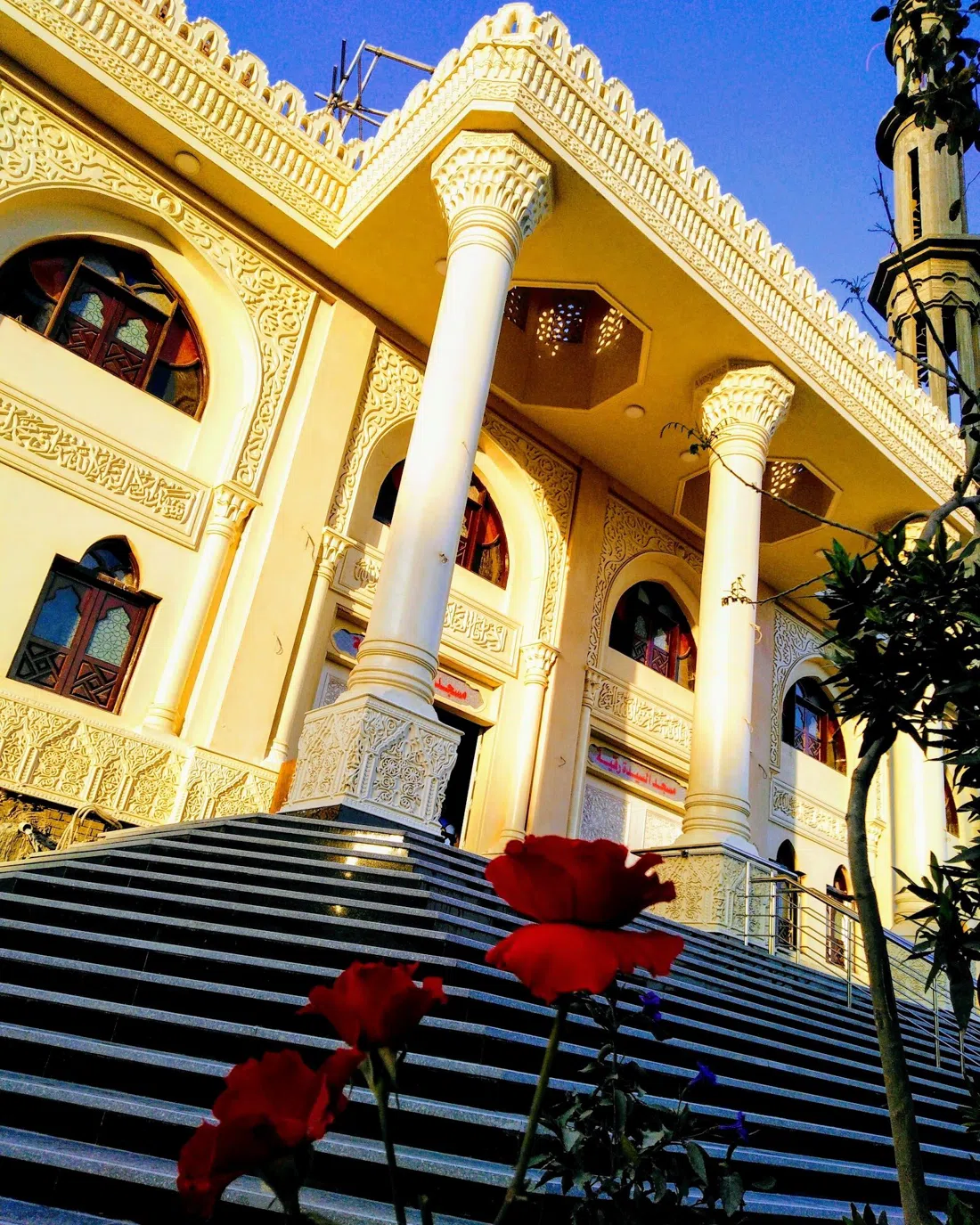
A few minutes' walk away, Al-Hussein Mosque [Al-Hussein Square] sits on the site Fatimid Cairo treated as its single most sacred point: the traditional resting place associated with the head of Hussein ibn Ali, grandson of the Prophet and the central martyr figure of Shi'a Islam. Be clear-eyed about what you're looking at: the building standing today is 19th-century, not Fatimid, so this stop is about continuity of meaning rather than continuity of stone. It's free; non-Muslims can view the courtyard and exterior, but the interior and shrine area are restricted, especially around prayer times. It sits opposite Al-Azhar and beside Khan el-Khalili, so it folds naturally into the same afternoon as either.
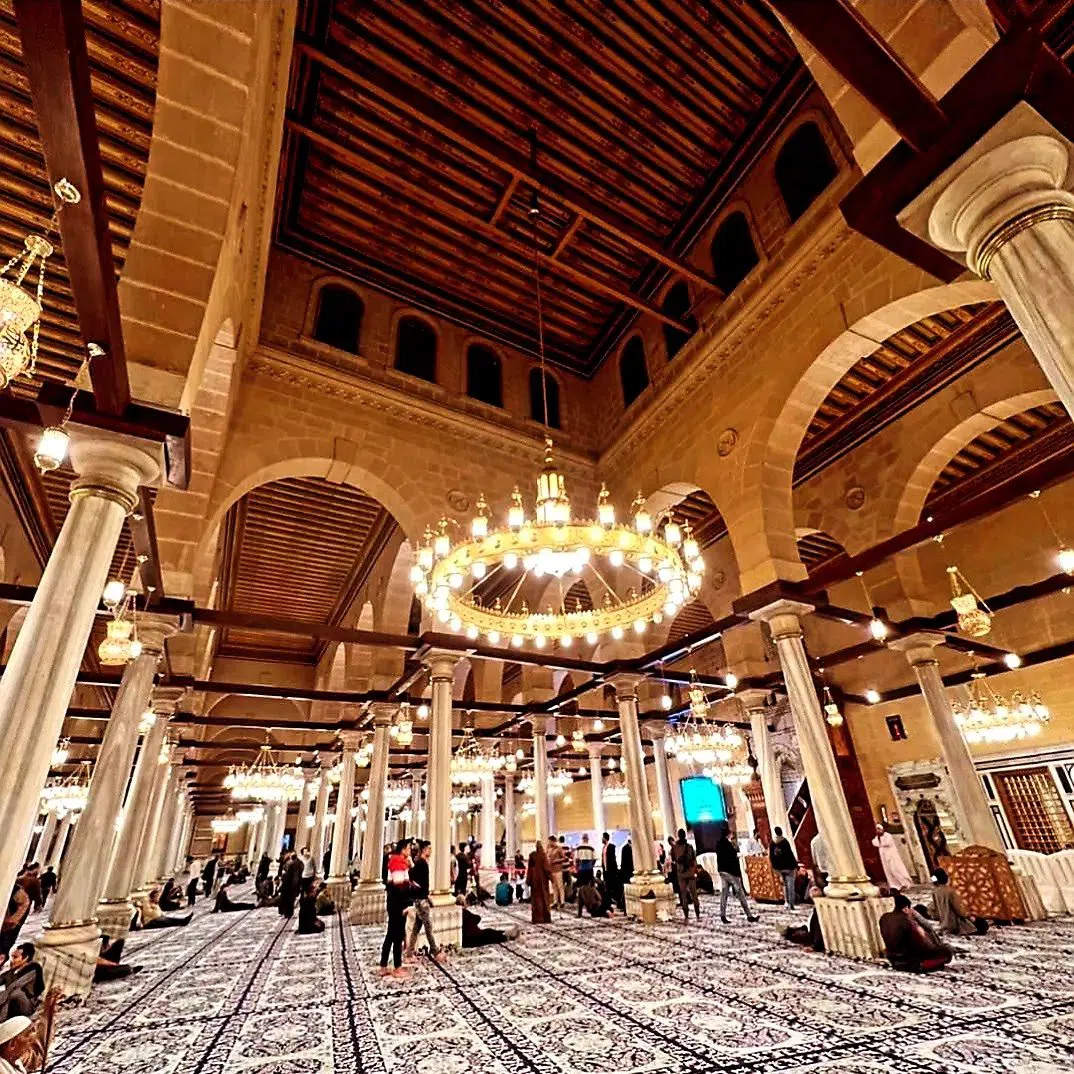
To close the dynasty's architectural arc, detour to the Mosque of Al-Salih Tala'i [near Bab Zuweila], built in 1160 by the Fatimids' last genuinely powerful vizier, the final mosque the dynasty built before Saladin ended it eleven years later. It's small and quiet, well suited to a group under fifteen, free to enter, though some sources list it as closed on Fridays; confirm locally before building your day around it. It's raised on a row of shops that funded its upkeep through rent, an early and pragmatic bit of mixed-use planning that says as much about Fatimid-era urban economics as the theology carved elsewhere.
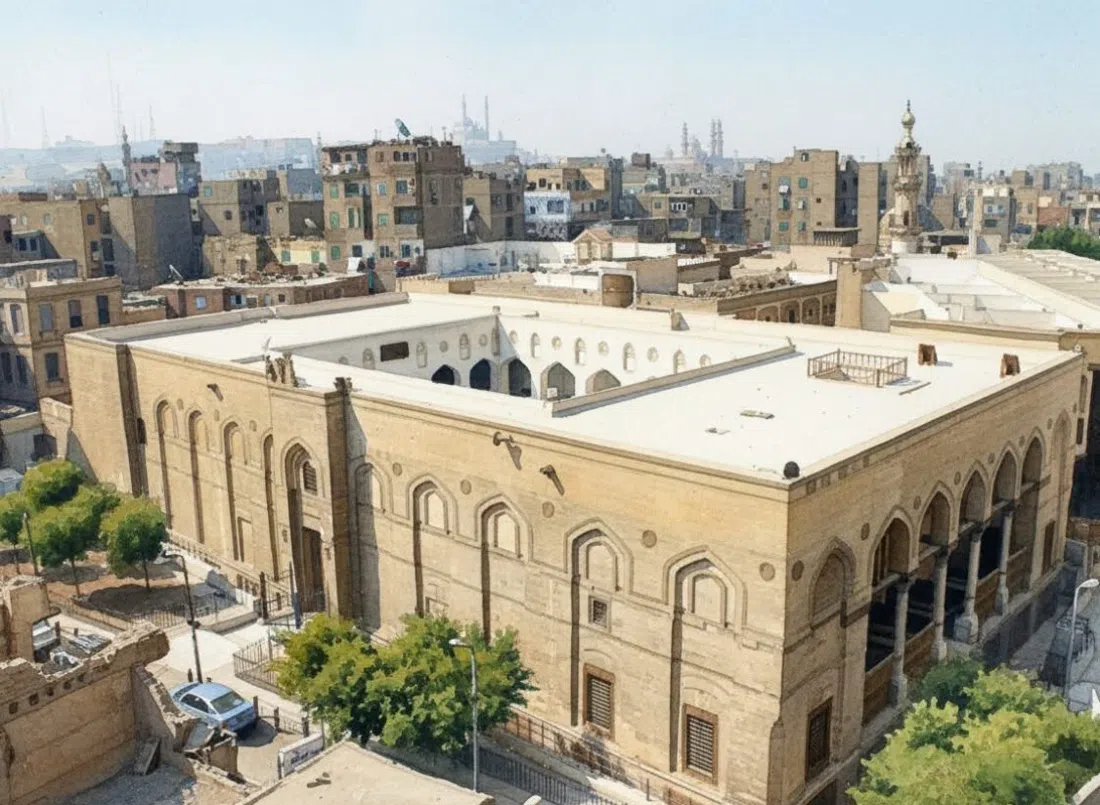
What replaced the Fatimid palace and where its treasures went
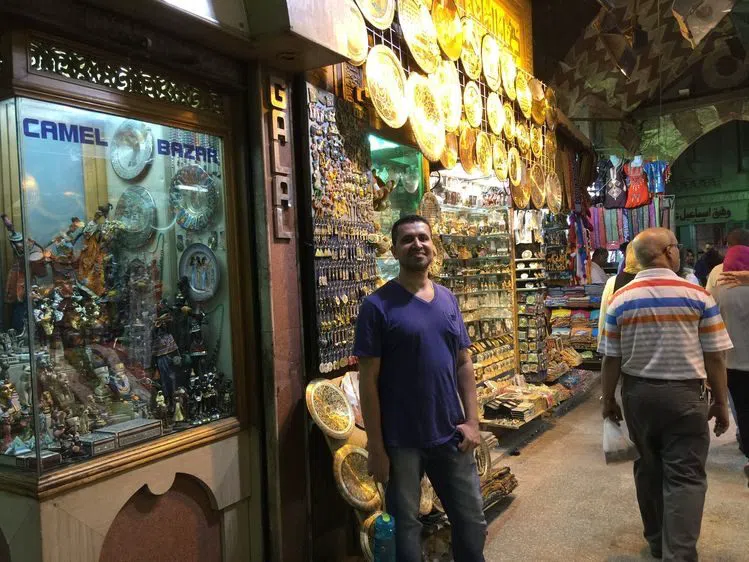
For three centuries, the heart of Fatimid Cairo wasn't a mosque or a gate but the Great Eastern Palace, a walled royal city-within-the-city that housed the caliph's court. None of it stands. In 1382, the Mamluk sultan Barquq built Khan el-Khalili [Islamic Cairo] directly over its ruins, and the market that resulted is now one of the most recognisable in the world. It's free to enter, with both private guides and group walking tours running daily, though it gets dense with tourists and locals alike on weekend evenings. It's worth naming plainly: Khan el-Khalili isn't a survival of Fatimid Cairo, it's the thing that physically replaced it. Standing in the market is standing on the erased palace, a more honest way to see it than heading straight for the souvenir stalls.
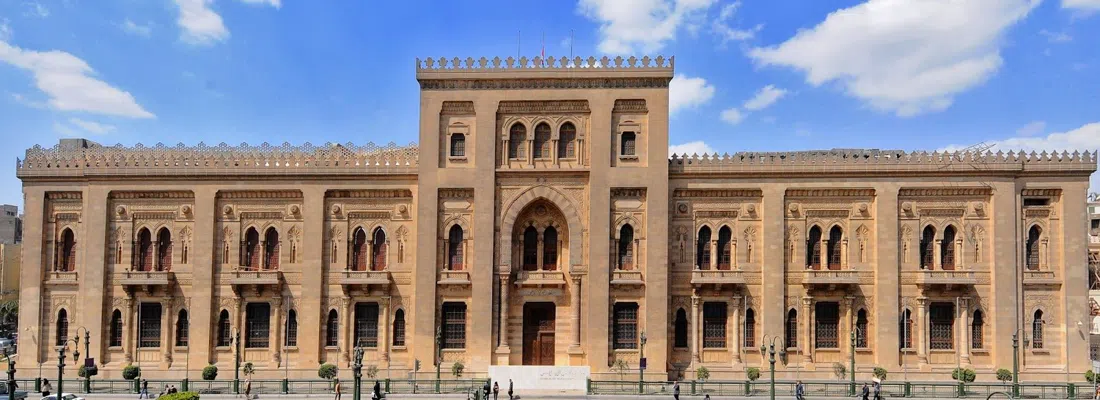
What did survive from the palace and the dynasty's wider material culture is mostly in glass cases now, at the Museum of Islamic Art, Cairo [Bab al-Khalq], a short taxi or walk from Khan el-Khalili. It's ticketed, with a higher rate for foreign visitors (check current pricing before you go, as it's revised periodically), and open daily 9am to 5pm, with split Friday hours (9-11:30am and 1:30-5pm) around prayer. Group bookings are handled routinely. This is the only place on the whole itinerary to see actual portable Fatimid objects: carved woodwork panels, luster ceramics, and a Qur'an manuscript connected to one of the caliphs. Everything else on this walk is architecture and stone inscriptions; this is where the dynasty's finer craftsmanship survived, largely because it left the buildings before the buildings were altered.
Getting there, timing it, and the cash you'll need
Islamic Cairo is walkable as a single connected district once you're inside it, but it isn't set up for cars. Arrive by taxi or ride-hail app to the Al-Hussein Square or Bab Zuweila end and expect to cover the rest, roughly 2km end to end along Al-Muizz Street, on foot. Wear shoes you don't mind on uneven medieval paving, and budget a full day if you want Fustat's Amr ibn al-As Mosque included, since it sits well south of the rest and needs its own taxi leg.
Carry cash. Entry fees at the gates and minor sites are small (Bab Zuweila runs around 40 EGP), but few of these venues take cards, and there's no ATM inside the old walls worth relying on, so withdraw before you arrive. Prayer times shape the day more than opening hours do: Friday midday closes Al-Azhar to visitors, several sites tighten access around each of the five daily prayers, and Al-Salih Tala'i's Friday status is worth confirming ahead rather than assuming. Aim to start by 9am to get the gates and mosques before the afternoon heat and the evening crowds converge on Al-Muizz Street and Khan el-Khalili. Dress modestly for every mosque on this list, shoulders and knees covered, with a headscarf on hand for women, and expect to remove shoes at the threshold.
For where to stay while you work through this, a hotel near Al-Hussein Square or downtown puts you within walking distance of nearly everything above. See the Cairo hotel search for options, and the broader Cairo guide for the rest of the city beyond this one district.
Total spend for the sites themselves is low. Bab Zuweila and the Museum of Islamic Art are close to the only two you'll pay for directly, and most of the mosques and gates are free, so the real budget line here is time, not money. Done properly, this is a full day. Rushed, it's a half-day that only covers the header sites and misses most of what actually makes the myth-versus-reality case.