Ramadan in Cairo runs on sound before it runs on food: a cannon cracks out near the Citadel, the maghrib call to prayer follows half a beat later, and for the next ninety minutes the entire city eats like it's been waiting a month for permission — because, in a real sense, it has. I've walked this trail across more Ramadans than I can count now, from the bench seats at a 250-year-old tea house to a white-tablecloth table on the Nile, and the honest version of it looks nothing like the single lantern-lit photo everyone posts. Here's where to actually sit down, in what order, who each stop suits, and what it costs.
The Spine: Al-Muizz Street, Cannon to Cannon
Everything in this guide connects to one street, so start there. Al-Muizz Street (Sharia al-Muizz, Islamic Cairo) is Cairo's most photographed Ramadan stretch — a pedestrian run through medieval Gamaleya strung with fanoos lanterns from the first week of the month, no ticket needed and no booking required, just a slow current of families, vendors and shisha smoke from maghrib until well past midnight. It handles any group size because there's nothing to book — the only real constraint is crowd density. Thursday and Friday nights after 9pm you're moving at a shuffle; if you want the postcard shot without a hundred heads in it, walk it between iftar and 8pm, before the second wave of the evening arrives. Dress modestly here as everywhere in Islamic Cairo during Ramadan — shoulders and knees covered reads as basic respect, not a formal dress code.
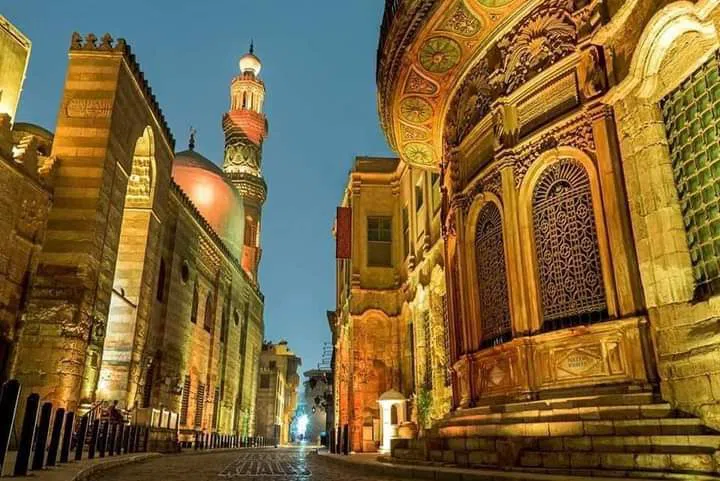
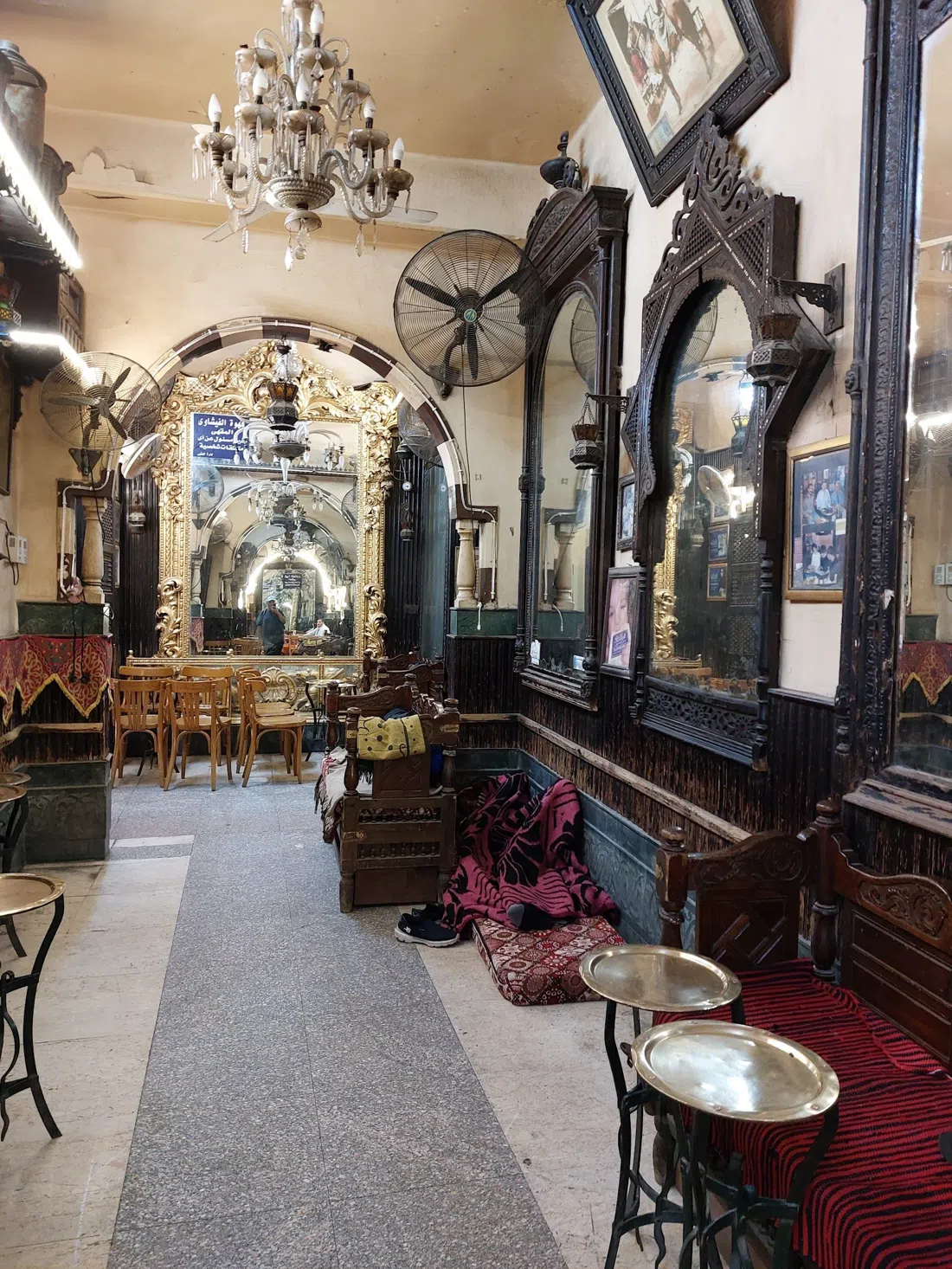
Walk south down Muizz and you land in Khan el-Khalili, where El Fishawy (deep in the bazaar's mirrored alleys) has been pouring tea since 1773 — seven generations of the same family behind the counter, and yes, this is genuinely where King Farouk and Naguib Mahfouz used to drink. There's no reservation system and no fixed seating plan: benches spill straight into the alley and you squeeze in wherever there's room, which is exactly what makes it work for a group of two or twenty. It's open 24 hours, so it's also where the neighbourhood decants to after iftar proper — expect it loud, thick with shisha smoke, and completely unbothered by how many of you turn up at once. Budget $3-6 a head for tea or a pipe; nobody here is timing your table.
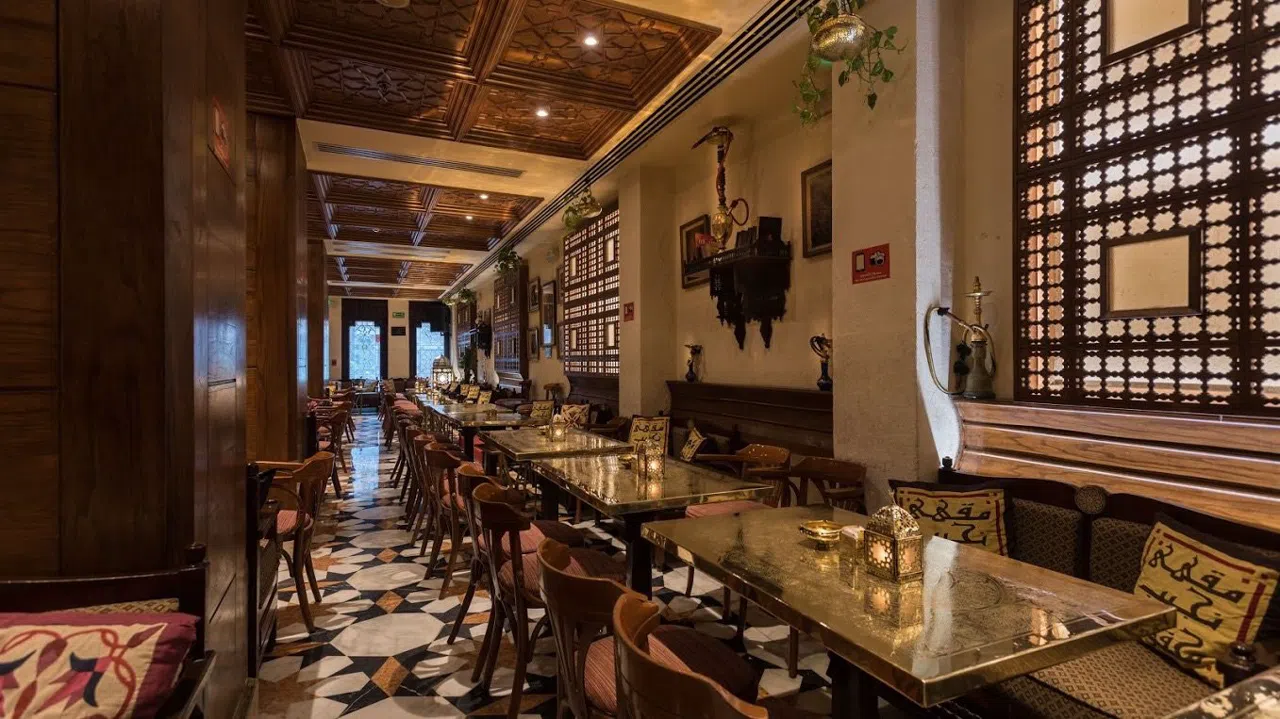
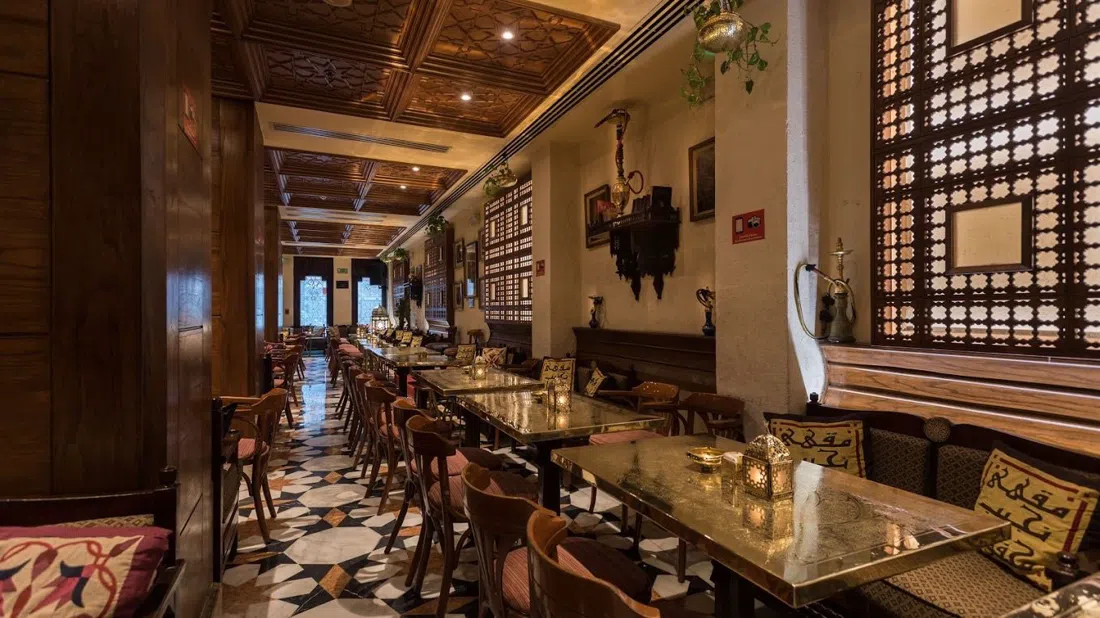
Two alleys over sits the sit-down alternative: Khan El Khalili Restaurant & Naguib Mahfouz Café (inside the bazaar, run by the Oberoi group since 1989), the one heritage venue in this whole trail that actually takes a proper booking. Air-conditioned, full table service, a real menu — it's the polished counterpoint to El Fishawy's controlled chaos, and it's the move if you want the bazaar's atmosphere without standing in the middle of it for an hour. Expect $$$ a head, and book a day or two ahead during Ramadan; the iftar sittings turn over fast and they do sell out.
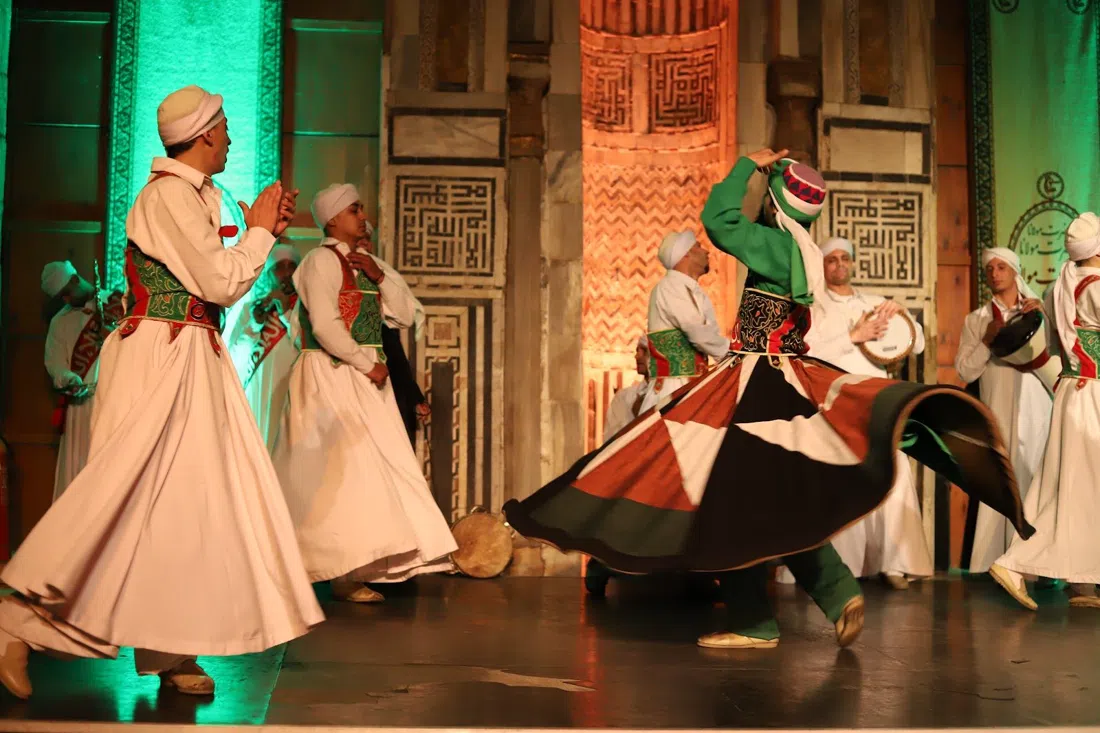
After the meal, it's a short walk to Al-Tannoura Egyptian Heritage Dance Troupe at Wekalet El Ghouri (just off Muizz, one street from El Fishawy) — Egypt's only professional Sufi-spinning troupe, performing inside a genuinely historic 16th-century wikala courtyard. It's free with a donation box on the way out, and it runs Saturday, Monday and Wednesday nights only, so check the calendar before you build a night around it. There's no reserved seating, so for a group, arrive a good 30-40 minutes before doors — it fills, and once it does, they close them and that's that.
Al-Azhar Park at Maghrib
If you get one sunset right in Cairo during Ramadan, take it at Al-Azhar Park (Darb al-Ahmar) — the wide lawns here give you the single best framing of the city's minarets catching last light before the cannon fires, and unlike the alleys below, you can actually sit down for it. Entry is $1-2, the park stays open until 1am through the month, and there's enough grass that a group can spread a full picnic without booking anything at all. The move: arrive an hour before maghrib, claim ground with a Citadel sightline, eat the moment the cannon goes, then walk down through Darb al-Ahmar toward Muizz Street once you're ready to move on for the night.
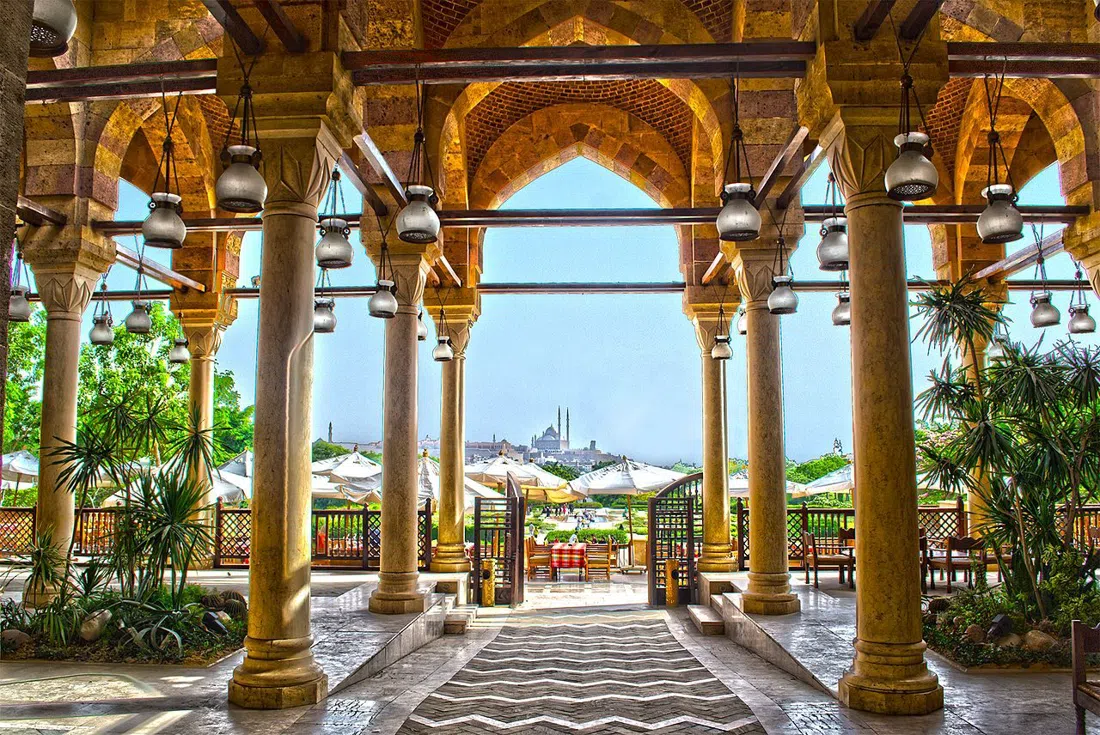
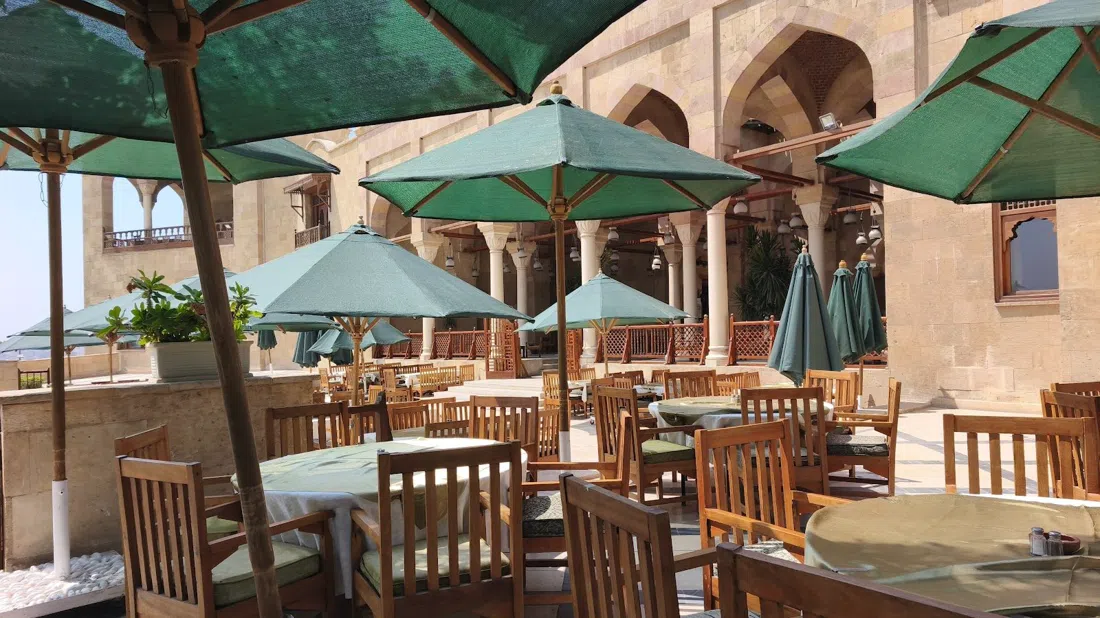
For a proper sit-down table inside the park itself, Studio Masr (Al-Azhar Park, part of the Amer Group) is the flagship — full table service, a grill-led menu, and the same Citadel view from a fixed seat rather than a picnic blanket. It's $$ a head, genuinely the best-value formal iftar table in the city for that view alone, and that's exactly why it fills during Ramadan — book ahead rather than walking up at 6pm expecting a table to be free.
The Hotel Iftars: Nile-View Tables
For a calmer, dressier night — bring a date here rather than a group of twelve, though both venues can seat a group comfortably if you do want one — the two hotel programmes on the Nile are the honest upscale answer, both running standard buffet or set-menu booking systems through the month.
Kempinski Nile Hotel — Blue Restaurant (Garden City, on the Corniche el-Nil) runs its confirmed 2026 Ramadan iftar buffet direct through the hotel, and it's the pick if you want Nile-view calm without the scale or price tag of the bigger hotel tents downtown. Smart-casual is fine, $$$ a head, and book through the hotel a few days out rather than the same afternoon — the Ramadan sittings are more structured than the hotel's normal service.
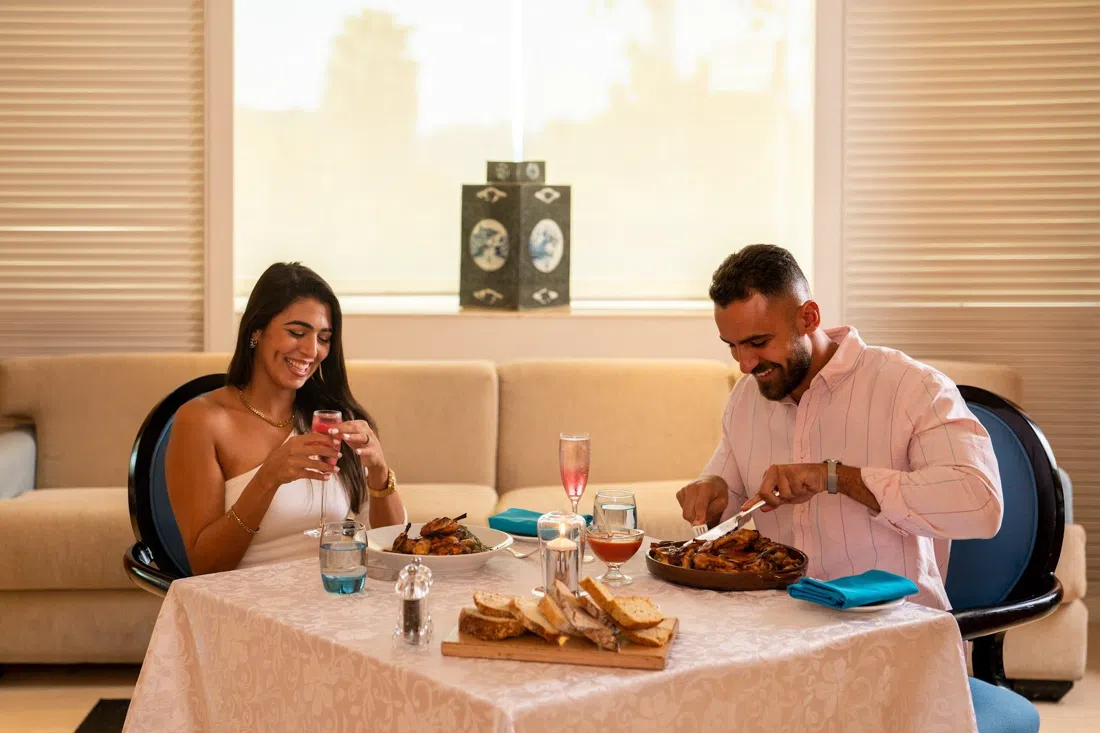
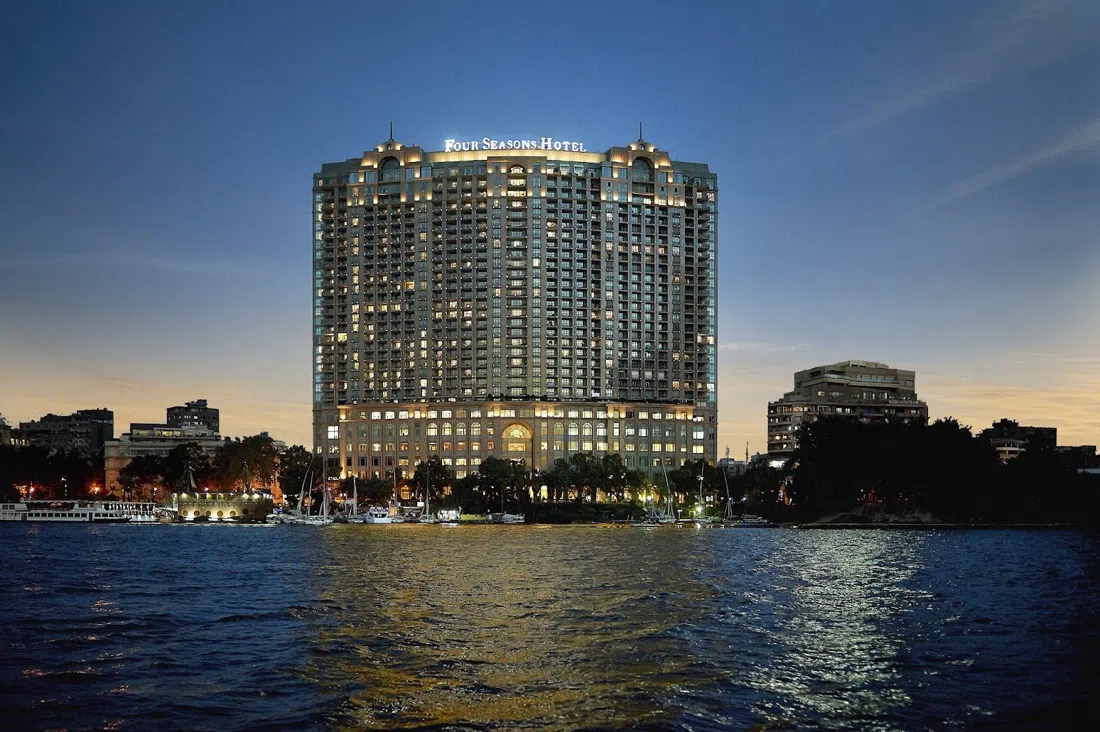
One step up in polish is Four Seasons Nile Plaza — Zitouni & Upper Deck Lounge (Garden City), really two venues built for one continuous night out: Zitouni for the iftar itself, then the Upper Deck Lounge afterward if you want to keep the evening going somewhere that isn't a shisha café. This is the most editorially polished Ramadan programme of any hotel in the city this year — plating and service that hold up against any Michelin-adjacent room, confirmed live for the 2026 season — and it runs $$$$ a head, so treat it as the one splurge night in the trail rather than a nightly habit. If you're building a Cairo stay around Ramadan, start with the Cairo hotel search — a Garden City base puts both hotel iftars and the Muizz Street walk within a short, pre- or post-cannon taxi ride of each other.
Downtown and the Everyday Table
Not every iftar in this city needs a reservation or a dress code, and downtown Cairo is where you eat the version Cairenes actually sit down to on an ordinary Tuesday night.
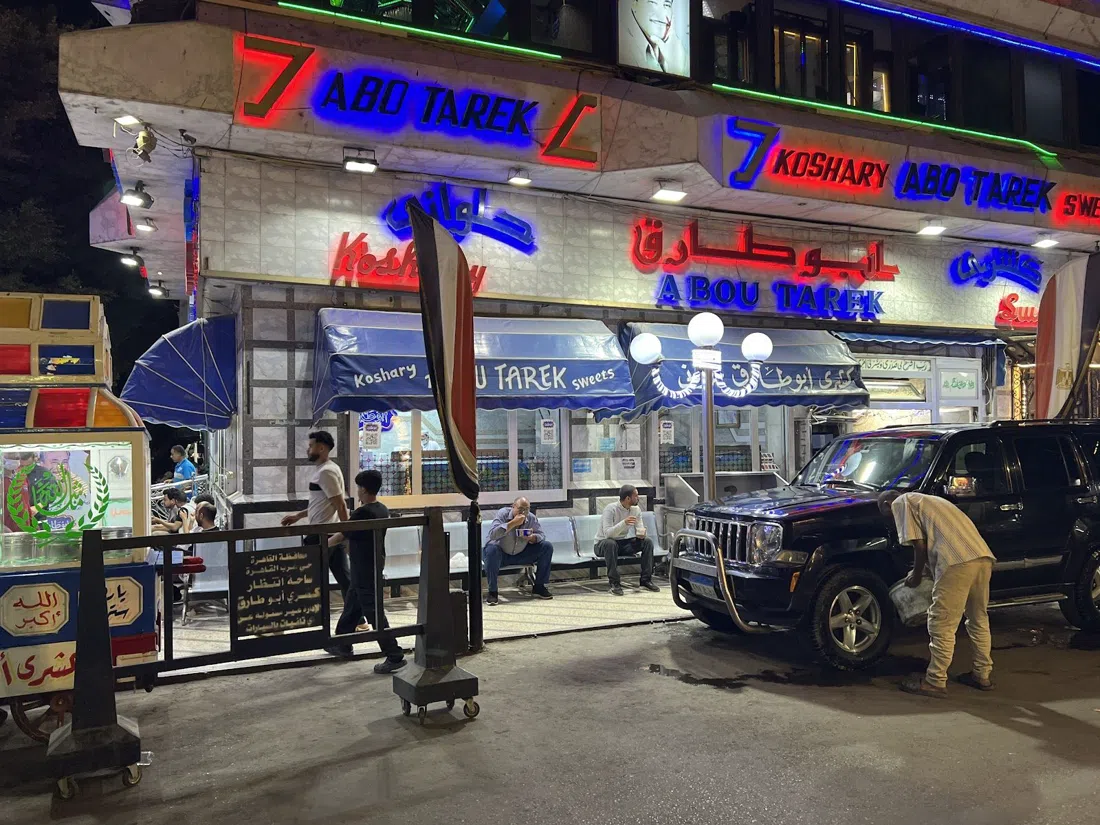
Koshary Abou Tarek (Downtown, off Talaat Harb) is Egypt's most famous koshary counter — the rice, lentil, macaroni and crispy-onion stack that's the country's real national dish — and it's the essential carb stop either side of a proper iftar. Multi-floor, fast turnover, no booking, and it absorbs a group of any size without so much as a raised eyebrow. A full plate runs a couple of dollars; it's the cheapest genuinely good meal in this entire guide.
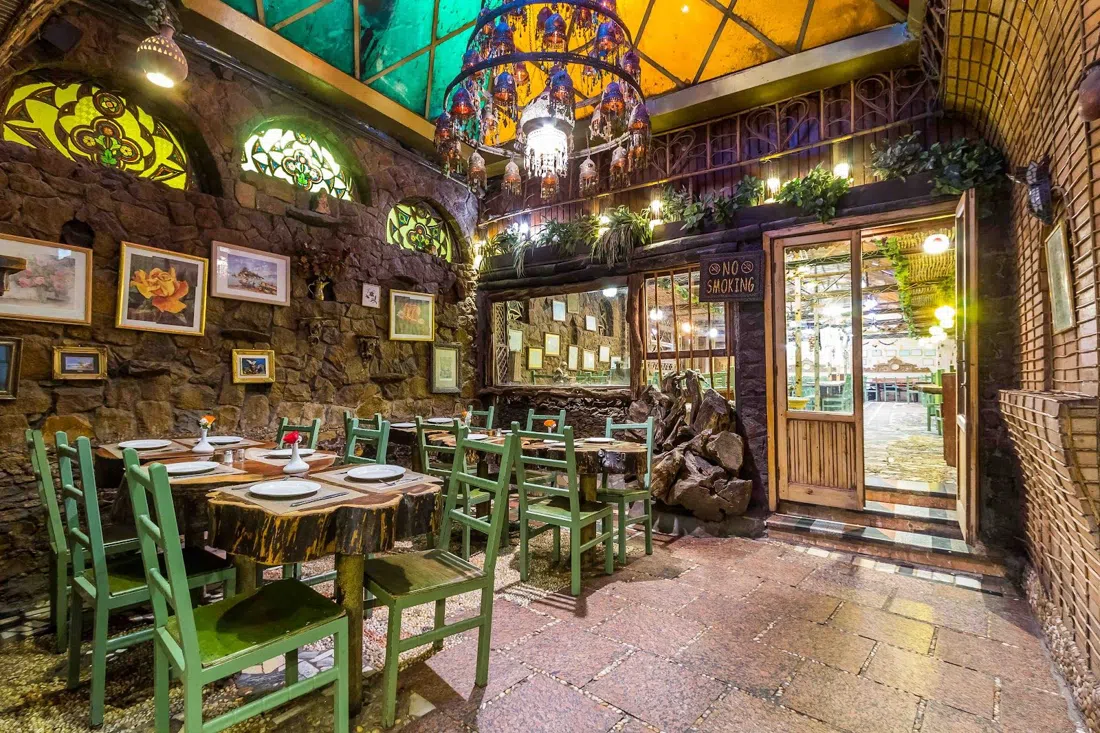
Felfela (Downtown) is the classic Egyptian restaurant that's been feeding visitors and locals alike for decades, and it earns the reputation — multiple connected rooms, thoroughly used to both groups and walk-ins, open 11am to midnight, $$ a head, and it's real Egyptian home cooking rather than a hotel restaurant's polished idea of it. Treat it as the safe, always-open downtown fallback for whenever the places that take reservations are already booked out.
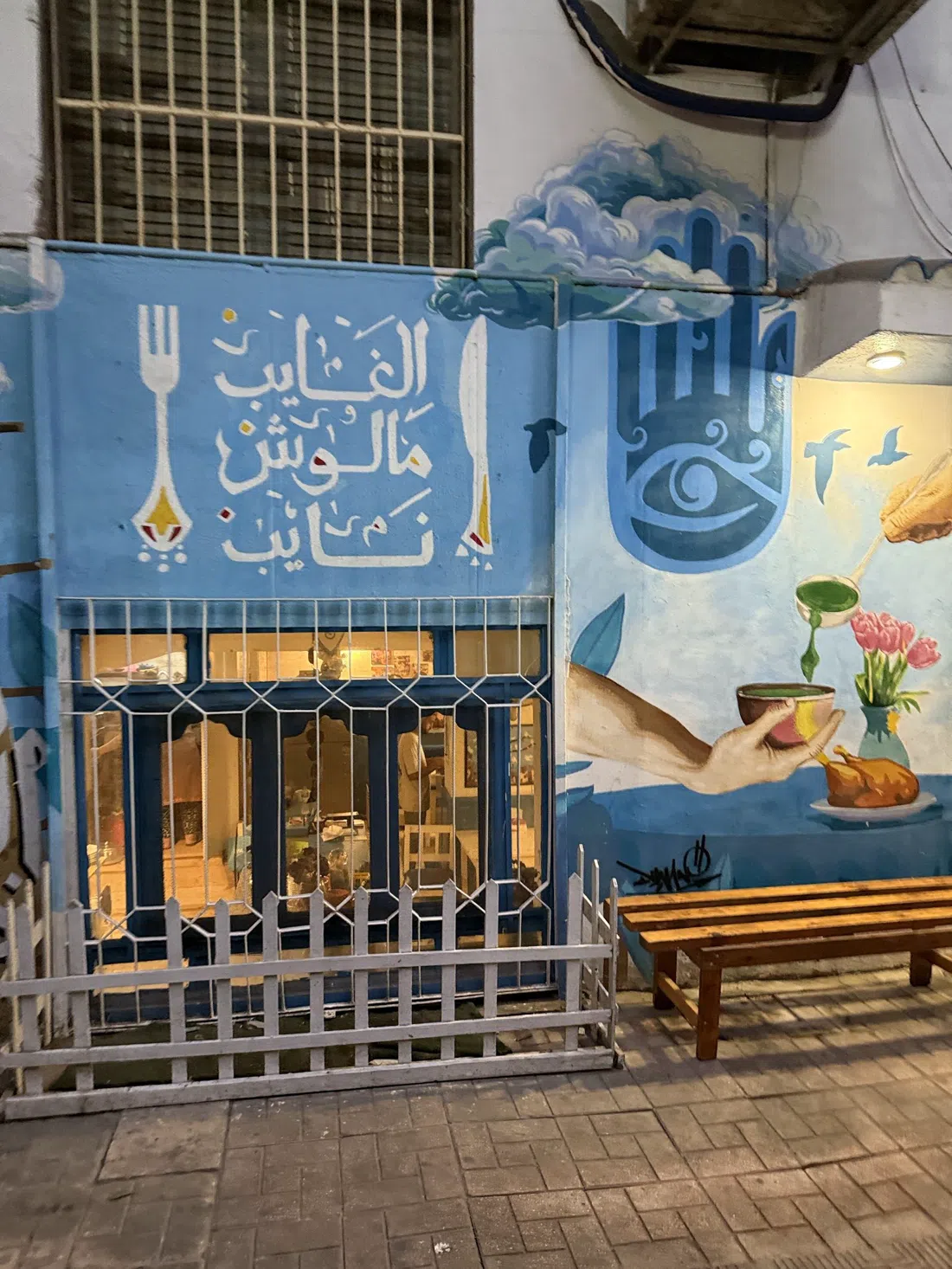
At the other end of the scale entirely is Fasahet Somaya (Downtown), and I'll be straight about it: this is a home-kitchen with maybe six tables, cash only, and the kitchen is open 5pm to 7pm and then it is done for the day, full stop. It is also the most genuinely home-cooked iftar in this whole piece, which is exactly why you don't turn up with a group of ten expecting a table — go in twos or threes, go early in the window, and budget around $14 a head. If you want the meal that doesn't feel curated for visitors, this is it, but respect the size of the room and don't expect a booking to survive being late.
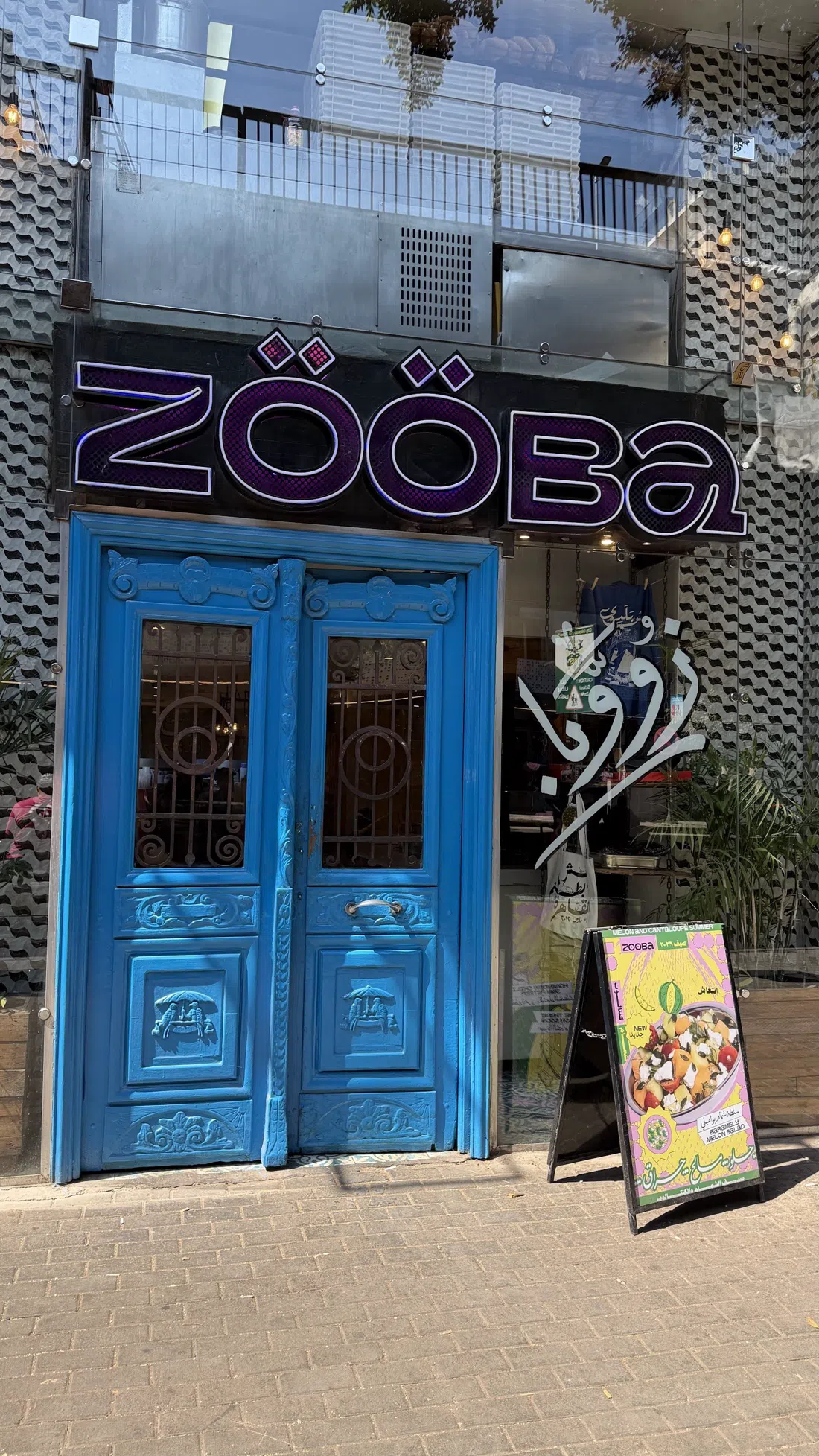
Zööba (six branches across the city) is the modern counterpoint to everything above — a design-forward, counter-and-table Egyptian street food format that made MENA's 50 Best list for 2026. It's the natural split-off point after a Muizz Street walk if half your group wants something quicker and more casual than a sit-down iftar, and it runs $$ a head. It's also the right call for anyone nervous about the very informal street-stall end of Egyptian food — same core flavours, a cleaner room, a menu that reads in English as easily as Arabic.
Getting Around, Cash and Timing
Cairo traffic in the thirty minutes before maghrib is its own event — the whole city is trying to get somewhere for the cannon at once — so if you're moving between venues, do it either well before iftar (by 4pm) or well after (post-8pm), never inside that window. Uber and Careem both work reliably here and are the easier option over hailing a taxi cold, though expect both to surge hard for the twenty minutes around sunset specifically.
Carry cash, and carry small notes. El Fishawy, Koshary Abou Tarek and Fasahet Somaya are effectively cash-only in practice even where a card machine technically exists behind the counter, and nobody in the bazaar wants to break a large note at 7pm on a Ramadan night. ATMs are common on the approach roads into Muizz Street but scarce on the pedestrian street itself, so stock up before you turn in.
On timing, build the night around the cannon rather than the clock on your phone — maghrib shifts by a few minutes each day through the month, so check a local prayer-time app rather than fixing a booking to a set hour. The hotel iftars run fixed sittings around maghrib and want a booking several days ahead; the street venues need no booking at all but reward arriving early, especially the Tannoura show and a good lawn spot at Al-Azhar Park before the sunset crowd arrives.
Budget per person for a full evening — one proper sit-down iftar plus the after-crawl — runs from around $5 for the koshary-and-tea version of the night up past $80 if you're doing Zitouni at the Four Seasons. Most of this trail sits comfortably in between those two numbers, and the honest advice is to mix registers across a week rather than pick one price point and stay there — a $4 plate at Abou Tarek one night, a $$$$ table on the Nile the next, is how you actually see Ramadan in this city. For the rest of Cairo beyond the Ramadan season, the full Cairo guide covers the year-round version of these same districts.