Het Cairo-nummer
A Cairo Morning Beneath the Step Pyramid at Saqqara in October
What there is to see inside Djoser's pyramid, what the gate charges in EGP, and why arriving at eight changes the rest of the day.

Door Lucas MeyerWalking Cairo, from Old Cairo's churches to Al-Muizz Street
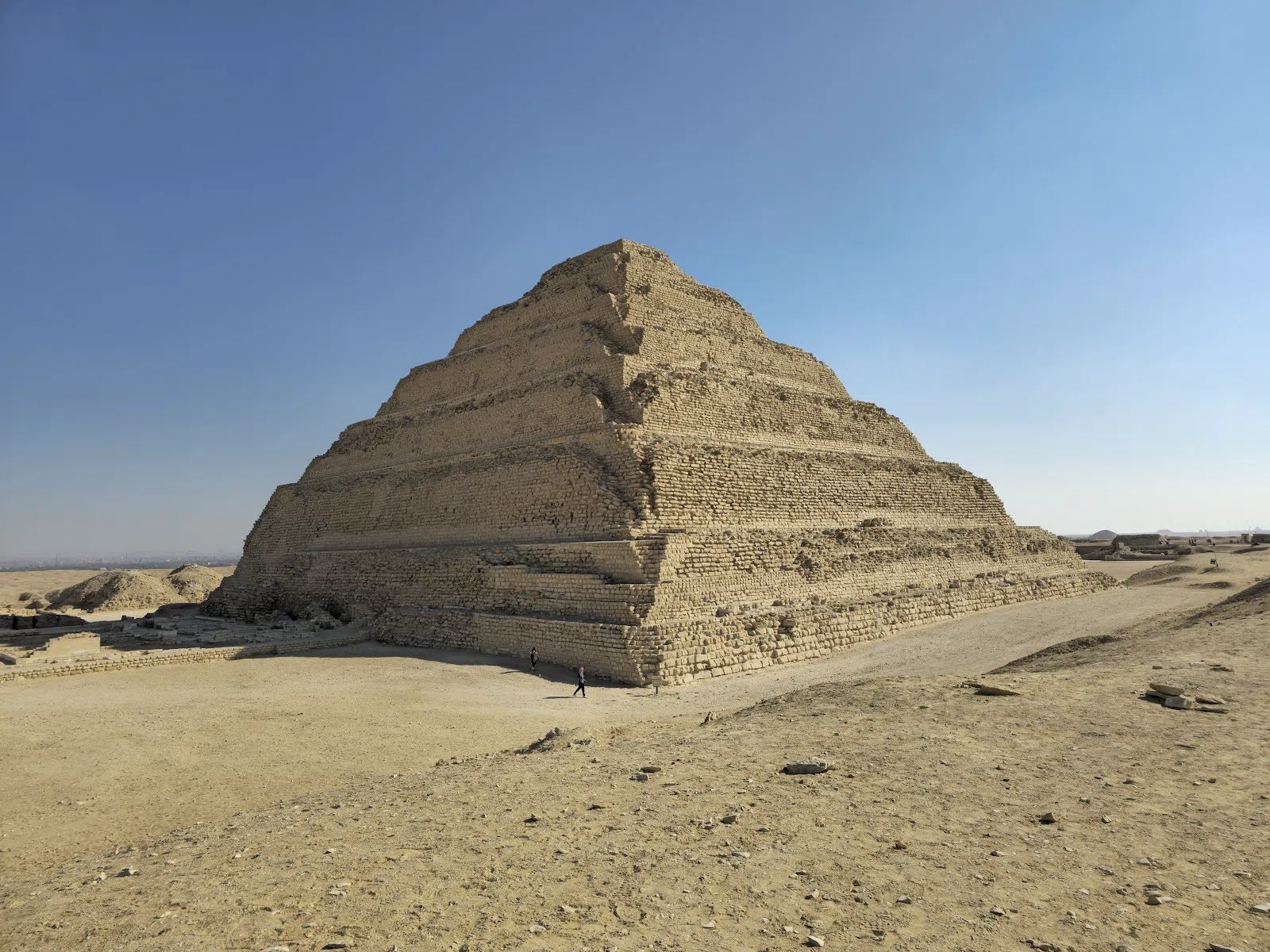
At eight in the morning the Step Pyramid throws a long shadow across the Heb-Sed court, and for about an hour the loudest thing on the plateau is sand moving across limestone. By ten the coach park has filled, the stone is too hot to lean on, and the single passage into the pyramid has a line of people standing in open sun. In October the gap between those two hours is the whole difference between a good day at Saqqara and a hot one.
What you are standing under
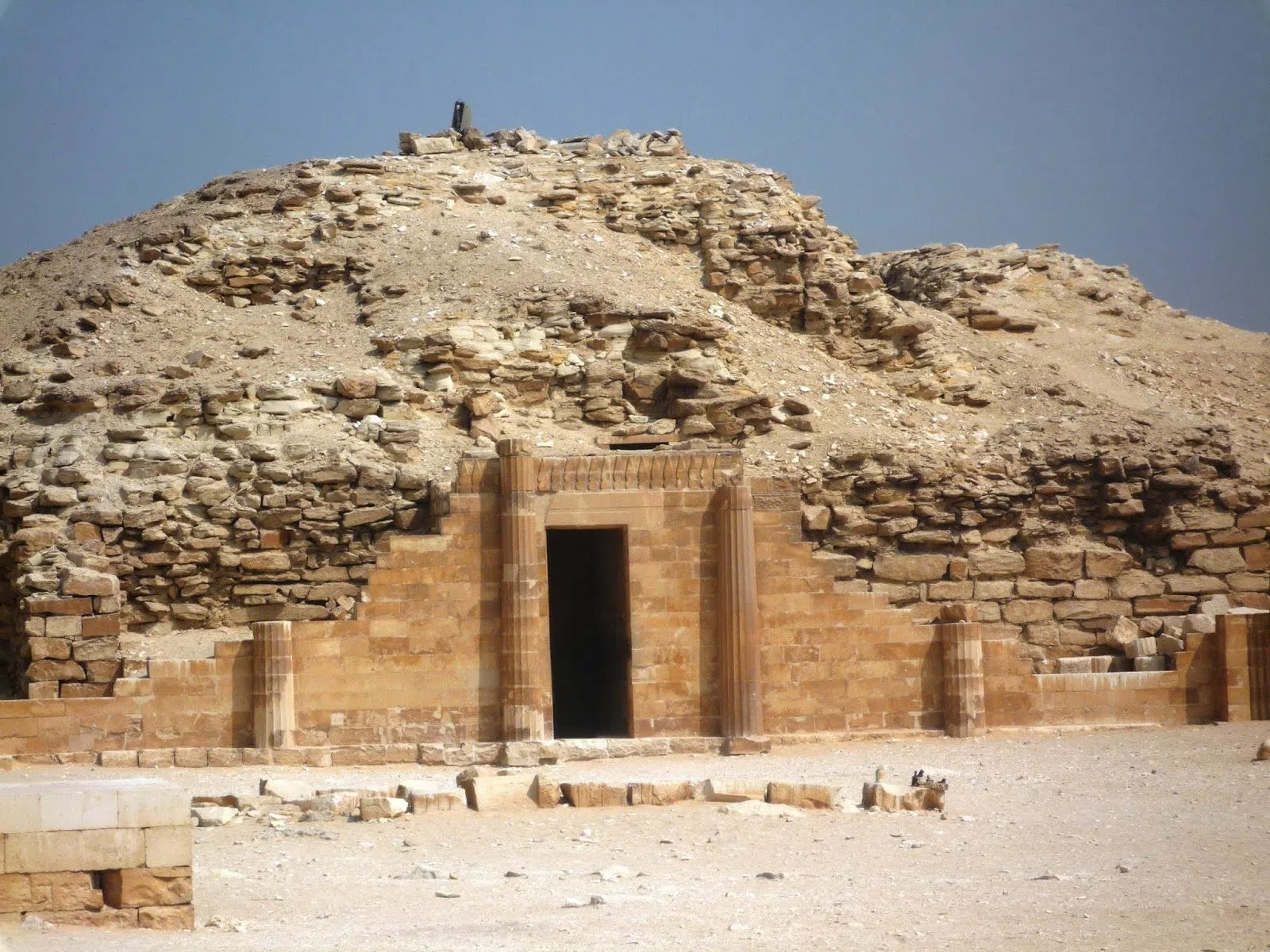
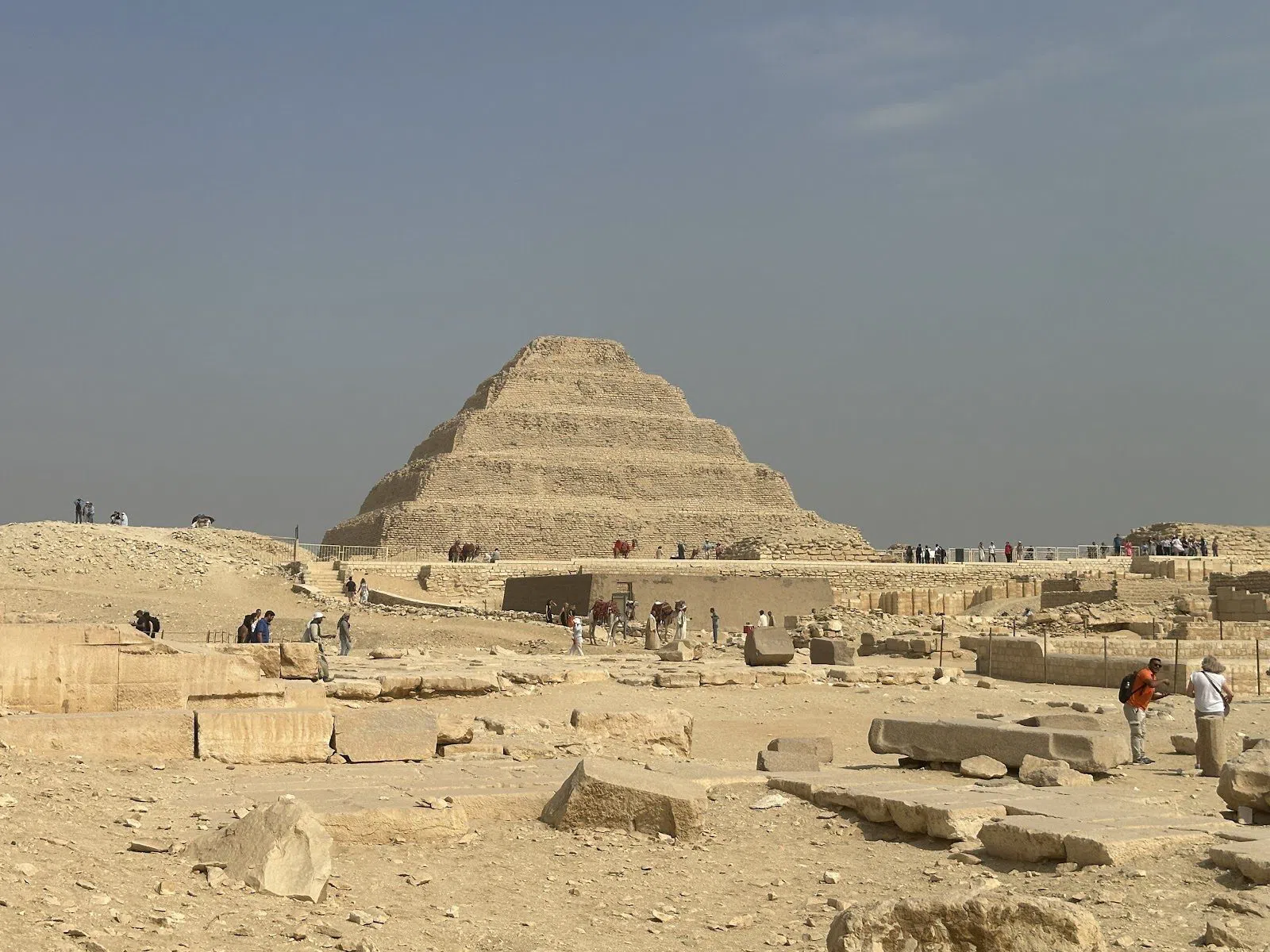
The Step Pyramid of Djoser (Saqqara archaeological area, about 30 km south of central Cairo) is the oldest large stone building still standing anywhere. It was raised in the 27th century BC for a Third Dynasty king, and it began as a flat mastaba that was enlarged and re-cut at least four times until it stood six steps high. You can read those revisions in the masonry from the court below, which is the most interesting thing about it: an architectural argument being worked out in public, stage by stage, by people who had never built in stone at this scale and had no way of knowing which parts needed to be thick.
That inexperience shows all over the enclosure. The wall is cut with false doors that do not open. The entrance colonnade is lined with columns shaped like bundled reeds, engaged into side walls rather than left to stand on their own. The chapels around the Heb-Sed court are solid fill behind a stone facade, built for a ritual the dead king would perform forever rather than for anyone to walk into. Almost nothing here is structural in the sense we would mean it. It is a small-block translation of a world made of mud, timber and plant stems, and Imhotep, the official credited with the design, is the reason the museum at the gate carries his name.
Plan je reis naar Cairo
Actuele prijzen van onze boekingspartners.
Gratis annuleren bij veel kamers. We kunnen een commissie ontvangen als je boekt.
Going inside the pyramid
The interior is a separate ticket and a separate decision. Only the southern passage is open, and it is a single narrow stone tunnel, propped and lit, running down to the 28 m central shaft with Djoser's stone sarcophagus at the bottom. Guides send groups through in small batches because there is no passing place: when a batch comes back up, everyone else waits at the mouth. Allow ten to fifteen minutes inside, add however long the batch ahead takes, and know what the EGP 280 buys. There is no decorated chamber. What you get is the inside of the first stone pyramid ever attempted, and the view down a shaft that was sunk before anyone had sunk one.
If you dislike enclosed spaces, skip it without guilt and spend the money on the tombs instead. The passage is dim, close and silent, and turning back mid-way is awkward for everyone behind you.
Start in the museum, not on the sand
Go into the Imhotep Museum (at the Saqqara ticket gate) before you walk anything. It is six air-conditioned galleries, restored and reopened in late 2023, included in the EGP 600 site ticket, open daily 08:00-17:00 and 09:00-15:00 during Ramadan, with toilets and a cafeteria beside it. Thirty to forty minutes here makes the plateau legible: the faience tiles, the architectural fragments, the surveying and stone-working that the open site only hints at. It is also the only reliable shade at Saqqara, which matters more in October than the gallery labels do.
The other thing to buy at the gate is the South Tomb of Djoser (same enclosure, south-west corner), an EGP 300 add-on that is covered by the EGP 1,400 inclusive ticket. Its chambers are lined with blue-green faience tiles and carved with panels of the king running the Heb-Sed course, and they are the most photogenic thing on the site by a distance. The catch is capacity: it holds a handful of people at a time, and a full coach ends up queueing at the stair head. Most day-tours leave it out, which is precisely why a pair or a small group should put it first.
The tombs north and south of the enclosure
The pyramid is the headline; the private tombs are the reason the day takes longer than people plan for.
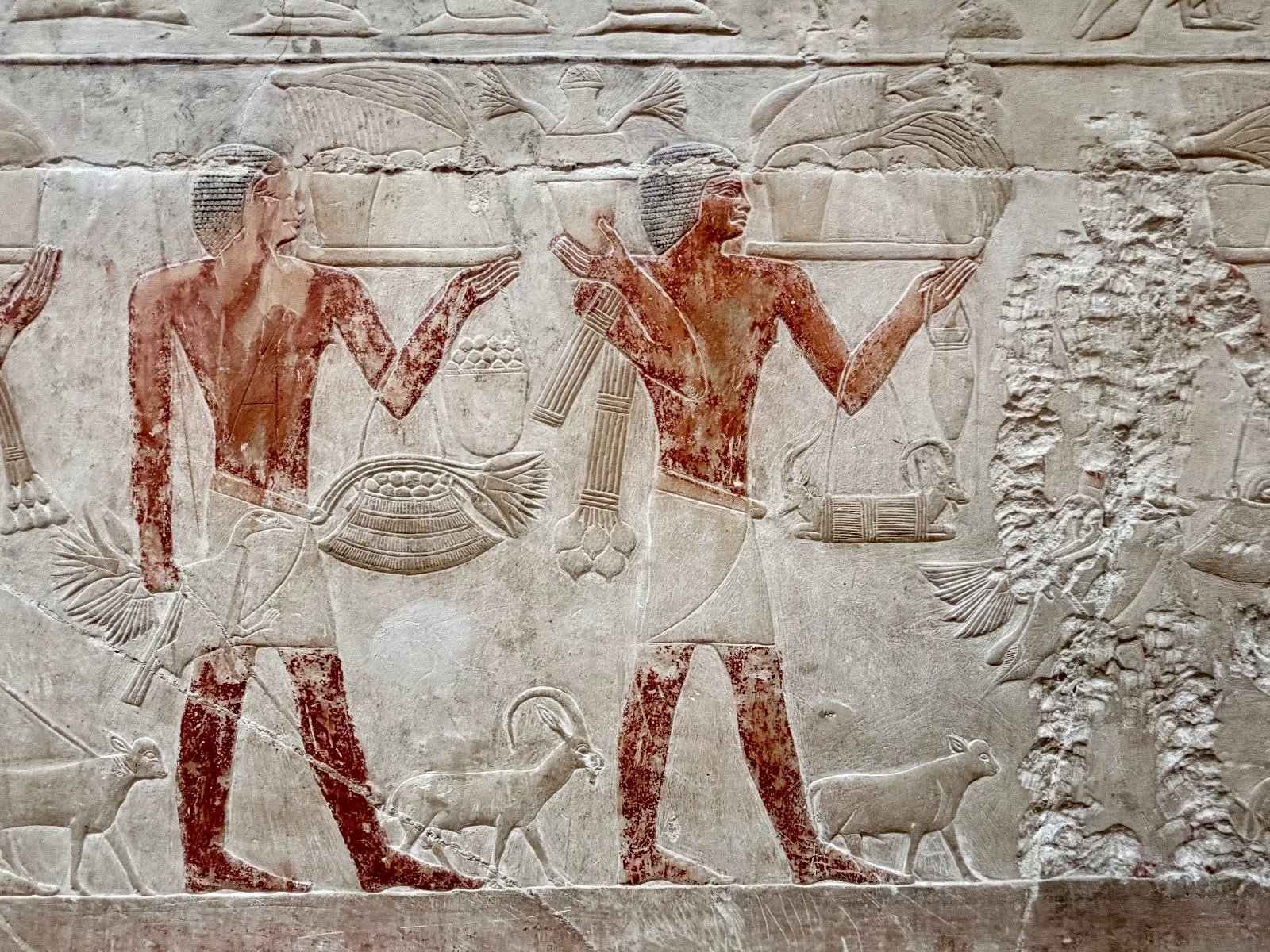
Mastaba of Mereruka (just north of the Teti pyramid) is the largest Old Kingdom private tomb in Egypt and the richest relief-by-relief record of daily life on the plateau: metalworkers, boatbuilders, cattle being force-fed, scribes being called to account. It is an EGP 200 add-on (students 100). It takes groups, but the rooms are small and low, so expect to shuffle and wait at doorways while a guide finishes a wall.
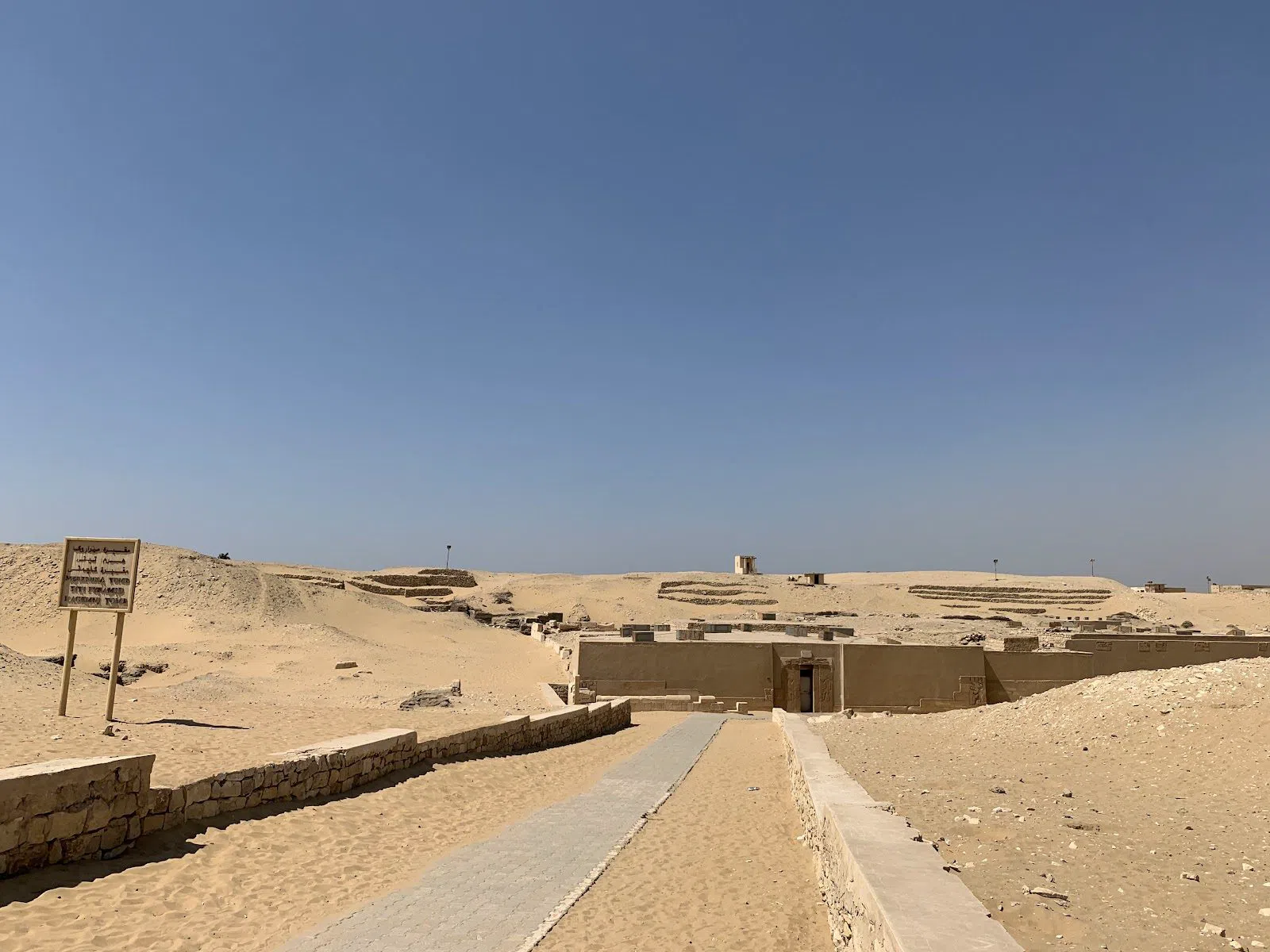
Mastaba of Kagemni (immediately beside Mereruka) is covered by the noble-tombs element of the site ticket, though tomb groupings change, so confirm at the ticket office. The carving is shallower than Mereruka's but better preserved than most, and it costs almost no walking. The flat roof next door gives guides somewhere to brief a whole coach in the open air, which is why you often see a group standing on it.
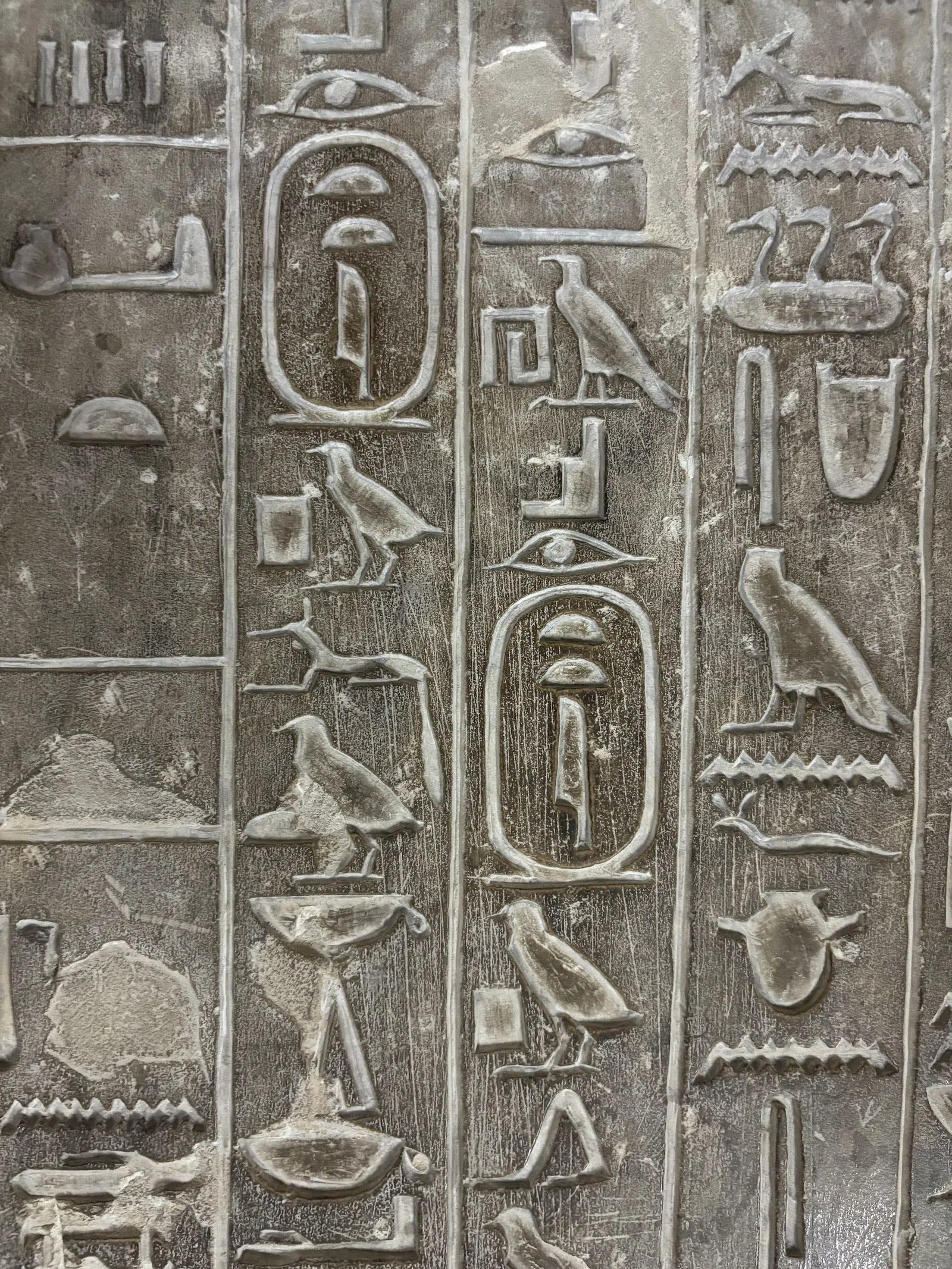
Pyramid of Teti (the same north-east cluster) is covered by the site ticket with no separate charge reported, and you can stand inside a burial chamber carved with Pyramid Texts. The entry passage is a low crouch with no handrail, so skip it if your knees are bad or tight spaces bother you. Unlike its neighbour, it stays open until closing.
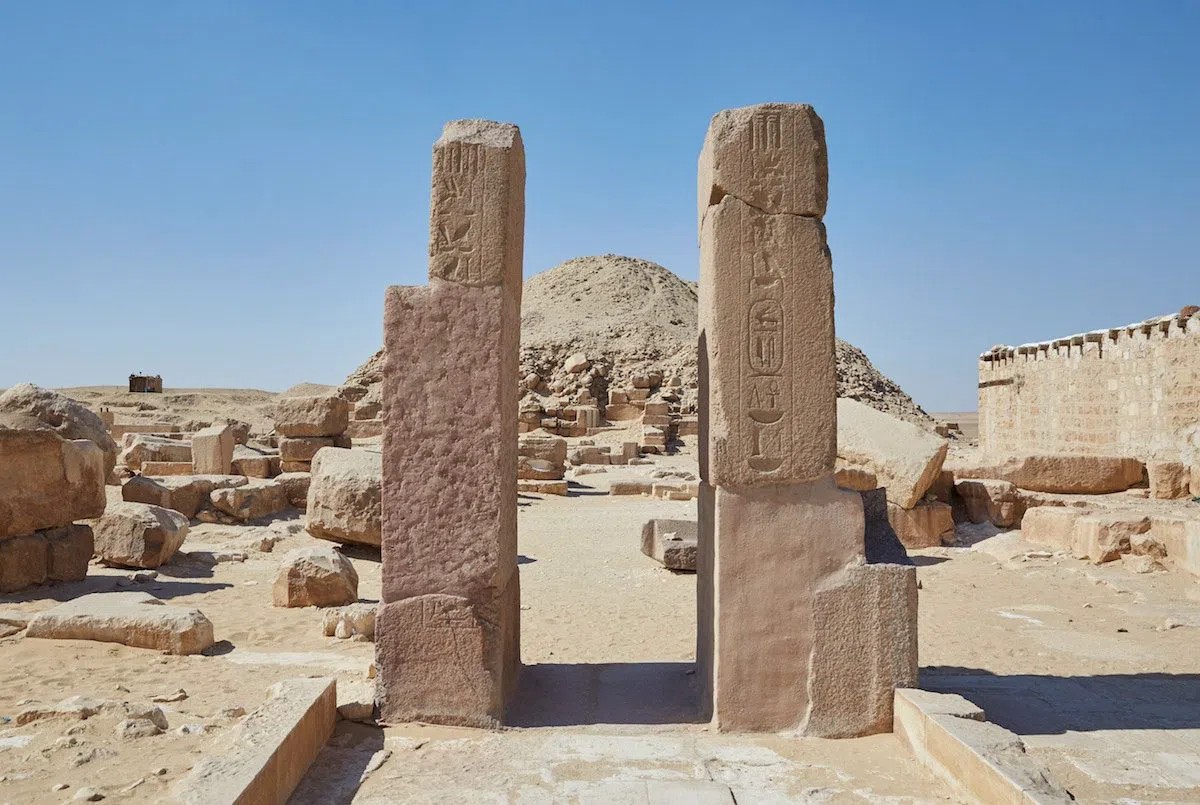
Pyramid of Unas and its causeway (south-west of the Djoser enclosure) reopened after two decades shut and is the strongest single argument for an 08:00 arrival: it has been closing to visitors around midday. The passage is short, steep and low, taken a few people at a time, and it is covered by the site or noble-tombs ticket, reported at around EGP 400 when sold as the tombs add-on.
Tomb of Mehu (near the Unas causeway) has the most intense surviving colour at Saqqara and was opened to visitors relatively recently, so plenty of itineraries still miss it. It is an add-on listed separately by the Ministry, with the price worth checking at the gate. It is also frequently locked, and someone has to go and find the guard with the key: fine if you are two people with time, fatal to the pace of a coach.
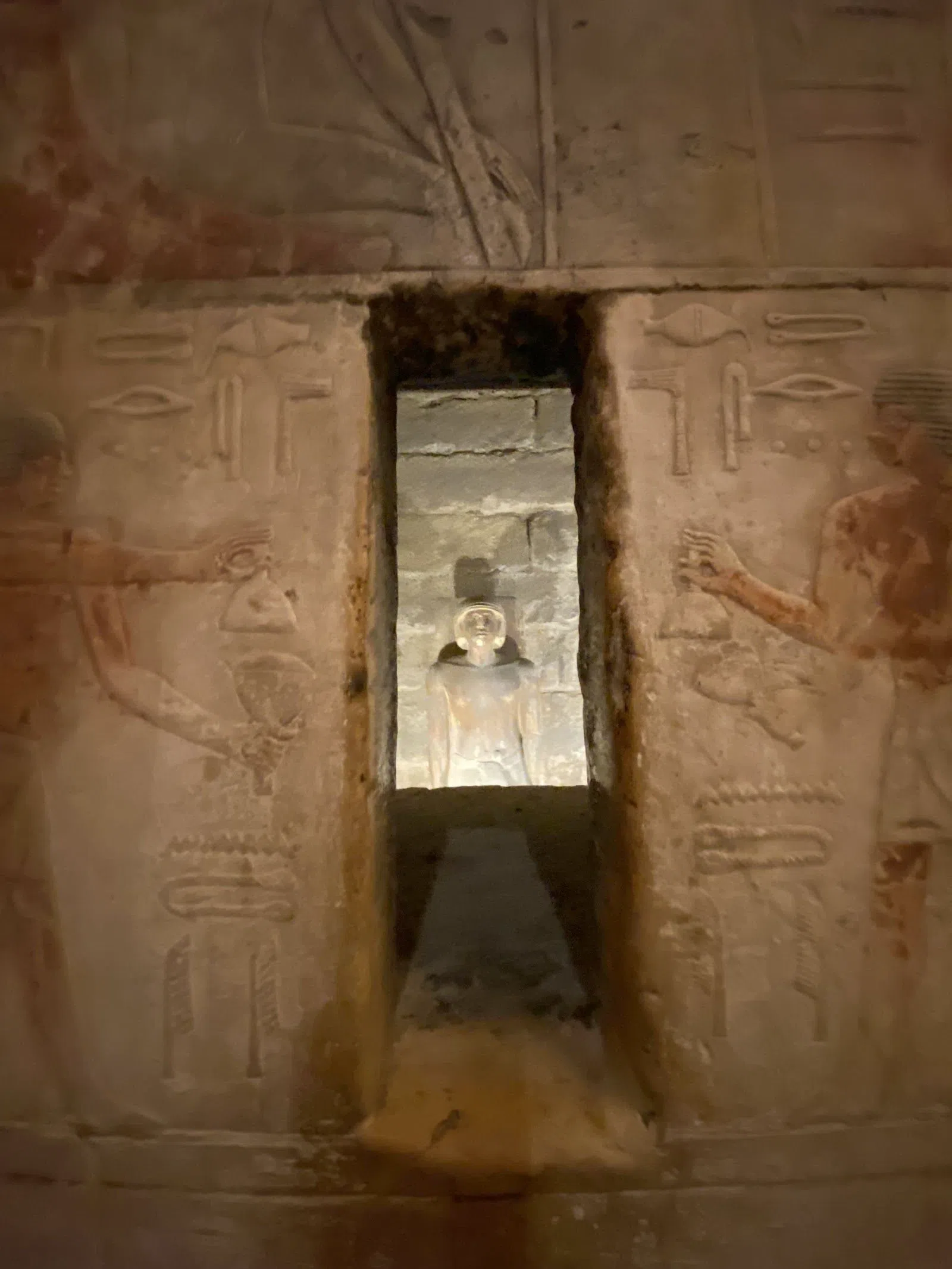
Mastaba of Ti (a short drive north-west of the Step Pyramid) is the classic teaching tomb of the Old Kingdom, with the marsh and hippopotamus scenes everybody has seen in a book, and it is usually quieter than Mereruka. It is covered by the noble-tombs element of the site ticket; confirm at the office. The open entrance courtyard means a guide can talk through the whole thing before anyone goes in, so it works for a group better than its size suggests.
Down among the Apis bulls
The Serapeum of Saqqara (north-west of the Step Pyramid, near the Ti tomb) is the one place here that startles people. It is the burial vault of the sacred Apis bulls: a rock-cut gallery lined with granite sarcophagi the size of small rooms, each one quarried, hauled and lowered into a side chamber for an animal. Auguste Mariette dug it out in 1850 and the scale still does not translate into photographs.
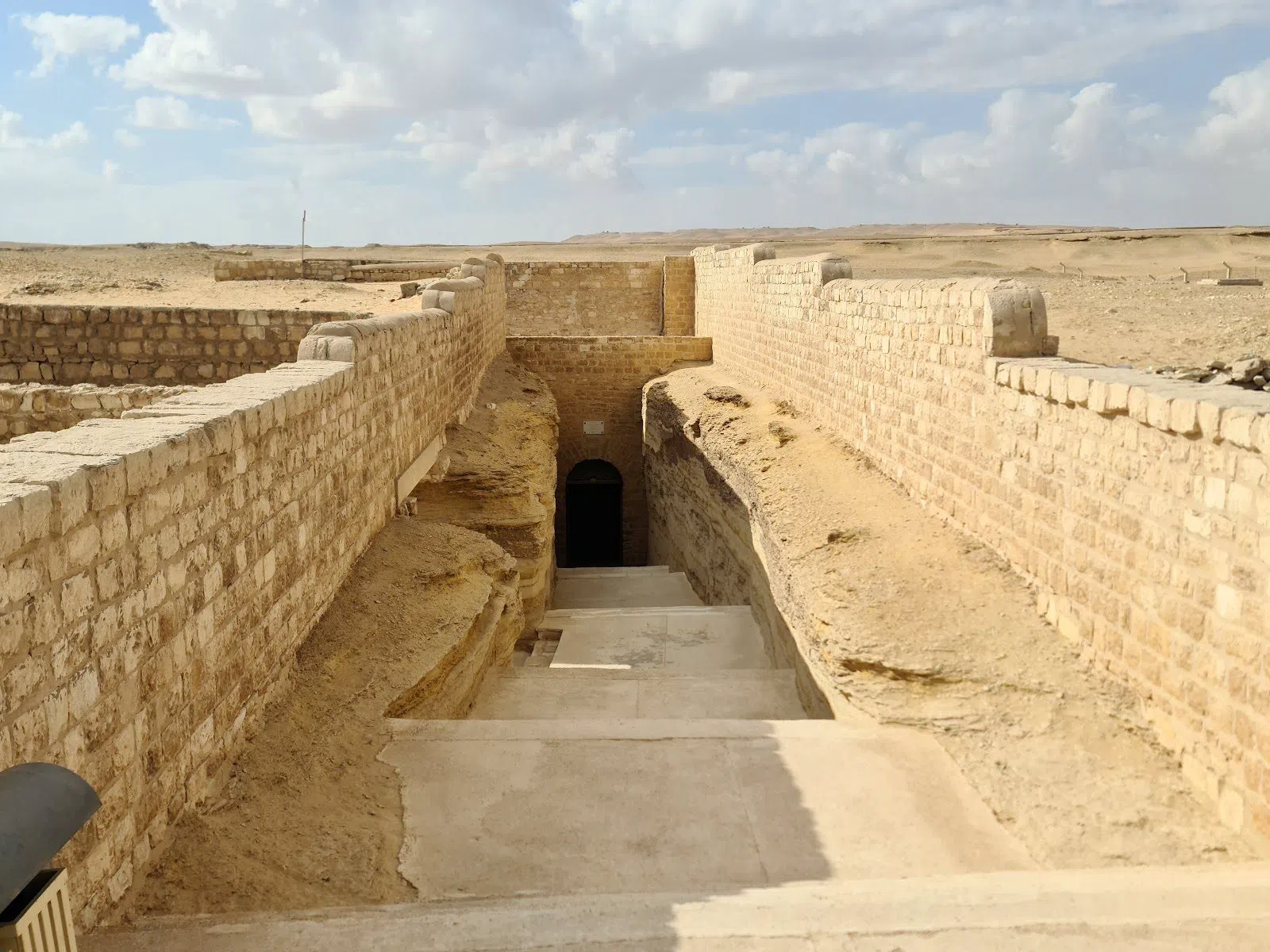
Access is easy by Saqqara standards, a one-way walkway with handrails and no stooping, so it is fine for any size of group. The only real problem is air: when two coaches arrive together the galleries get close and warm. It is cool and shaded otherwise, which makes it the right thing to do in the middle of the day rather than first thing. EGP 340, students 170.
The cliff where the digging is still going on
For anyone who follows the excavation news, the Tomb of Maia (Bubasteion necropolis, in the cliff on the site's eastern edge) is the one to ask about at the gate. Maia was nurse to Tutankhamun, and her New Kingdom rock-cut tomb sits in the same cliff face as the 2025-26 New Kingdom discoveries. Only two of the Bubasteion tombs are open and the path along the cliff is uneven, so it suits small groups and reasonably sure feet. It falls under the New Kingdom and noble-tombs ticket, reported at around EGP 400, or the EGP 1,400 inclusive.
How long the plateau actually takes
A realistic core visit: forty minutes in the museum, an hour on the Djoser enclosure including the pyramid interior and its batching, twenty minutes in the South Tomb, forty minutes across two noble tombs, half an hour at the Serapeum plus the short drive to it. That is three to three and a half hours before lunch, and it assumes you are not waiting on a guard with a key.
Add the ancient capital and a second pyramid interior and you are looking at a six-hour day on the ground, plus the drive each way from Cairo. Most people who try to do all of it after a late start end up walking the plateau in the hottest part of the afternoon with two tombs left unvisited.
Adding the ancient capital and the Dahshur descent
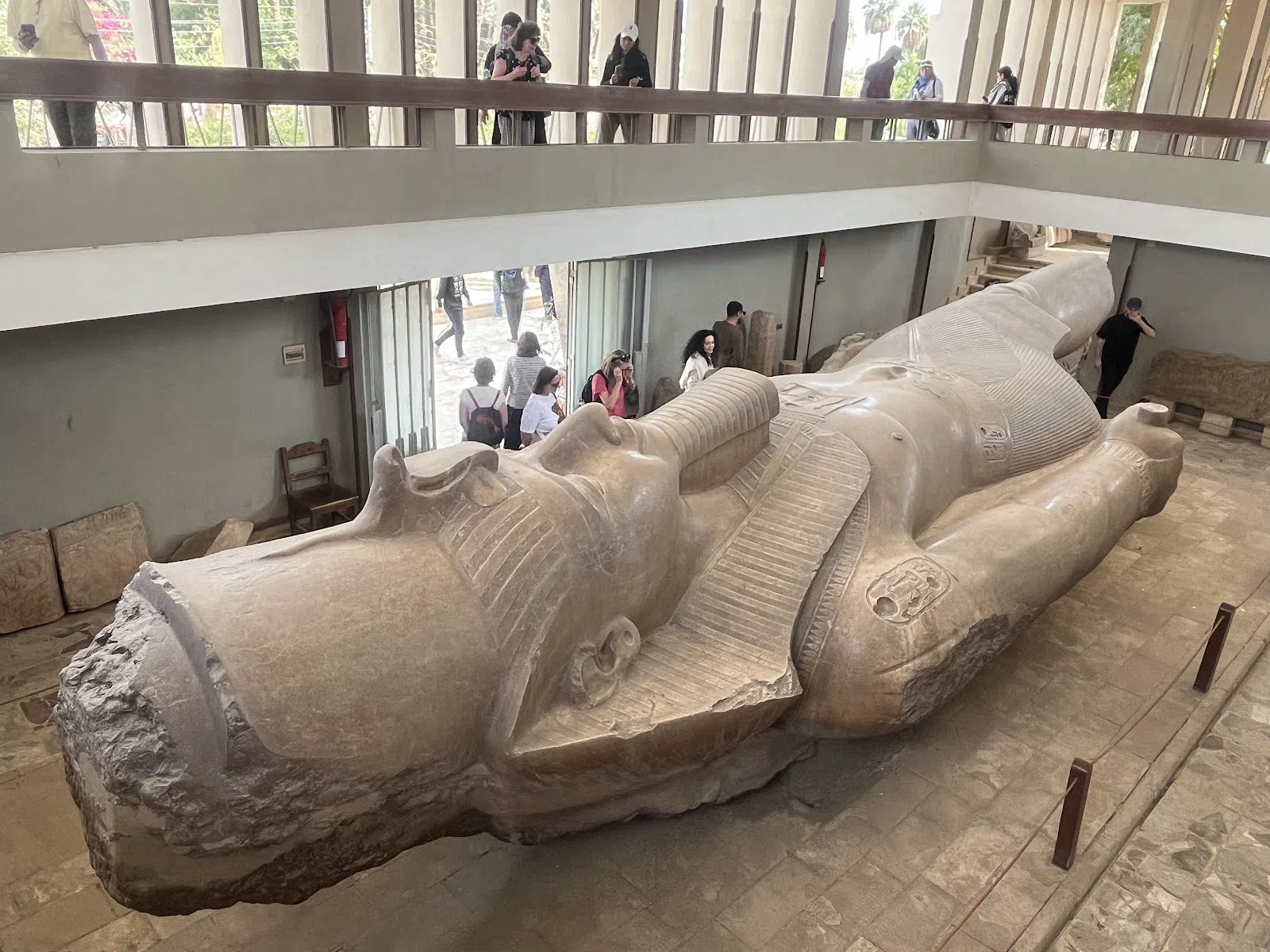
Memphis Open-Air Museum (Mit Rahina village, ten minutes down the hill) is the city Saqqara was the cemetery for, and it is the most group-friendly stop of the day: flat, compact, with coach parking, done in thirty to forty-five minutes. Around EGP 200 for foreign adults, students about half. Treat the hall with the fallen colossus of Ramesses II as the must-see and the open field of fragments as optional.
The Red Pyramid (Dahshur, roughly twenty minutes further south) is the natural third stop and the quietest big-pyramid interior in Egypt. EGP 200 for foreigners, students 100, open daily 08:00-17:00 with last entry at 16:00. Open desert absorbs any size of group, but the descent is single-file, crouched and hot, and half a coach normally decides to wait outside. What you get at the bottom is three chambers with stepped corbelled ceilings rising above you, the engineering experiment that made Djoser's steps into a true pyramid. The Bent Pyramid is on the same ticket and also enterable, by the wooden stair on its north face.
Tickets at the gate and what to buy
Site entry is EGP 600, students 300, and that includes the museum. Buy the Step Pyramid interior at EGP 280 and you are at 880. Add the South Tomb at 300, the Serapeum at 340 and Mereruka at 200 and you are at 1,740, more than the EGP 1,400 inclusive all-monuments ticket. The arithmetic is simple: if you intend to do two or more add-ons, buy the inclusive one and stop counting.
Two warnings. The gate takes card payment only, so carry a card you know works and keep cash for everything outside the fence. And the tomb groupings do change, so ask at the ticket office which tombs today's noble-tombs element actually opens before you pay for extras.
Doors, knees and group size
Saqqara has a dozen doors and each one has its own access standard. The Djoser court and the Imhotep Museum take coaches without strain. The Serapeum walkway handles any group. Memphis is flat and easy. Everything else narrows: the pyramid passages at Djoser, Teti and Unas are low, unaided and taken in small batches; the South Tomb and Mehu are for pairs and handfuls; Mereruka and Kagemni mean shuffling and waiting at doorways. There is no step-free route into any interior on the plateau, no lift, and no shortcut back out of a passage once you are in it. If knees, chest or claustrophobia are a factor, the plan that works is the museum, the court, the Serapeum and two decorated tombs, with no descents at all. That is still a full, coherent morning.
A guided day is bookable ahead from 70 USD per person and runs seven days a week. The guided options here carry 3,402 traveller reviews between them, and the top one is rated 4.6 out of 5 from 918 reviews. The honest case for it is logistics rather than access: one vehicle, a guide who knows which tombs are open today, and someone else dealing with the ticket windows. The case against it is that group itineraries are the reason the South Tomb and Mehu stay quiet.
Lunch and the road back
Blue Lotus of Sakkara (2 km from the Saqqara ticket office, opposite the carpet schools) is the one good meal in the area: a family-run guesthouse kitchen doing home-cooked set meals, moderately priced, cash only, winding down around 16:00. It is small, it cooks to order, and it is not a coach stop, so book ahead and arrive as a couple or a handful.
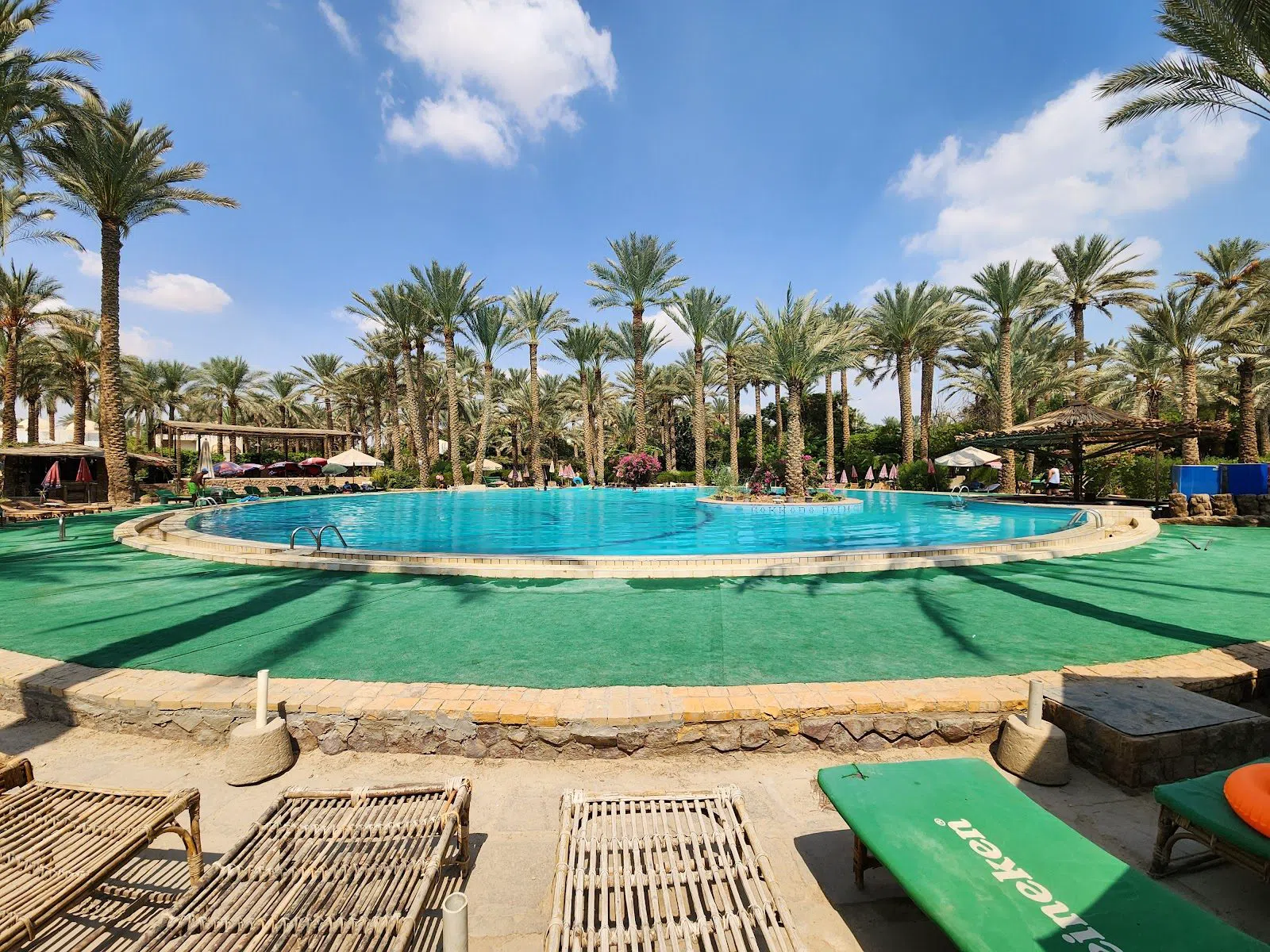
Saqqara Palm Club (closest to the site entrance) is the other model entirely: buffet service, day-use packages including the pool from roughly EGP 150 up depending on what is included. Include it for what it is, the standard group lunch and toilet stop with a solid Egyptian buffet, rather than somewhere you would drive out for.
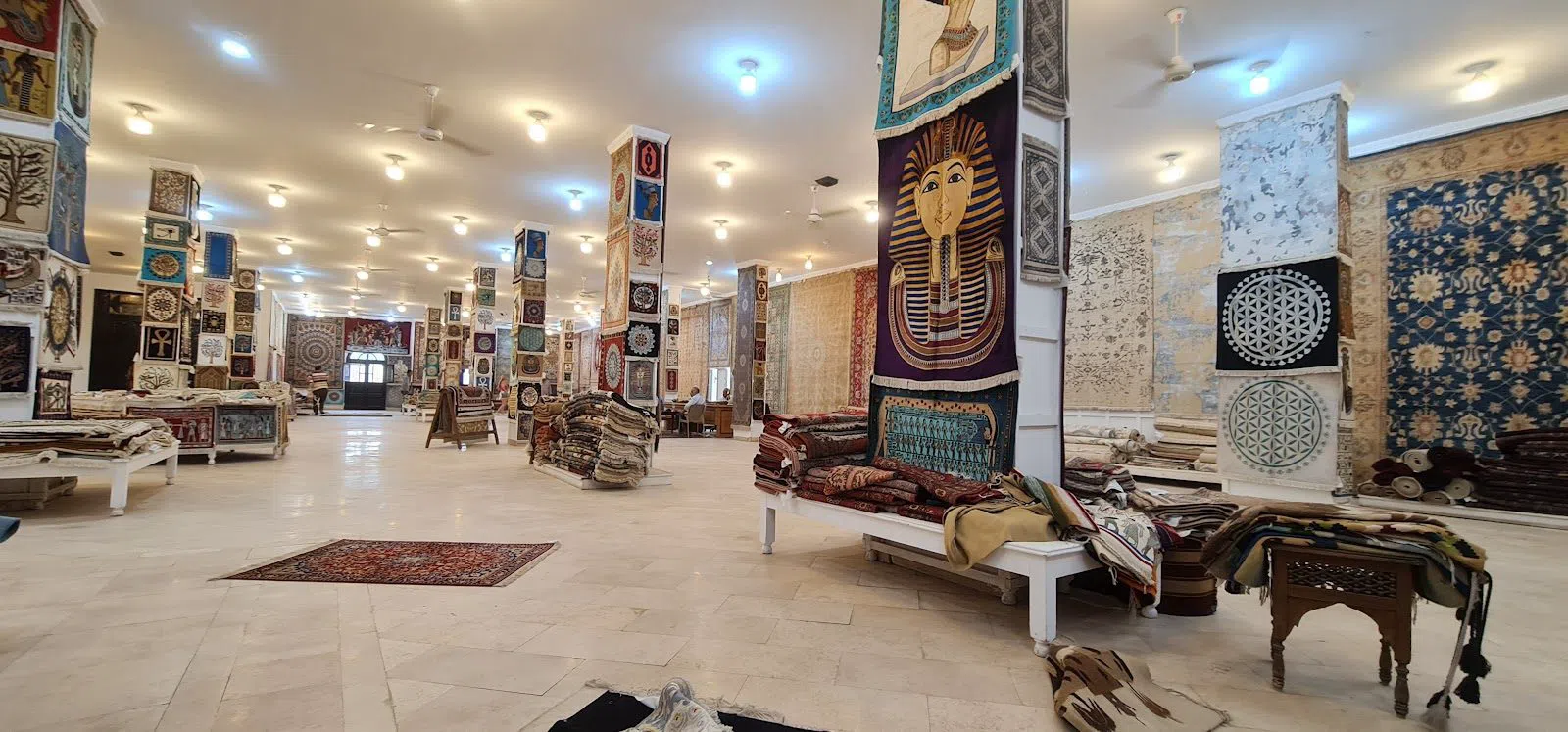
On the way back, Ramses Wissa Wassef Art Centre (Harrania, on the Saqqara road) is worth the twenty minutes. It is a working weaving school, open daily 10:00-16:00 with Mondays by appointment and email ahead for groups or a workshop visit. Looking around is free; tapestries start in the low thousands of EGP and climb. It is the straight alternative to the roadside sales rooms that call themselves carpet schools, and the difference is visible within a minute of walking in.
Best time to go in October 2026
October is the first month of the year when Saqqara is comfortable rather than survivable, and the plateau has no natural shade whatsoever: no trees, no colonnade you can sit under, nothing between you and the sky except the museum. Early in the month expect around 30 °C or a little above by midday, easing as the weeks go on. That makes the schedule obvious. Be at the gate for 08:00, do the enclosure and any pyramid interior while the stone is still cool, use the Serapeum and the museum when the sun is highest, and be at lunch by one.
The 08:00 start is not only about heat. Unas has been shutting to visitors around midday, the Step Pyramid passage batches far faster before the coaches land, and the long low light across the stepped faces is a morning thing. Coach traffic from Cairo is heaviest mid-week; Friday mornings tend to be the quietest run out of the city, and the guided day runs every day of the week, so there is no scheduling reason to pick a busy one. Bring a hat and more water than you think, because the museum café is the only place to restock inside the fence.
Is it worth it
Yes, with a caveat about expectations. Saqqara is a working archaeological landscape rather than a bigger version of a famous pyramid skyline, and the material worth seeing is at eye level and underground: relief carving, faience, a bull's granite sarcophagus, the first attempt at anything. People who like architecture, engineering or social history will find more here in three hours than in a whole day of exterior photographs. People who mainly want the postcard will find it dusty and diffuse.
It suits independent pairs best, because the two things most worth doing (the South Tomb and Mehu) are exactly the two a coach cannot absorb. It also suits families with older children who will go down a passage, and anyone combining it with the ancient capital and a second pyramid interior into one considered day rather than a tick-list. For context on the rest of the city and what pairs well with a desert morning, the Cairo guide is the place to start.
Practical notes
Getting there. No metro or train reaches Saqqara. It is roughly 30 km from central Cairo, about 45 minutes on a clear road and closer to 90 in the morning rush. Ride-hailing out is straightforward; getting a car back from the gate is not, so hire a car and driver for the day and keep it with you between the plateau, Mit Rahina and Dahshur. Distances inside the site are driving distances, not walking ones.
Money. The Saqqara gate is card only. For everything else (the farm lunch, tips, the guard with the key, anything at Memphis or Dahshur) assume cash in EGP. Blue Lotus is cash only outright.
Timing. Gate at 08:00. Core plateau three to three and a half hours. Lunch by 13:00. Memphis and the Red Pyramid add about two hours plus drives, with Dahshur's last entry at 16:00.
Budget per person, at the door. EGP 1,400 inclusive at Saqqara covers the site, the pyramid interior and the add-on monuments, which beats paying piecemeal once you want two or more; EGP 200 at Memphis; EGP 200 at Dahshur. Call it around EGP 1,800 in tickets for a full day, plus the car and lunch, or from 70 USD per person for a guided day where someone else handles all of it.
Where to stay. Anywhere with a quick road out to the southern desert saves you an hour of city traffic at dawn. Start with the Cairo hotel search and prioritise the run south over the view.
Voor vertrek
What does Saqqara cost at the gate in 2026?
Site entry is EGP 600 (students 300) and includes the Imhotep Museum. Going inside the Step Pyramid is EGP 280 more. Add-ons include the South Tomb of Djoser at EGP 300, the Serapeum at EGP 340 (students 170) and Mereruka at EGP 200. The all-monuments inclusive ticket is EGP 1,400, which is the cheaper choice as soon as you want two or more add-ons. The gate takes card payment only.
How long do you need at Saqqara, and can you add Memphis and Dahshur?
Allow three to three and a half hours for the core visit: the Imhotep Museum, the Djoser enclosure and its pyramid interior, the South Tomb, two decorated tombs and the Serapeum. Memphis at Mit Rahina is ten minutes down the hill and takes 30-45 minutes; the Red Pyramid at Dahshur is about 20 minutes further and needs an hour or more. All three together is a six-hour day on the ground plus the drive from Cairo each way.
Is going inside the Step Pyramid claustrophobic?
Yes, for some people. Only the southern passage is open and it is a single narrow stone tunnel with no passing place, running down to the 28 m central shaft where Djoser's stone sarcophagus sits. Guides send visitors through in small batches, so you may wait at the mouth. Expect ten to fifteen minutes inside. If enclosed spaces are a problem, skip it and spend the EGP 280 on the Serapeum or Mereruka instead.
What time should you arrive in October?
08:00, when the gate opens. There is no shade anywhere on the plateau except the museum, and early October midday sits around 30 °C or a little above. An early start also means the pyramid passage batches faster before the coaches arrive, and the Unas pyramid has been closing to visitors around midday. Do the open enclosure first, keep the Serapeum and the museum for the hottest hours, and be at lunch by one.
Do you need a guided tour, or can you just turn up?
You can turn up and buy everything at the gate, and independent pairs do well at Saqqara because the South Tomb and the Tomb of Mehu are too small for coach groups. A guided day is bookable ahead from 70 USD per person and runs seven days a week; the case for it is logistics, one vehicle for the whole loop and a guide who knows which tombs are unlocked today. The guided options here carry 3,402 traveller reviews between them, and the top-rated one has 4.6 out of 5 from 918 reviews.