The Cairo issue
Eating Cairo from the Koshary Counter to the Juice Window
One day of eating in Cairo, beginning at the morning foul counters and ending at a mango juice window, with the price, the queue and the door to expect at every stop.
By Nadia HaddadEating Cairo from the dawn markets to the last koshari counter
Fried onions reach you before the door does: that sweet, faintly scorched drift off a koshary counter, hanging over the pavement a full block before you arrive. Behind it comes charcoal off a kebab grill, and behind that the wet-green smell of a juice window where mangoes go into the press with their skins still on. Cairo feeds you standing up, and most of the best of it costs less than a hotel coffee.
What follows is a route rather than a ranking. It runs the way the city's own appetite runs: beans and fritters early, koshary at midday, bread and charcoal through the afternoon and evening, then sugar, then juice, then tea. I have been back to every place on it. I do not judge a kitchen on one plate, and neither should you, because a counter that is glorious at 9am can be tired and over-salted at 4pm. Take the trail in two days if you have them. In one long day it is perfectly walkable in Downtown, with two deliberate detours by car.
Start where the city starts, with foul and ta'ameya
Egypt eats foul medames (فول مدمس, fava beans stewed slow overnight until they collapse into something between a stew and a spread) and ta'ameya (طعمية, the fritter made from split fava beans rather than chickpeas, green inside, crusted with sesame) in the morning. It is not a curiosity breakfast. It is what gets a city of millions to work.
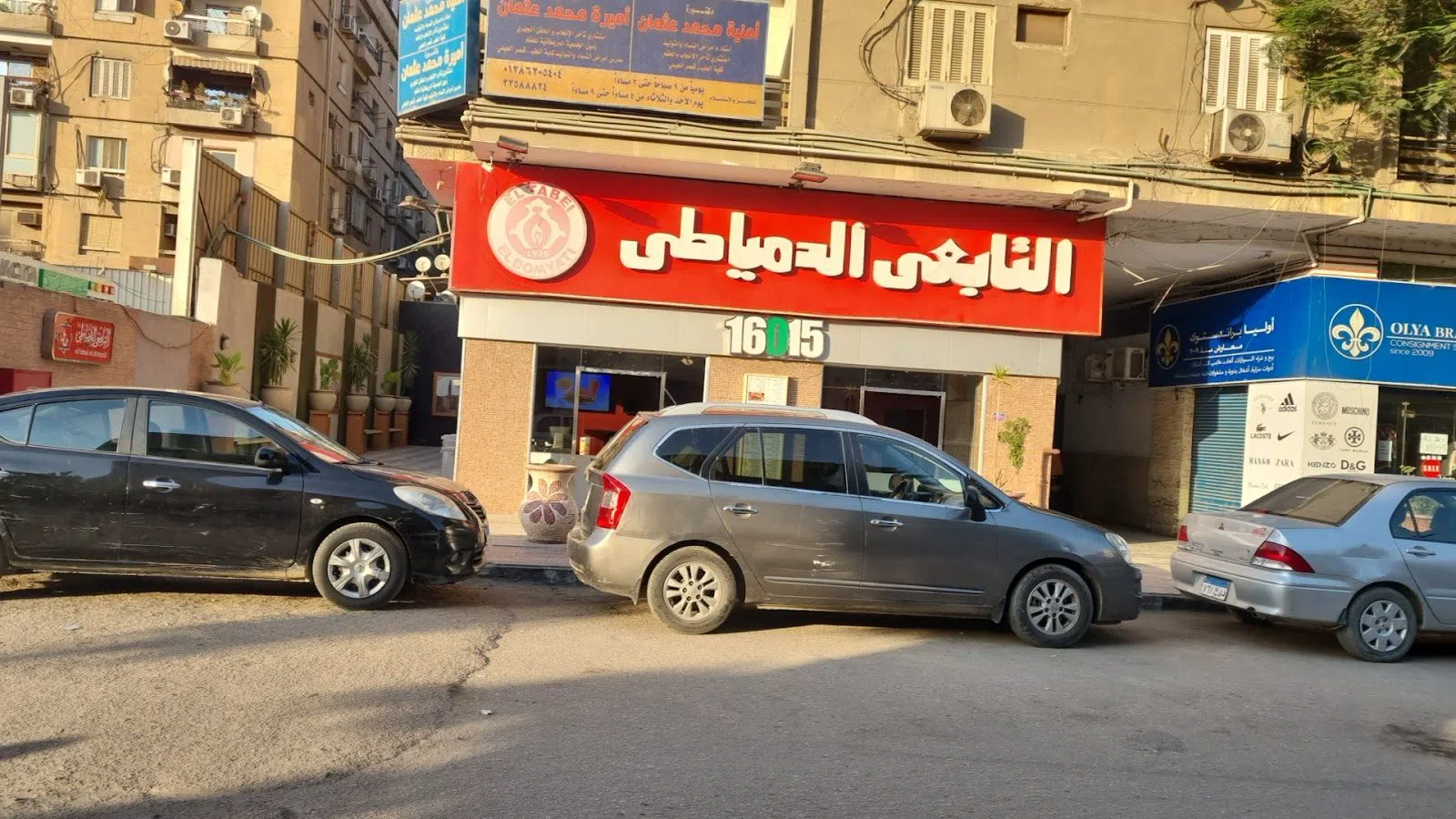
El Tabei El Domyati (Downtown, with branches in Abbassiya, Mohandessin, Maadi, Nasr City and New Cairo) is where to have it. Order at the counter, pay, carry the tray. A plate of foul comes swimming in oil with cumin and lemon and you tear baladi bread into it; the ta'ameya arrives hot enough to hurt, and that is the only state in which it is worth eating, because a cold ta'ameya is a different, sadder food. Expect 30–80 EGP (roughly $0.60–1.60) for a full breakfast. Groups are easy here because nobody is sitting for long. Come to a chain rather than an unmarked cart for the turnover and the kitchen discipline you can see, on a morning when your stomach has not yet met the city.
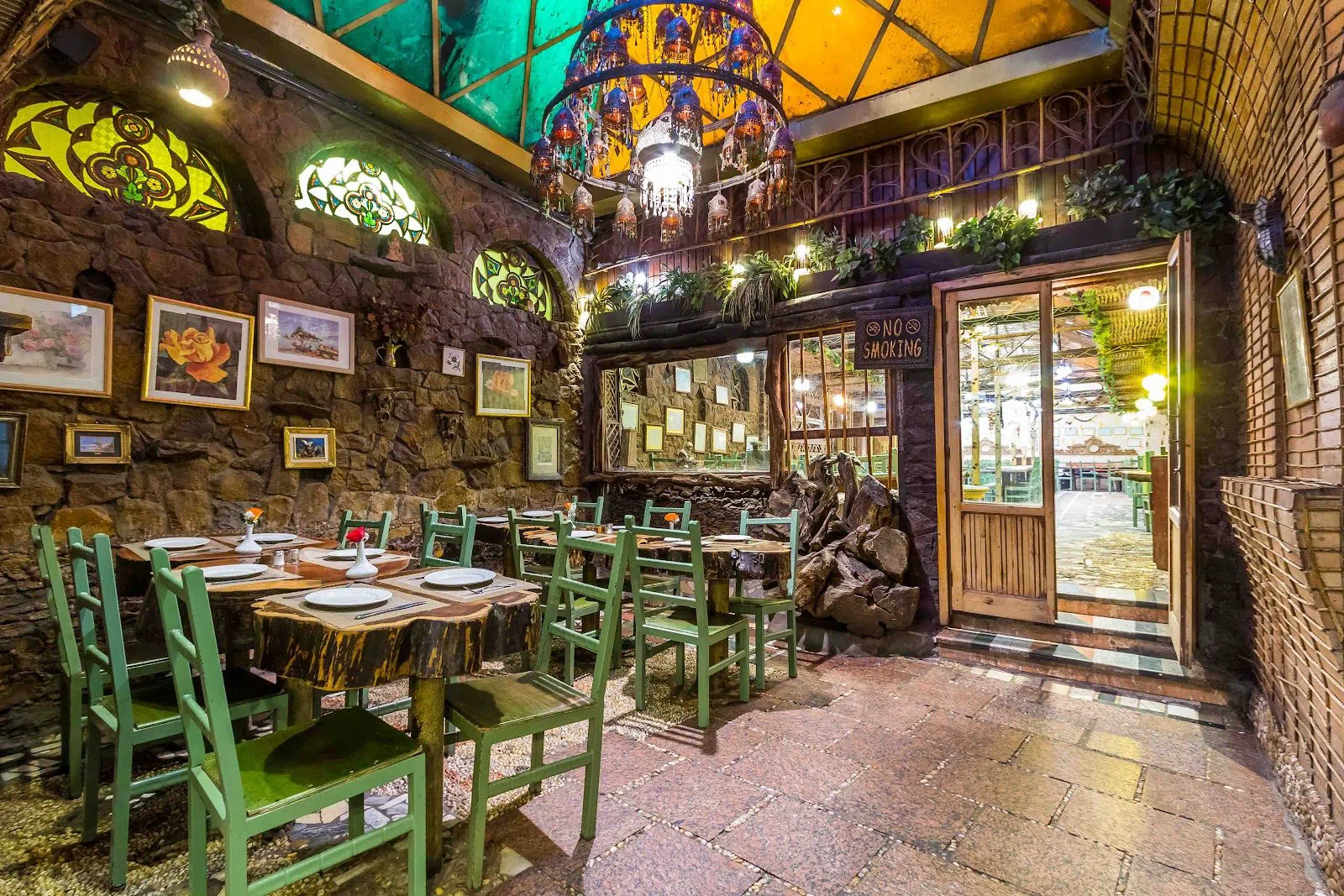
If you would rather sit down and be looked after, Felfela (Downtown) has been doing this since 1959, in a long dim hall built for big tables, comfortable with foreigners and entirely used to a party of eight walking in. The ta'ameya is the gentlest introduction in the city, and the molokheya (ملوخية, jute-leaf soup, garlicky and green and deliberately slippery) is the version to try first if you are unsure about the texture. Two honest warnings: it is cash only, and they add a small charge for cutlery and service, which surprises people who did not read the bill. Budget 150–350 EGP (~$3–7) a head. The Downtown original is separately managed from the later branches and keeps the original recipes, so it is the one to go to.
Plan your Cairo trip
Live prices from our booking partners.
Free cancellation on many rooms. We may earn a commission when you book.
The koshary argument you settle for yourself
Koshary (كشري) is rice, brown lentils, macaroni and chickpeas under a fierce tomato sauce, buried in fried onions, then wrecked in the best way with da'a (دقة, garlic-vinegar) and shatta (شطة, chilli). It is carbohydrate on carbohydrate on carbohydrate, invented by poor people to be filling and perfected into something delicious.
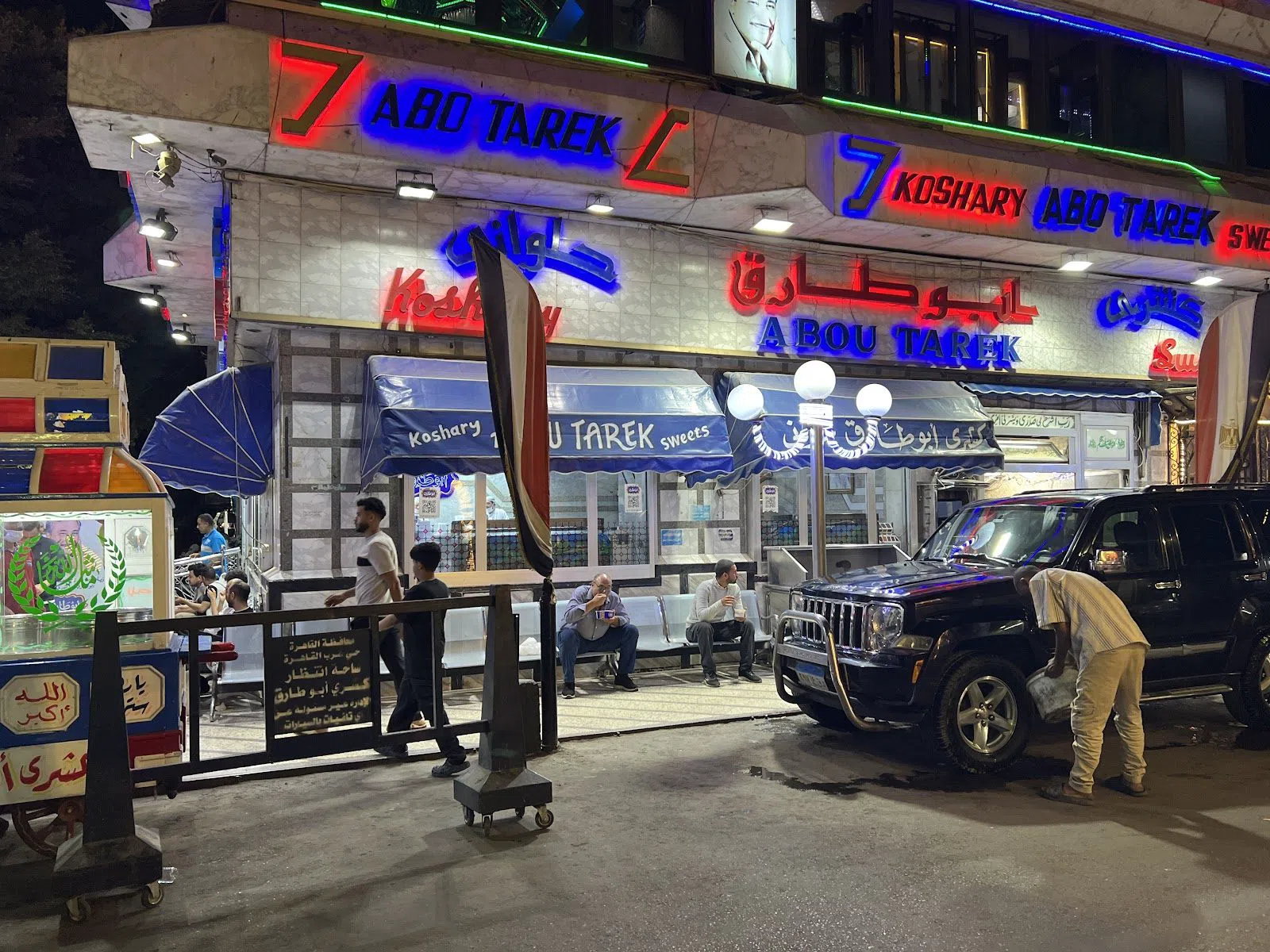
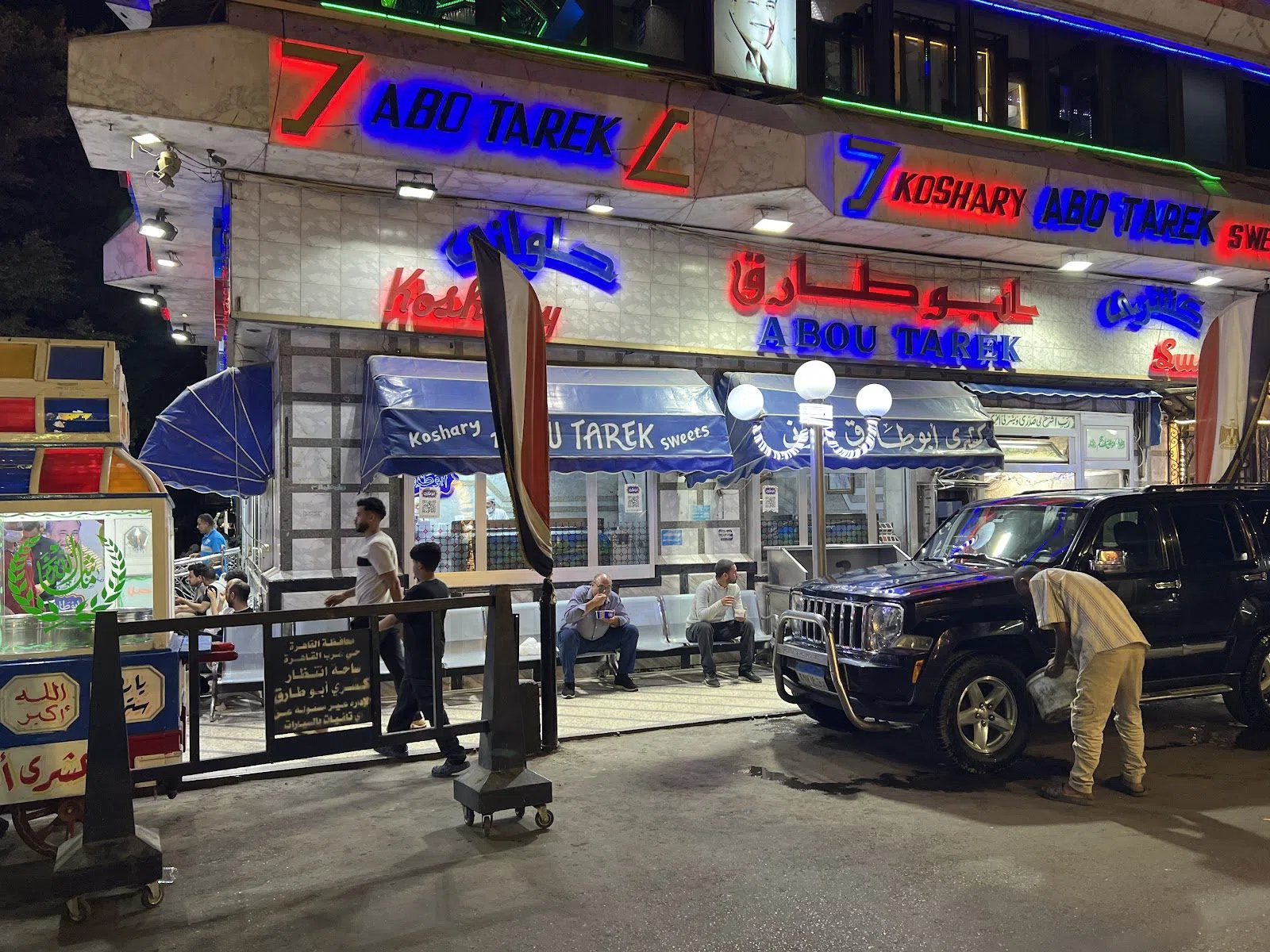
Koshary Abou Tarek (Downtown) is the famous one: a street cart in the 1950s, now five floors of seating with a doorman and a mad, efficient churn of trays. Walk-in groups of ten and more get absorbed without a booking, because no reservations are taken and the tables turn in fifteen minutes. A bowl is 40–90 EGP (~$1–2). It is loud, bright, slightly theatrical, and the sauce is sharper and sweeter than most.
Then walk ten minutes to Koshary El Tahrir (Downtown at 19 Abdel Khaleq Tharwat St, with branches at Bab El Louk, Dokki and Mohandessin) and eat a second, smaller bowl at 25–70 EGP (~$0.50–1.50). This is the consistency pick locals reach for, and doing both is worth the second bowl because the two do not taste the same: the lentils are cooked further here, the onions less caramelised, the whole thing rounder and less acidic. Counter service, no bookings, and a group that does not mind splitting across two tables will be fine. Split one bowl between two people at each and you will have learned more about Egyptian cooking than any single visit teaches.
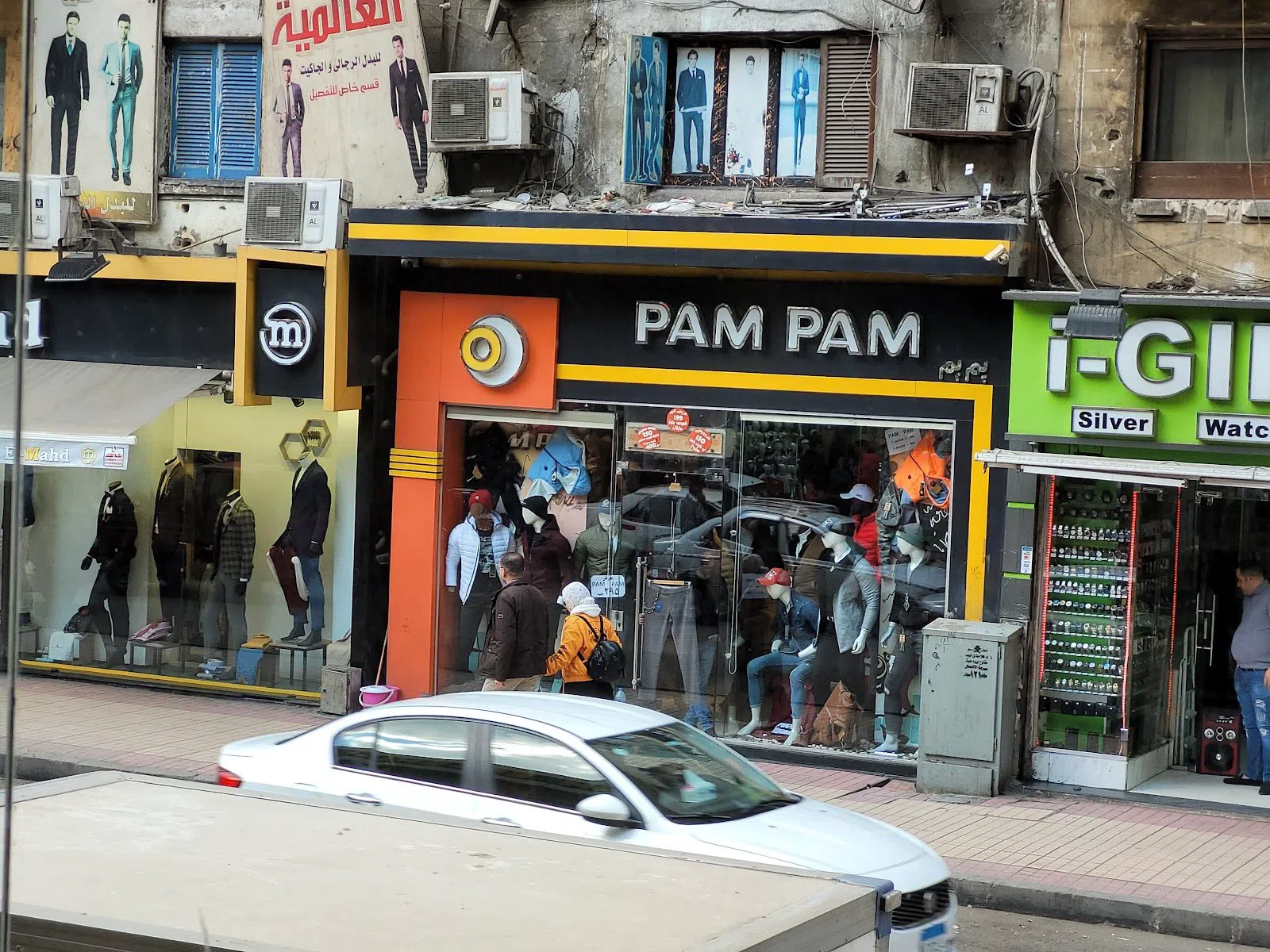
For anyone travelling with a nervous stomach or a fussy teenager, Zooba (Zamalek, Maadi, Citystars and the Grand Egyptian Museum) is the polished translation: counter and table, English menus, ta'ameya and koshary rebuilt with good sourcing and served in a room you would happily sit in for an hour. It was ranked No. 32 in MENA's 50 Best Restaurants 2026, and 80–200 EGP (~$2–4) a dish buys you the easiest entry point on this trail. It does not replace the rough stops, but it makes a good first hour before them.
Bread, charcoal and the long afternoon
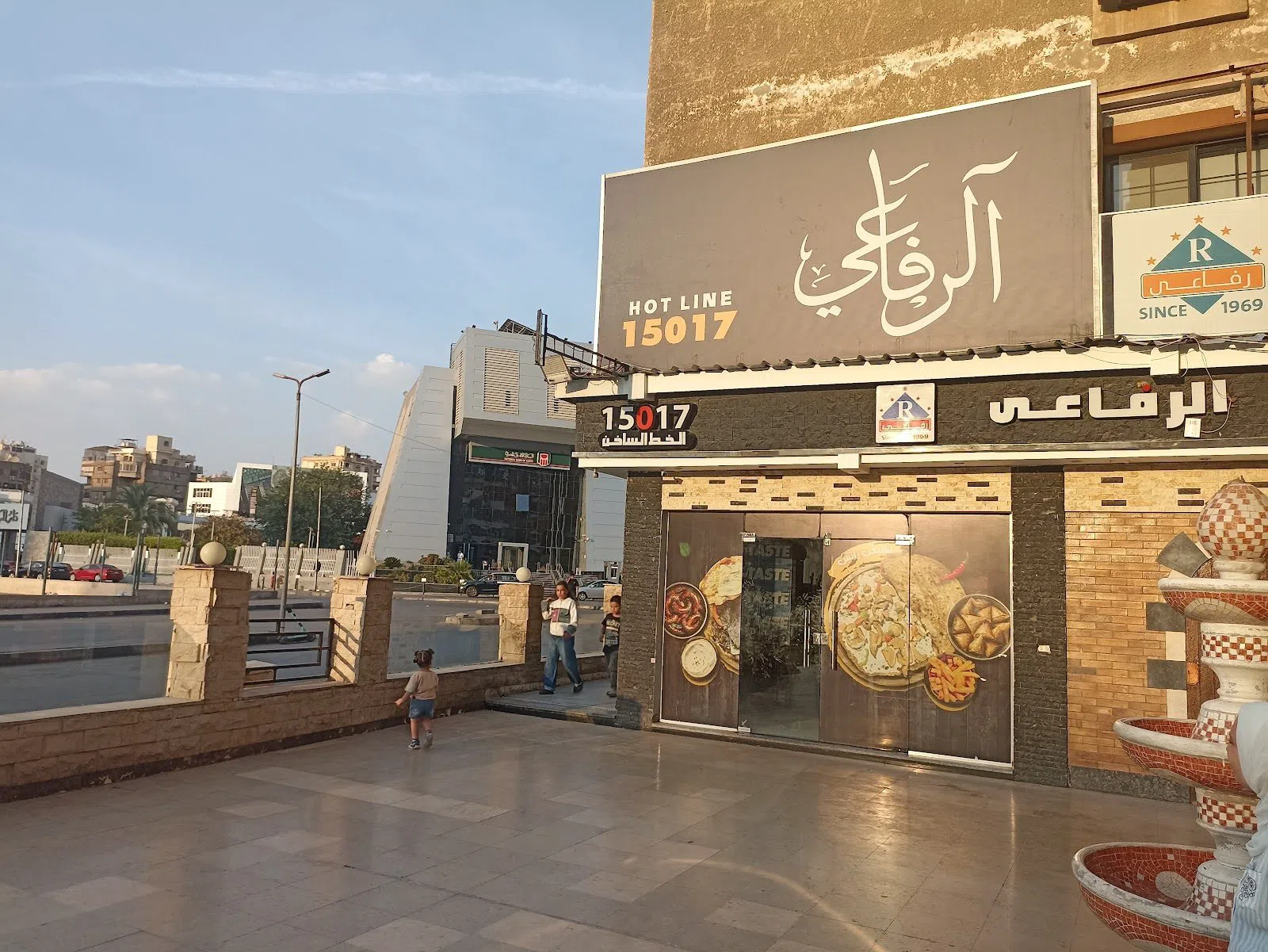
Hawawshi (حواوشي) is minced beef, onion, green pepper and chilli packed into baladi bread and baked until the bread crisps and the fat soaks back in. Hawawshi El-Refaie (Downtown original; newer branch at Gardenia Mall, New Cairo) started as a butcher's in 1969 and is still the benchmark; you can taste that a butcher owns it, in the coarseness of the mince and the amount of fat left in. The original is a tiny shop, mostly takeaway, with standing room only, so send one person to queue while the rest wait outside. The New Cairo branch, the first outside site the family has ever opened, arrived in 2026 and has proper seating. Sandwiches run 60–150 EGP (~$1–3).
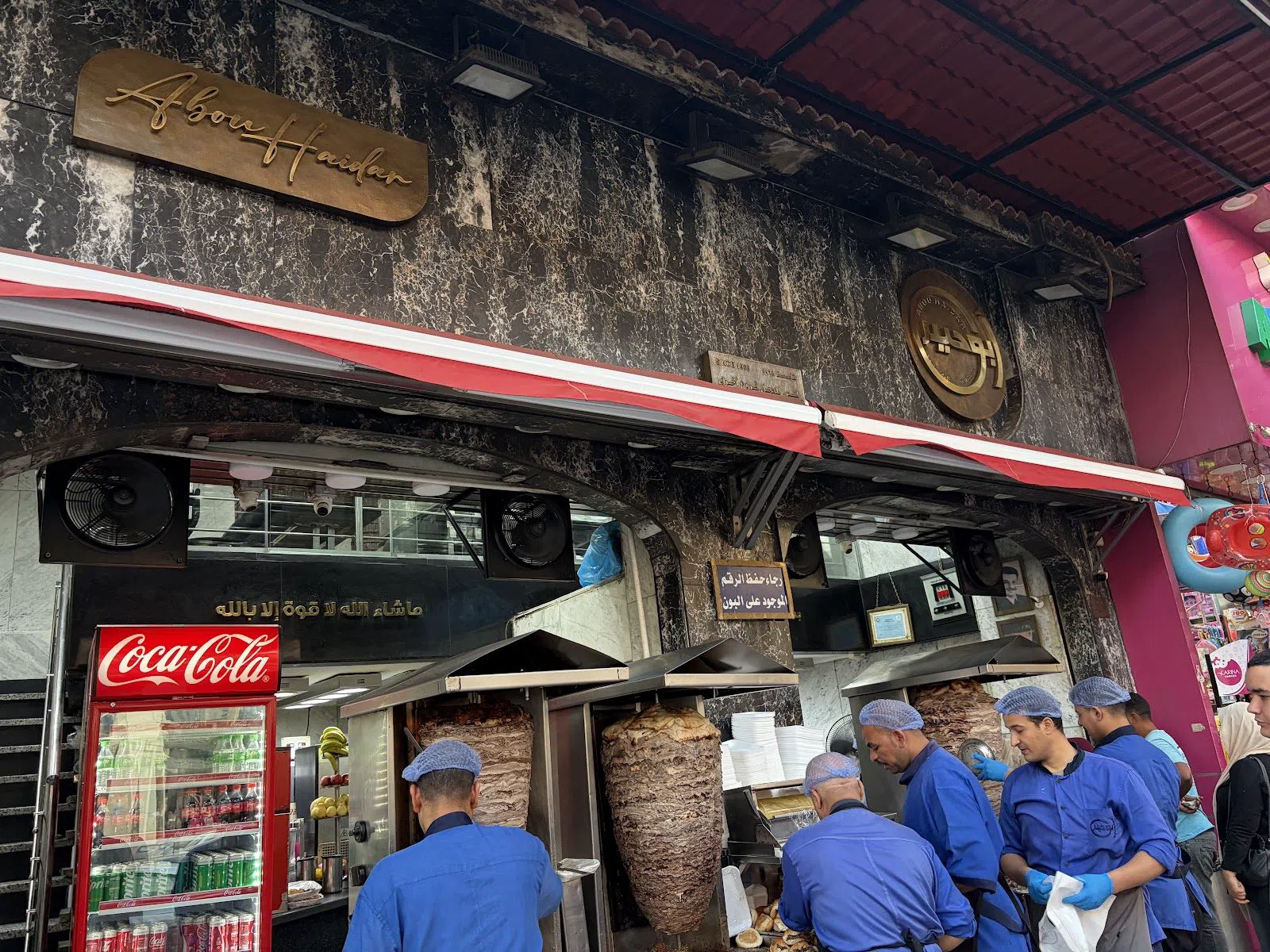
East in Heliopolis, Abou Haidar is one of the oldest fast-food counters in the district and widely rated the best shawarma (شاورما) in Cairo. It is a window with a few stools; groups order and eat on the street, and there is nothing to book. Sandwiches are 70–180 EGP (~$1.50–3.50). Order the mango juice alongside, as the regulars do: cold sweetness against hot fat and garlic sauce is the whole logic of the pairing.
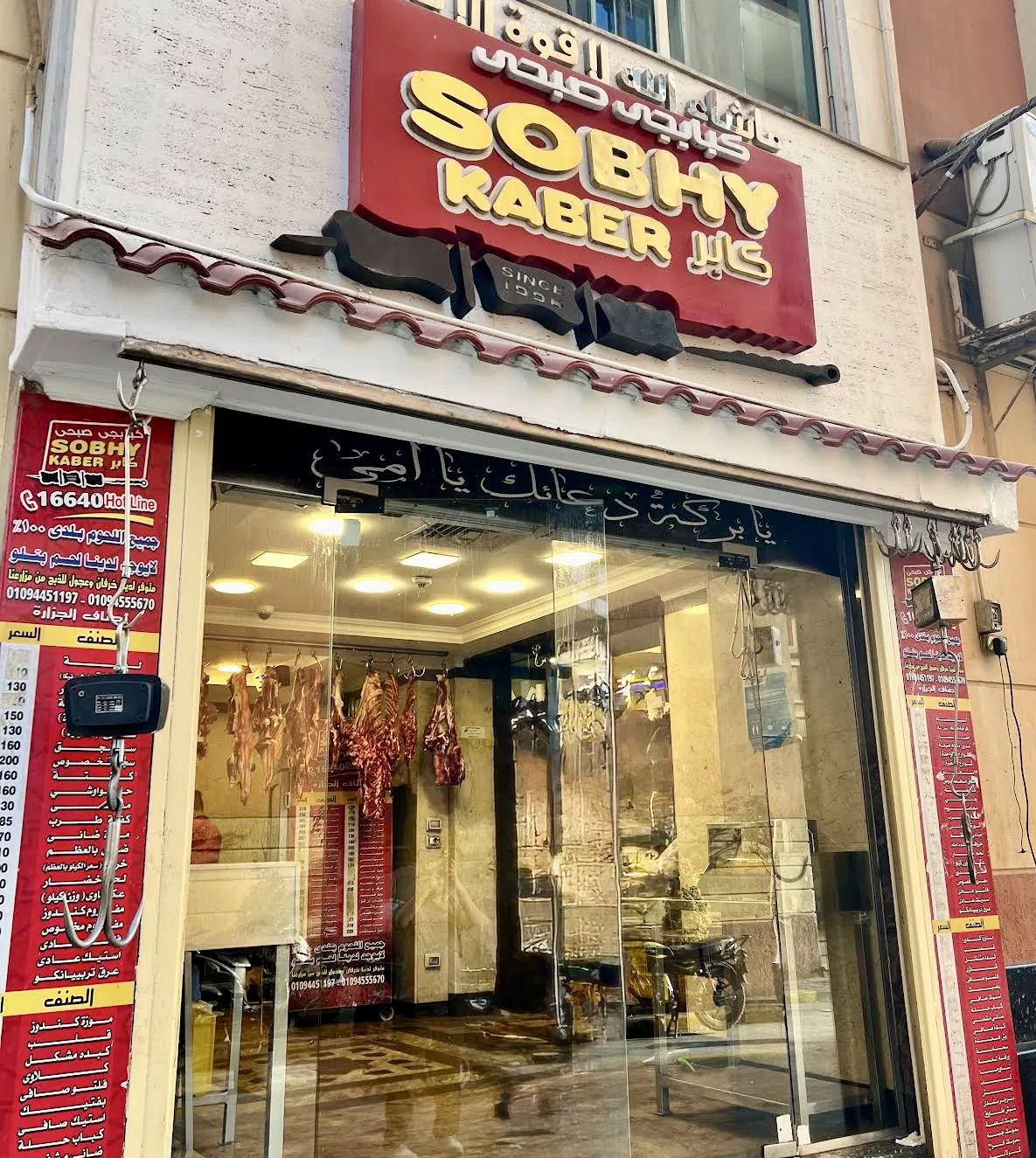
For the evening, cross to Rod El Farag and Sobhy Kaber, which grew from one street vendor into the district's most famous kebabji. This is the real charcoal experience: kofta (كفتة, spiced minced meat pressed onto skewers) and kebab brought out in waves with bread, tahina and salads, and a molokheya as celebrated as the meat. It is used to families, big tables and Gulf visitors, so a group is welcome, but waits reach an hour at peak. Go early evening, or send someone ahead to put your name down. Around 250–500 EGP (~$5–10) a head, and it sits well off the tourist circuit, which is most of its charm.
One correction worth having before you plan anything around it: Kebdet El Prince, the legendary liver-and-offal kitchen, no longer exists in the form the older guidebooks describe. The Imbaba street-side original closed permanently in 2022 for road works. The operator reopened indoors in December 2025, far out west, 30–45 minutes' drive from central Cairo, with prices roughly 130% above the old menu, now 200–450 EGP (~$4–9) a head. The kebda (كبدة, liver fried hard and fast with garlic, chilli and lemon) is still excellent and the big indoor room makes groups easy. But it is a dedicated trip rather than a trail stop, and anyone who tells you to wander into Imbaba for it is working from stale notes.
A feteer big enough for four
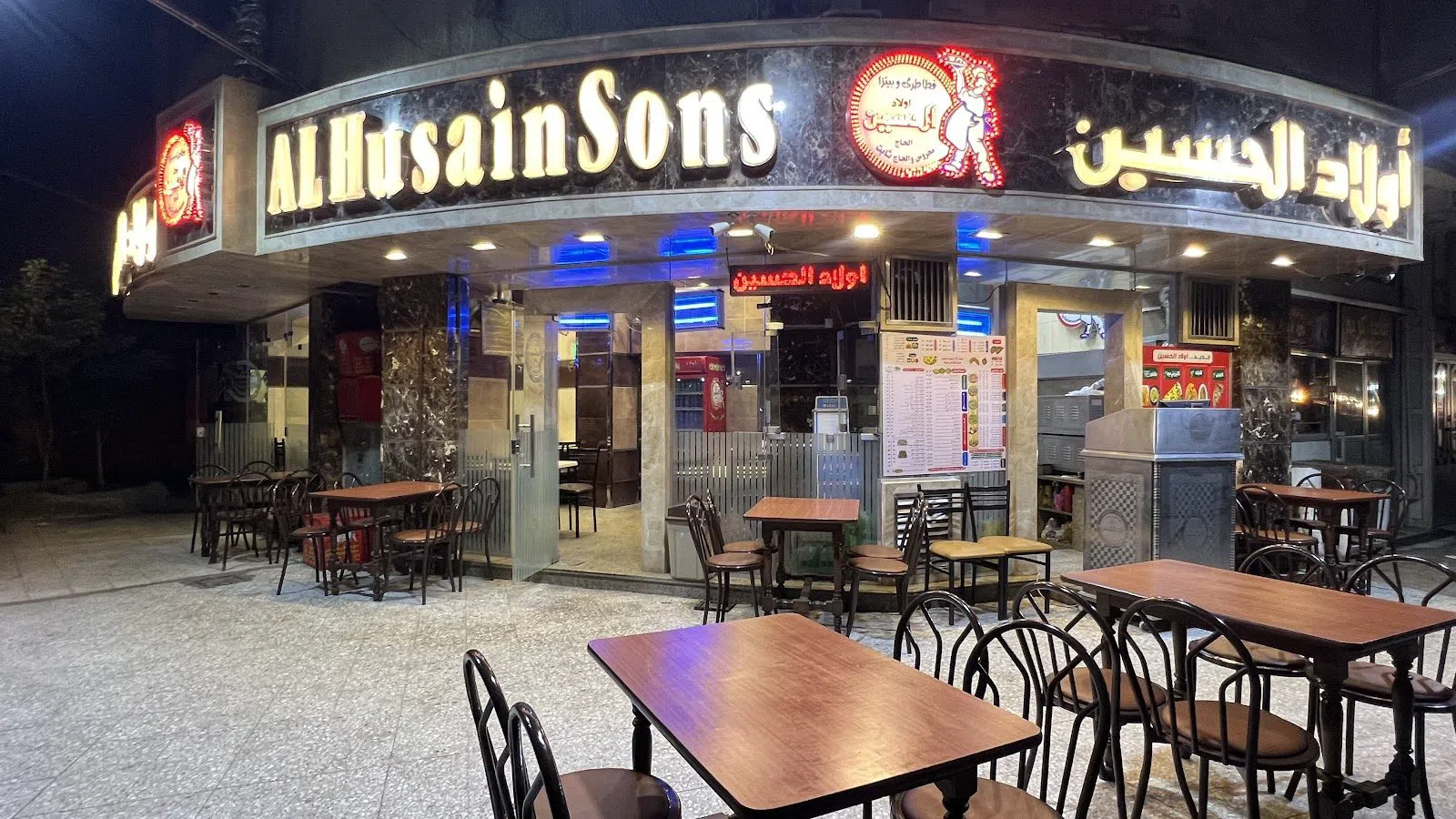
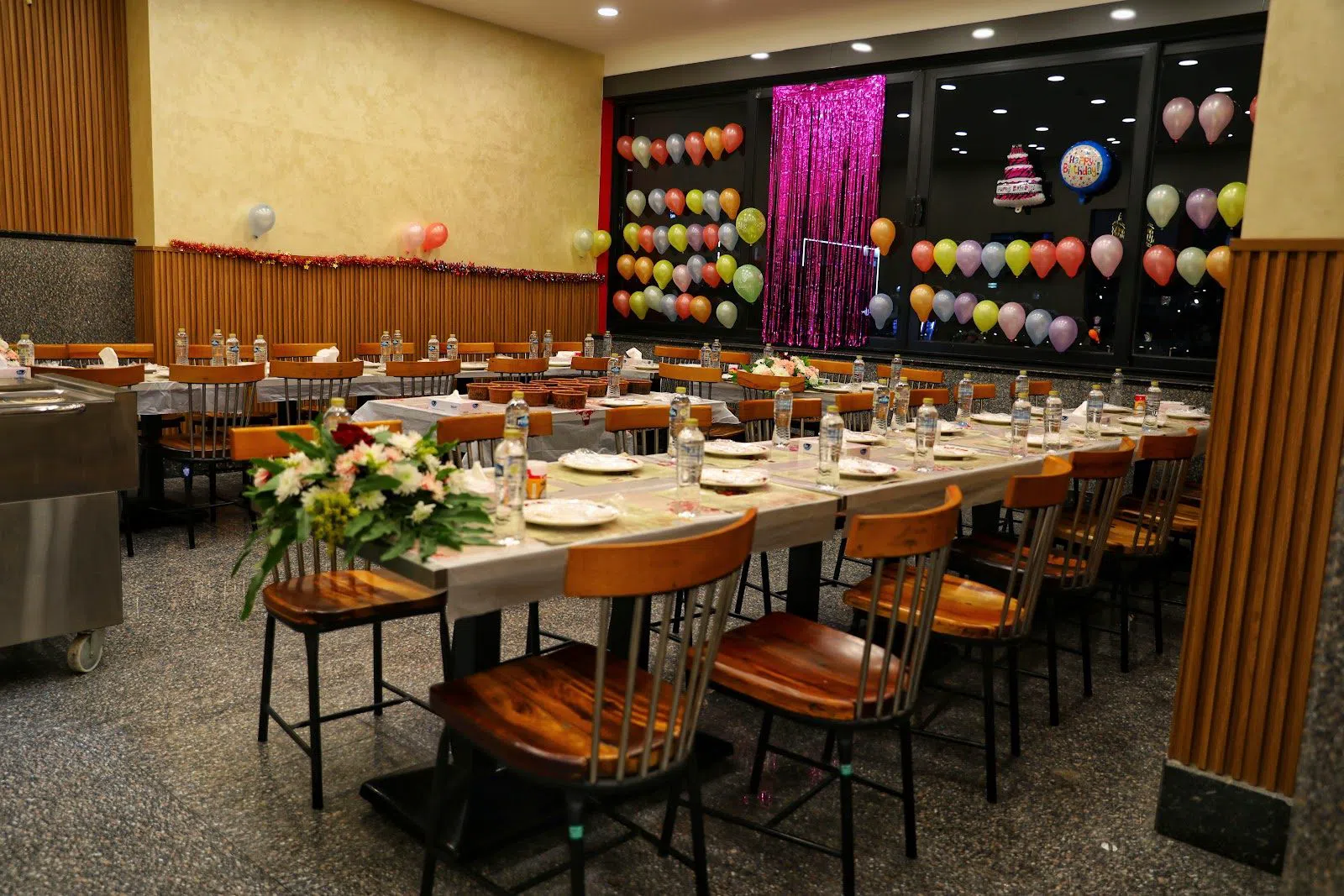
Feteer meshaltet (فطير مشلتت) is the pastry Egyptians describe as their pizza, and it is nothing like one: dough stretched to translucency, folded through ghee dozens of times, then baked into a layered disc that shatters and stretches at once. Awlad El Hussein (Sayeda Zeinab original; roomier newer site in New Cairo) has been at it for a century and makes what is widely called the biggest feteer in Egypt.
One feeds four or more, so this is a sharing stop by design. Order it sweet, dusted with icing sugar and served with honey and cream, or savoury with cheese and pastrami, or ask for it plain and have both on the side. It runs 100–300 EGP (~$2–6) per feteer. Queues at the Sayeda Zeinab original are normal and part of it; you will stand, you will watch the dough being thrown, and the wait is roughly the baking time, so there is no way around it. Couples should order one savoury and stop there, because the sweet version defeats two people.
Cairo's sugar, in four counters
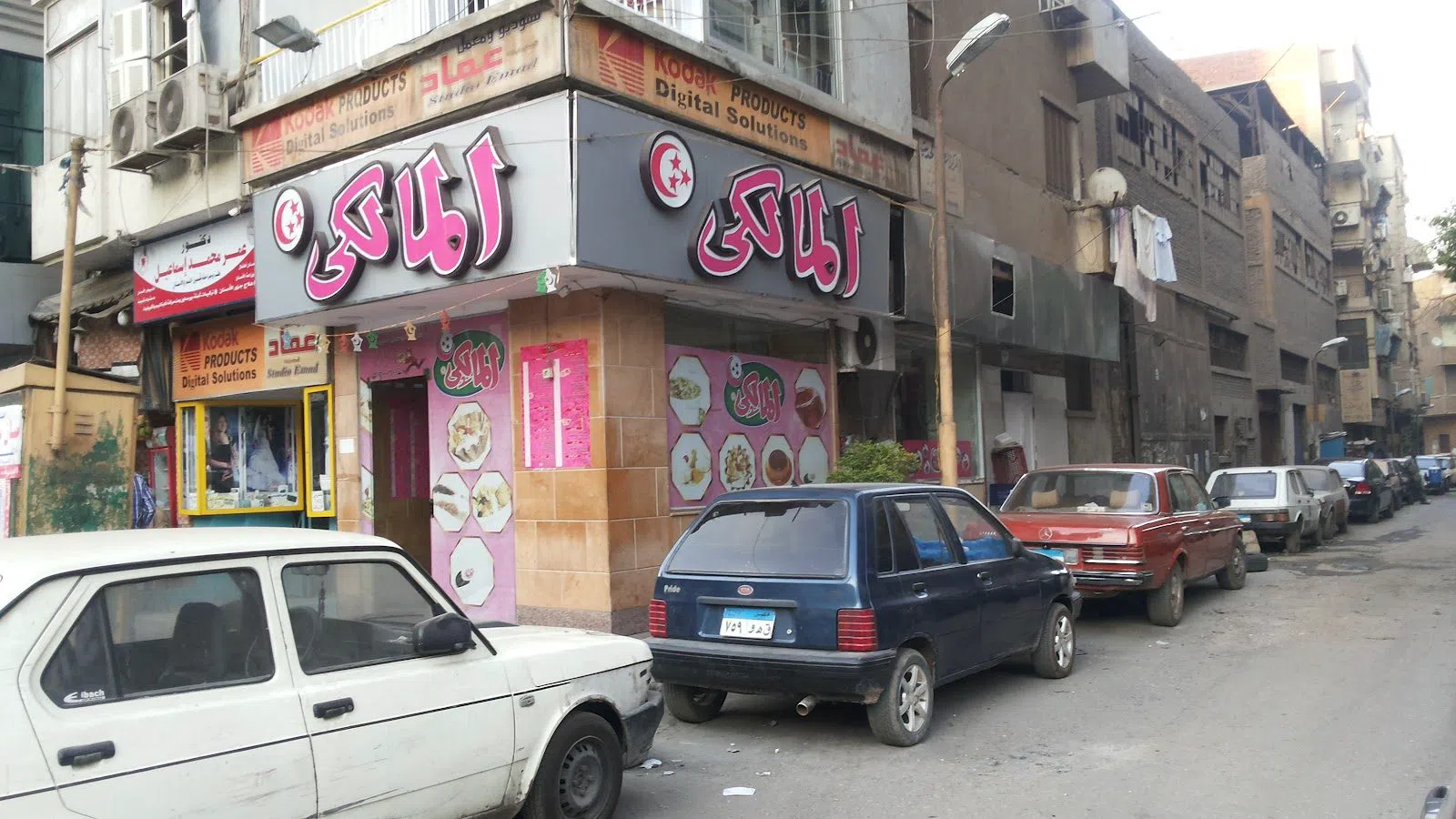
El Malky (around twenty branches citywide; the original opened in 1917 by the Hussein mosque) is the reference point for roz bel laban (رز باللبن, rice pudding baked until a skin forms on top) and om ali (أم علي, hot bread pudding with milk, nuts and coconut). Counter service, quick, 50–150 EGP (~$1–3), and a group can sweep through in ten minutes. The branch in the old quarter is the atmospheric one; the mall branches taste the same and feel like nothing.
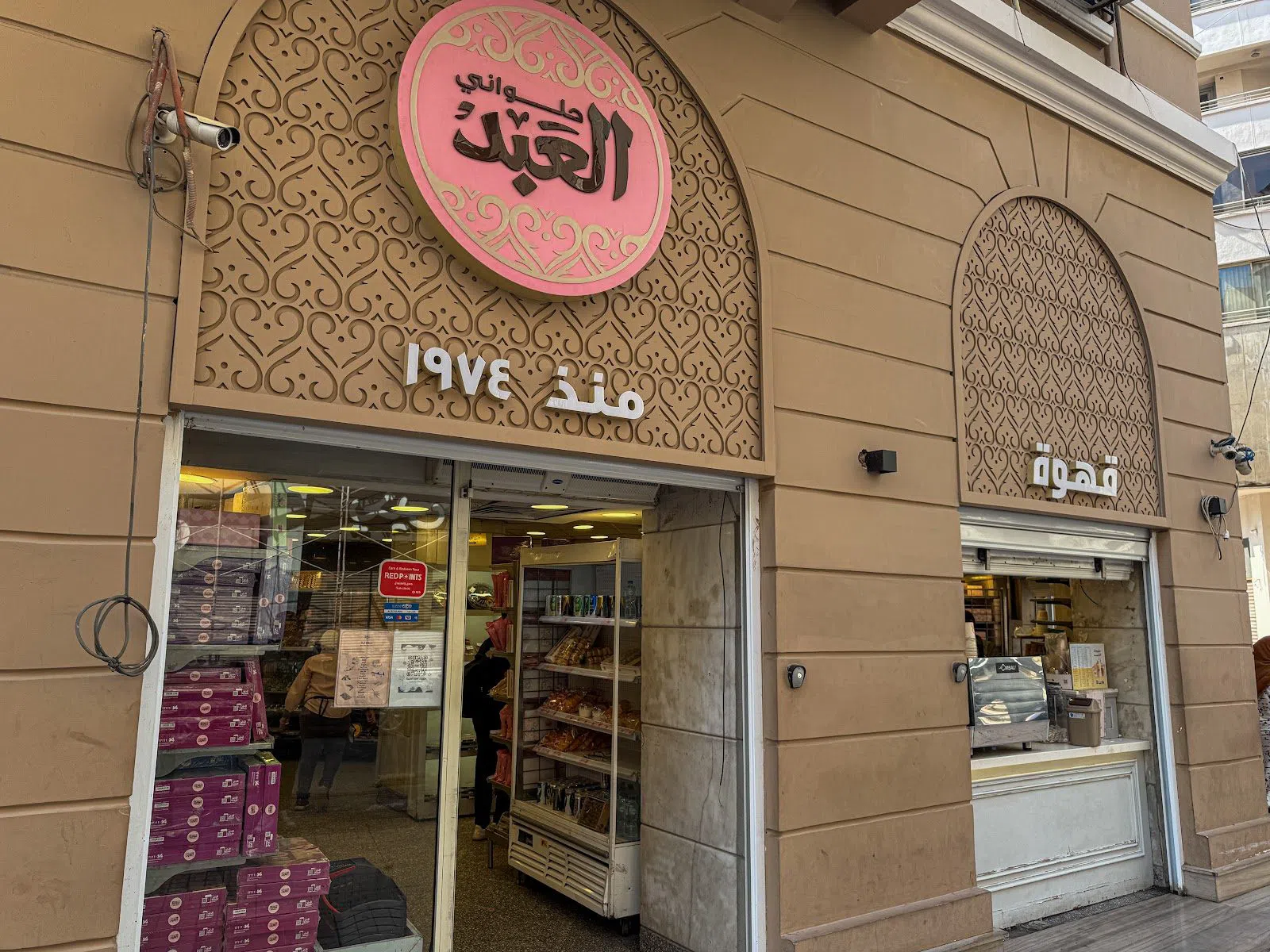
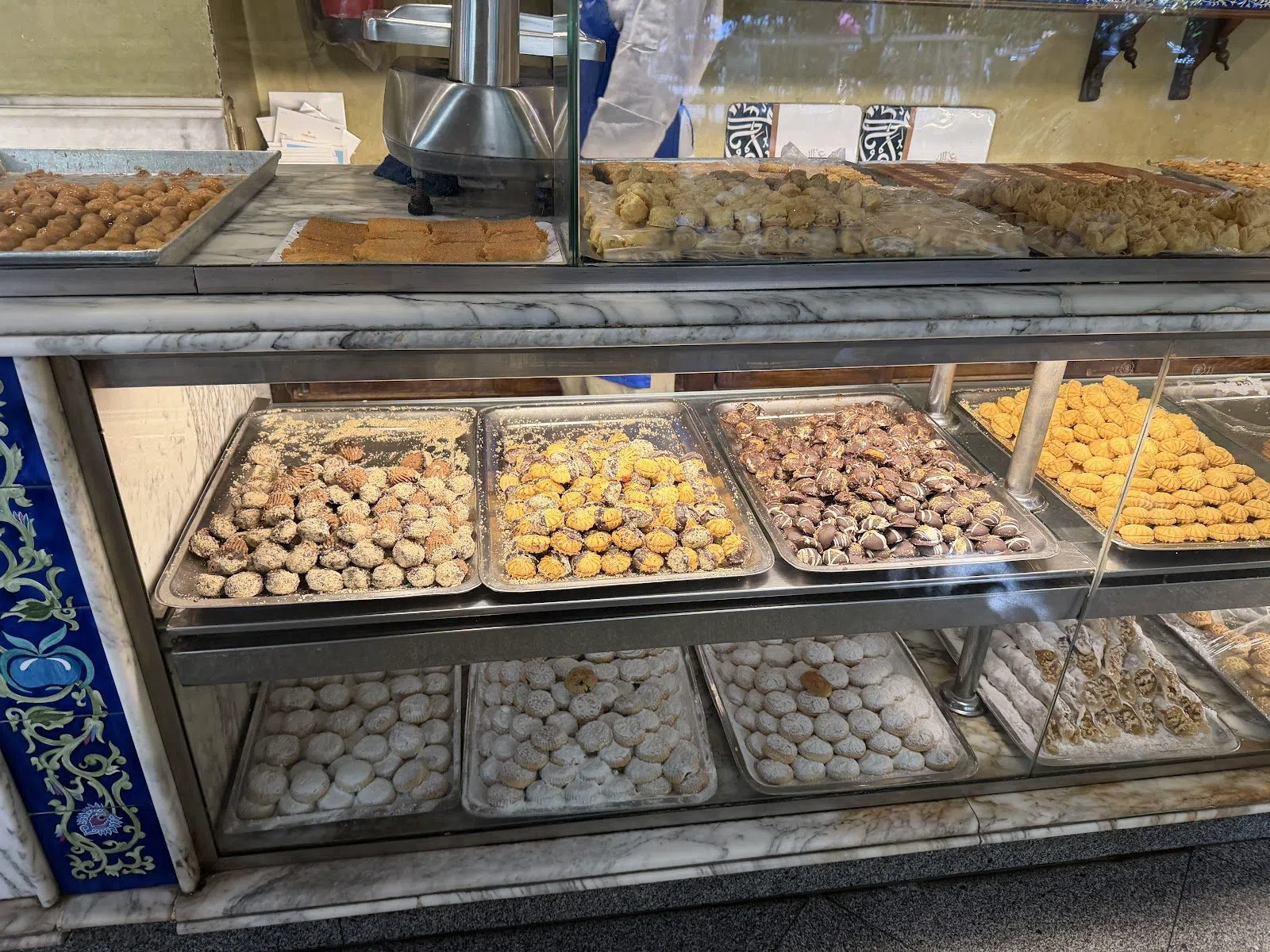
El Abd (Downtown) has no seating at all. You join a pavement crowd, buy pastries by the kilo, and eat walking; that is the local ritual and there is no polite alternative. Reckon 60–250 EGP (~$1–5) depending on how much you point at. The pastries are the reason people say they came; the ice cream window is where the crowd actually is.
In Zamalek, Mandarine Koueider works from family recipes brought to Egypt in the 1920s from the Levant. The yoghurt and the mastic (مستكة) ice creams are the reason to detour: mastic gives a chewy, resinous, almost pine-cold flavour you will either love immediately or not at all. Two scoops are 140 EGP (~$3); the sweets are sold by weight and travel home well. The shop is small and mostly takeaway with a few seats, so it suits a couple, or a group buying boxes rather than sitting.
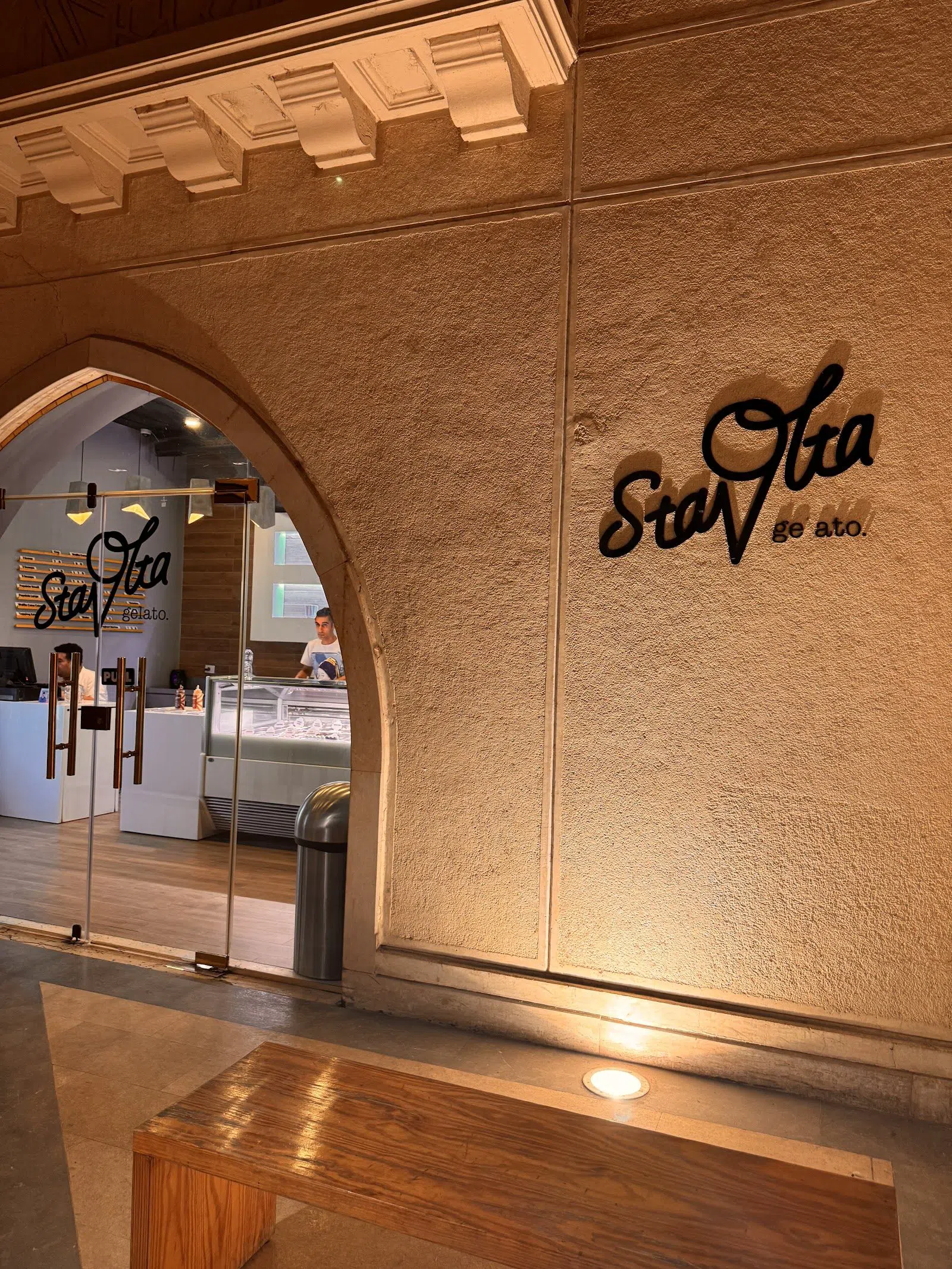
And for a counterpoint to all that dairy, Stavolta Gelato (Maadi Degla, Zamalek at Iconia, Westown and Point 90) rotates twenty-four flavours daily using real seasonal Egyptian fruit and proper Italian method; the mango and guava in season are extraordinary. 100–200 EGP (~$2–4), mostly takeaway, so order and walk.
The mango juice at the end of the trail
Farghaly (standing pavement service, open late) has been the city's juice landmark for decades, and it is where the trail is supposed to end. Mango (مانجو) in season comes pressed thick enough to need a spoon at the top of the glass, and Egyptian mangoes are small, fibrous, intensely perfumed, nothing like the airport variety. A glass is 40–120 EGP (~$0.80–2.50).
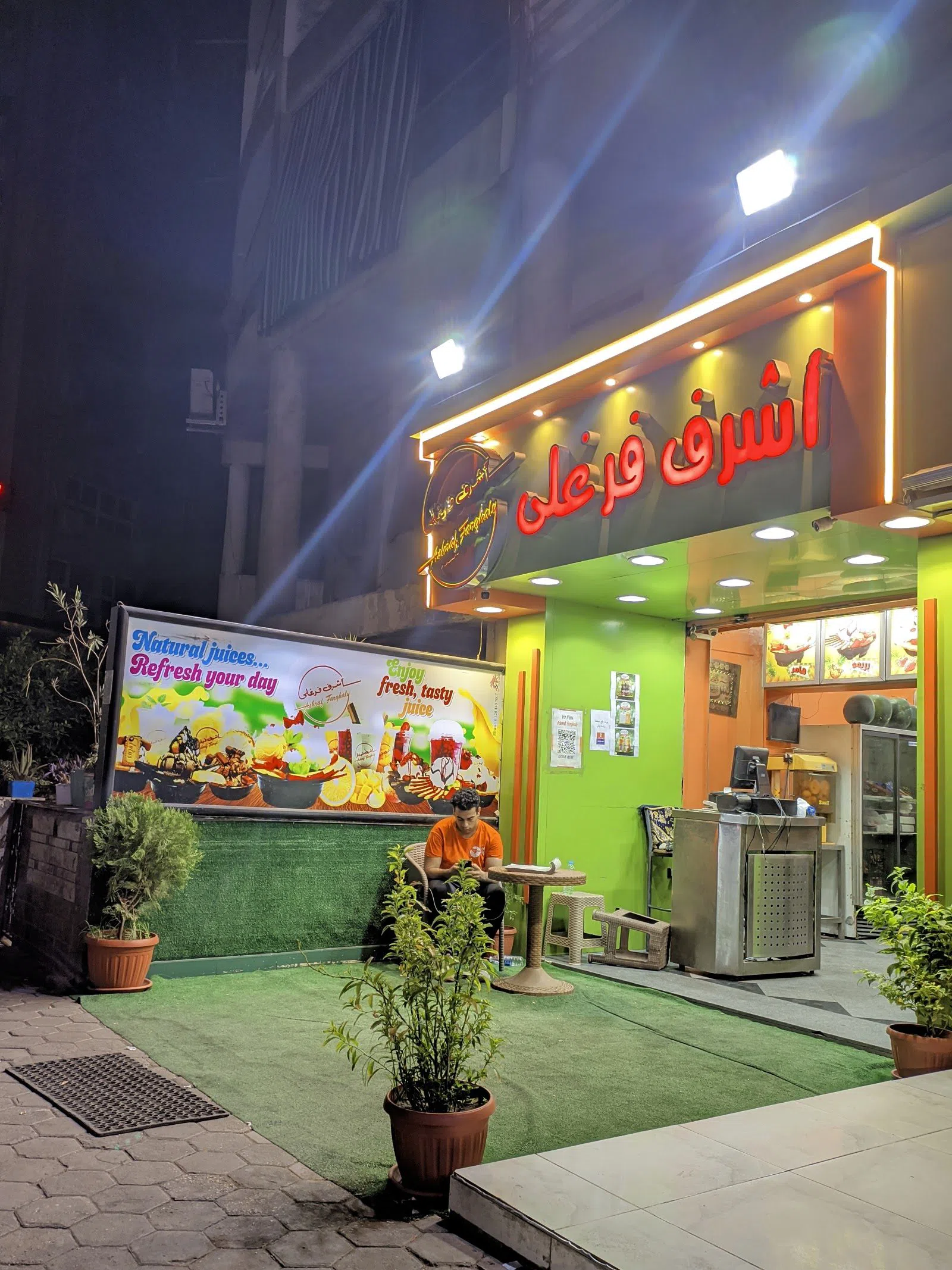
There is nothing to book and nothing to sit at. A group simply piles up at the window, shouts an order, and stands on the kerb drinking. Order the sugarcane (عصير قصب, aseer asab) as a second glass; it comes out grassy, cold and faintly metallic, and after a day of fried onions and charcoal it resets your whole mouth. Come after dark, when the queue is at its best and the street is at its loudest.
A last glass of tea in the alley
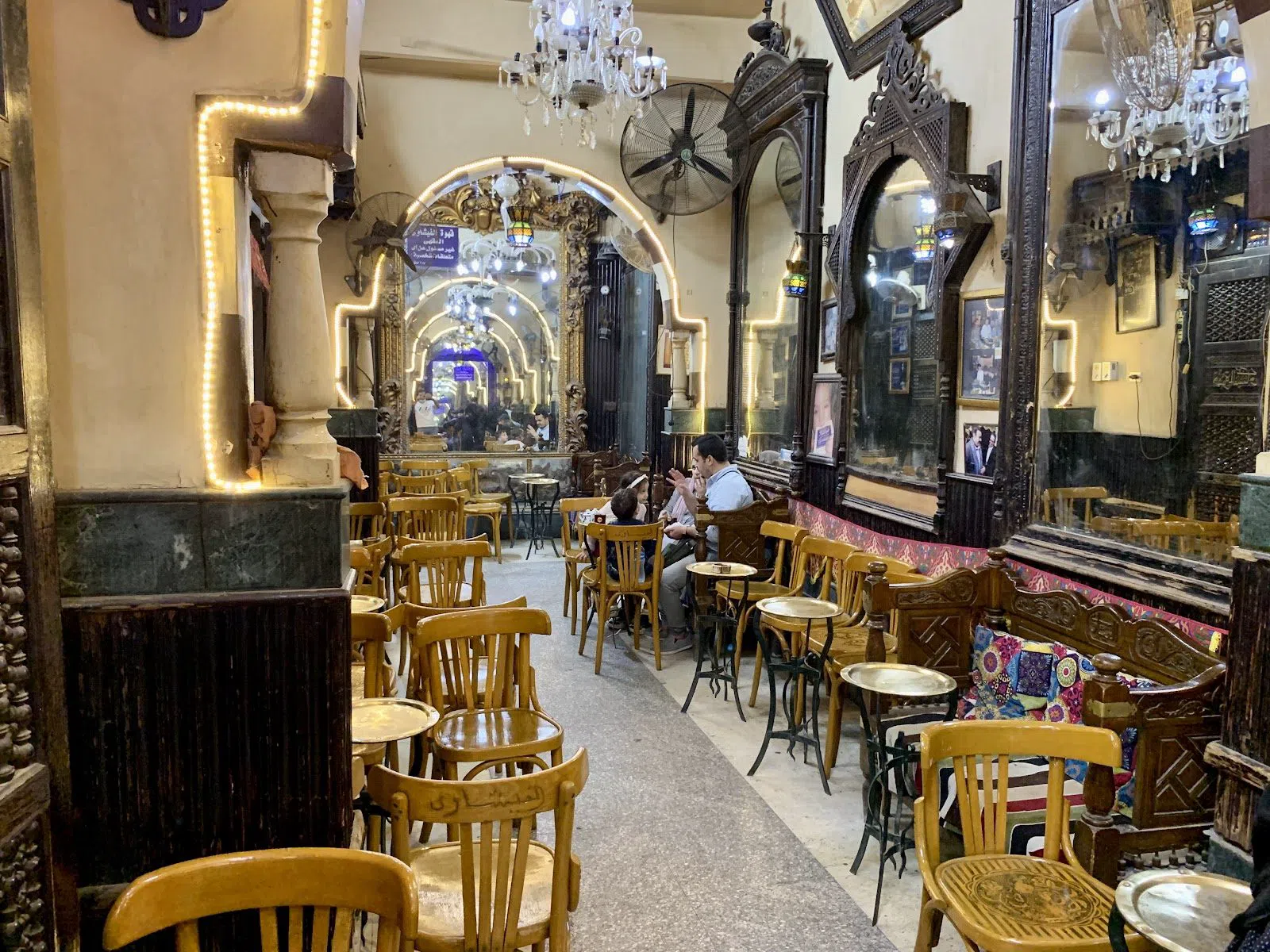
If you still have an hour, El Fishawy (in the old bazaar alleys) has been running for over two centuries and was Naguib Mahfouz's daily table. It is open nearly around the clock and busiest after dark. Groups can push tables together in the alley, though you will wait for them, and hawkers will approach you every few minutes without exception. Tea is 60–150 EGP (~$1–3) a glass, which is tourist rate and everybody knows it, and the shisha smoke is heavy enough to make it a poor choice for anyone with a chest complaint or a small child. You are paying for the mirrors, the noise and two hundred years of it. On the right night that is a fair trade.
Walking the trail without wasting a day
Downtown holds the bulk of this trail: El Tabei El Domyati, Felfela, both koshary houses, Hawawshi El-Refaie and El Abd all sit within a twenty-minute walk of each other, and the Metro at Sadat station puts you in the middle of it. Everything else is a ride-hailing app: Heliopolis for Abou Haidar, Rod El Farag for Sobhy Kaber, Zamalek for Mandarine Koueider. Fares within the city are cheap; traffic between 3pm and 8pm is not, so build the afternoon around one crossing rather than three. For where to base yourself, Downtown puts you inside the walking half of the trail and Zamalek gives you quieter streets ten minutes away; compare both on the Cairo hotel search.
Bring cash, in small notes. Felfela is explicitly cash only, the standing counters at Farghaly, El Abd and Abou Haidar are cash in practice, and nobody at a juice window is breaking a 500. Draw a few hundred pounds in tens and twenties before you start.
Foul and ta'ameya from 8 to 10am. Koshary from noon. Feteer mid-afternoon, when the ovens are hottest and you have four hours before dinner. Charcoal after 8pm, because that is when Egyptians eat it. Juice and tea after 10pm. During Ramadan the daytime counters keep different hours and the whole city eats after sunset, so check before you plan a lunchtime stop.
Done as street food, the whole trail runs 500–700 EGP a head for a full day of eating. Add Sobhy Kaber and it is closer to 1,200; add the drive out to Kebdet El Prince and you are at a different price point again, and that one is genuinely optional. For everything else worth building around these meals, start with the Cairo guide.
One last piece of advice, from someone who has eaten badly here as well as well: eat where the queue is local and the food is leaving the counter fast. Every place on this list passes that test on repeat visits, in different weeks, at different hours. That is the only test that matters.
Before you go
Is Cairo street food safe to eat?
Broadly yes, if you stick to counters with fast turnover and food cooked hot in front of you. The places on this trail (El Tabei El Domyati for breakfast, the koshary houses, Hawawshi El-Refaie) all work continuous queues, so nothing sits. Start with Zooba or Felfela on your first day if your stomach is cautious, drink bottled water, and be warier of salads and raw garnishes than of anything fried or grilled.
How much does the whole trail cost?
Eaten as street food, a full day runs about 500-700 EGP a person: 25-90 EGP for a bowl of koshary, 30-80 EGP for breakfast, 60-150 EGP for hawawshi, 100-300 EGP for feteer shared between four, 50-250 EGP for desserts and 40-120 EGP a glass of juice. Add a charcoal dinner at Sobhy Kaber, 250-500 EGP a head, and you are past 1,200 EGP.
Which koshary is better, Abou Tarek or El Tahrir?
They are different rather than ranked. Koshary Abou Tarek has the sharper, sweeter tomato sauce and the five-floor spectacle; Koshary El Tahrir cooks its lentils softer, fries its onions lighter, and is the steadier everyday bowl locals default to. They sit a ten-minute walk apart, so eat a small bowl at each and decide for yourself, because comparing the two is the point of the koshary stop.
Can I do this trail with a big group, and does anything take bookings?
Almost nothing takes reservations. Koshary Abou Tarek absorbs walk-in groups of ten or more, Felfela and Sobhy Kaber are both built for big tables, and Zooba handles mixed groups comfortably. Abou Haidar, Farghaly, El Abd and the original Hawawshi El-Refaie are standing-only windows, where a group orders and eats on the pavement. At Sobhy Kaber, send someone ahead, because peak waits reach an hour.
Is Kebdet El Prince still in Imbaba?
No. The street-side original closed for good in 2022 for road works. The operator reopened indoors far west of central Cairo in December 2025, a 30 to 45 minute drive out, with a much bigger room and prices about 130% above the old menu at 200-450 EGP a head. It is worth a dedicated trip for the liver, but it is not a walkable stop on any city-centre trail any more.