The Cairo issue
The Art of the Haggle: A Local's Guide to Khan el-Khalili
How to read Cairo's 700-year-old bazaar, price a copper lantern, and know which stalls reward a hard bargain and which don't — with the tea stops, kebab houses and timings to plan a full day around.
By Lucas MeyerWalking Cairo, from Old Cairo's churches to Al-Muizz Street
Khan el-Khalili has been a working market since the fourteenth century, when Sultan Barquq's amir Jaharkas el-Khalili cleared a caravanserai here in the heart of Fatimid Cairo. Seven hundred years later it is still trade first and spectacle second: a warren of stone-vaulted lanes behind the Al-Hussein Mosque where coppersmiths, goldsmiths, spice merchants and tea-house waiters do the same jobs their great-grandfathers did. The haggling is not a tourist ritual laid on for visitors — it is simply how prices are set. Understand that, and the whole place becomes far easier to navigate.
This guide walks you through the Khan the way a return visitor would: where to warm up, where haggling is expected and where it isn't, where to rest and eat, and how to time a day so you are not fighting the worst of the crowds. Every place named below is one I would send a friend to. Nothing here is padding.
First, the ground rules of the bargain
The single most useful thing to grasp is that not every price in the Khan is negotiable, and the places where haggling is theatre are different from the places where it barely applies. On the souvenir lanes — spices, oils, trinkets, brass — the first number quoted is an opening bid, often two to three times the going rate, and you are expected to counter. On the gold lane, by contrast, most of the price is fixed by the day's metal rate and only a small 'making charge' is up for discussion. Knowing which situation you are in saves both money and awkwardness.
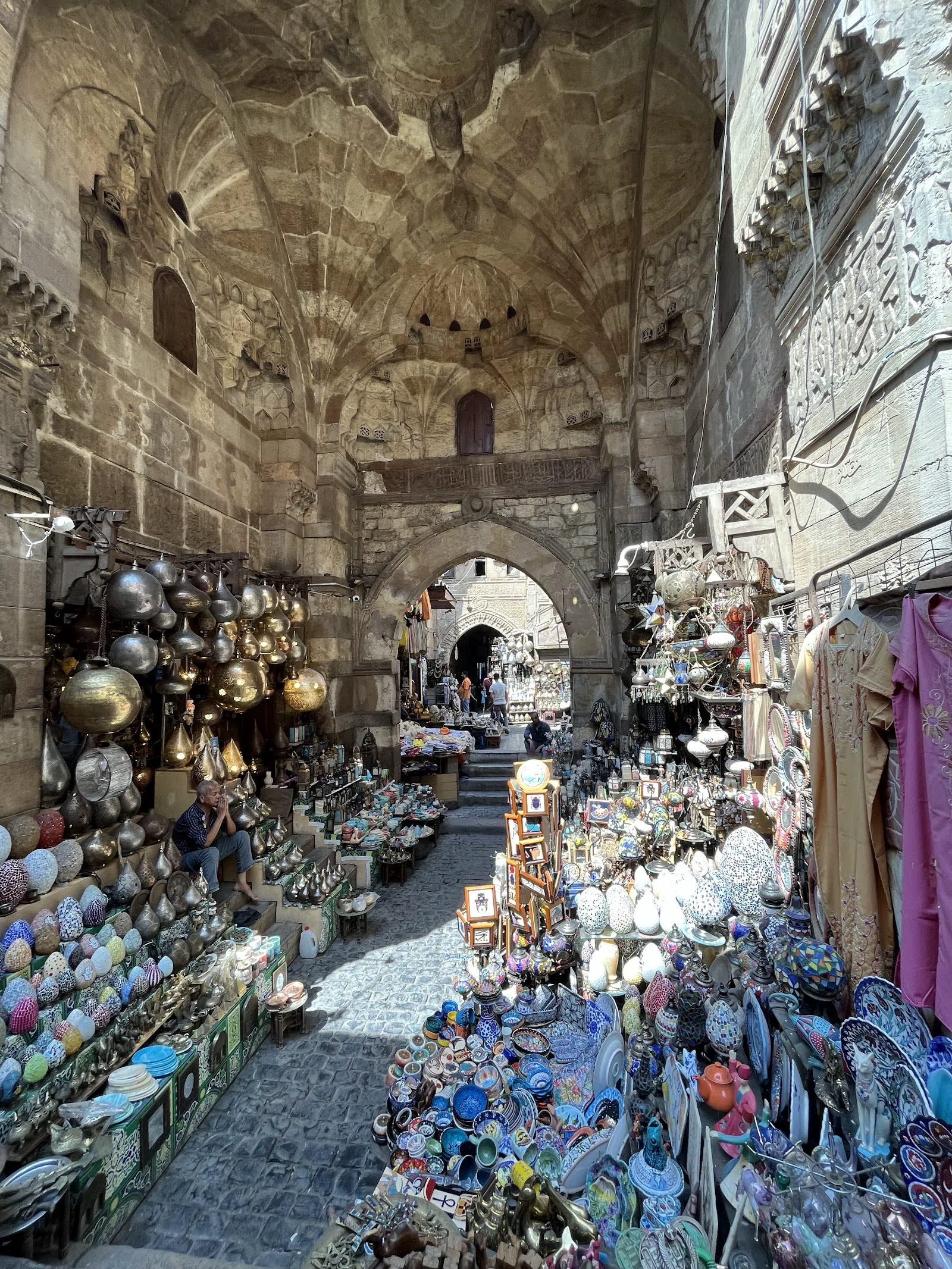
Before you reach the polished tourist stalls, it is worth spending twenty minutes on El Muski Street (Sharia al-Muski, the long market street running west from Al-Hussein square). This is where Cairenes actually shop — hardware, fabric, kitchenware, cheap clothing — and it is gritty, crowded and entirely un-touristy. There is nothing precious to buy here for most visitors, but it is the best possible warm-up for the haggling ahead: you can watch locals bargain, get a feel for real prices, and practise walking away without any pressure. Keep bags zipped and stick together; the crowds are dense and the street is a genuine thoroughfare, not a stroll.
A few habits that serve you well everywhere in the Khan: decide what a thing is worth to you before you ask the price; counter at roughly half the opening number and expect to settle somewhere in the middle; buy spices and loose goods by weight rather than by the handful; and treat the whole exchange as good-humoured, because the vendors certainly do. A firm, friendly 'no thank you' is all you ever need for the roving sellers who drift between tables.
Plan your Cairo trip
Live prices from our booking partners.
Free cancellation on many rooms. We may earn a commission when you book.
The spice and perfume lanes
The attareen — the spice and apothecary trade — is the Khan's oldest and most atmospheric corner, and the best place to learn the mechanics of a bargain on low stakes.
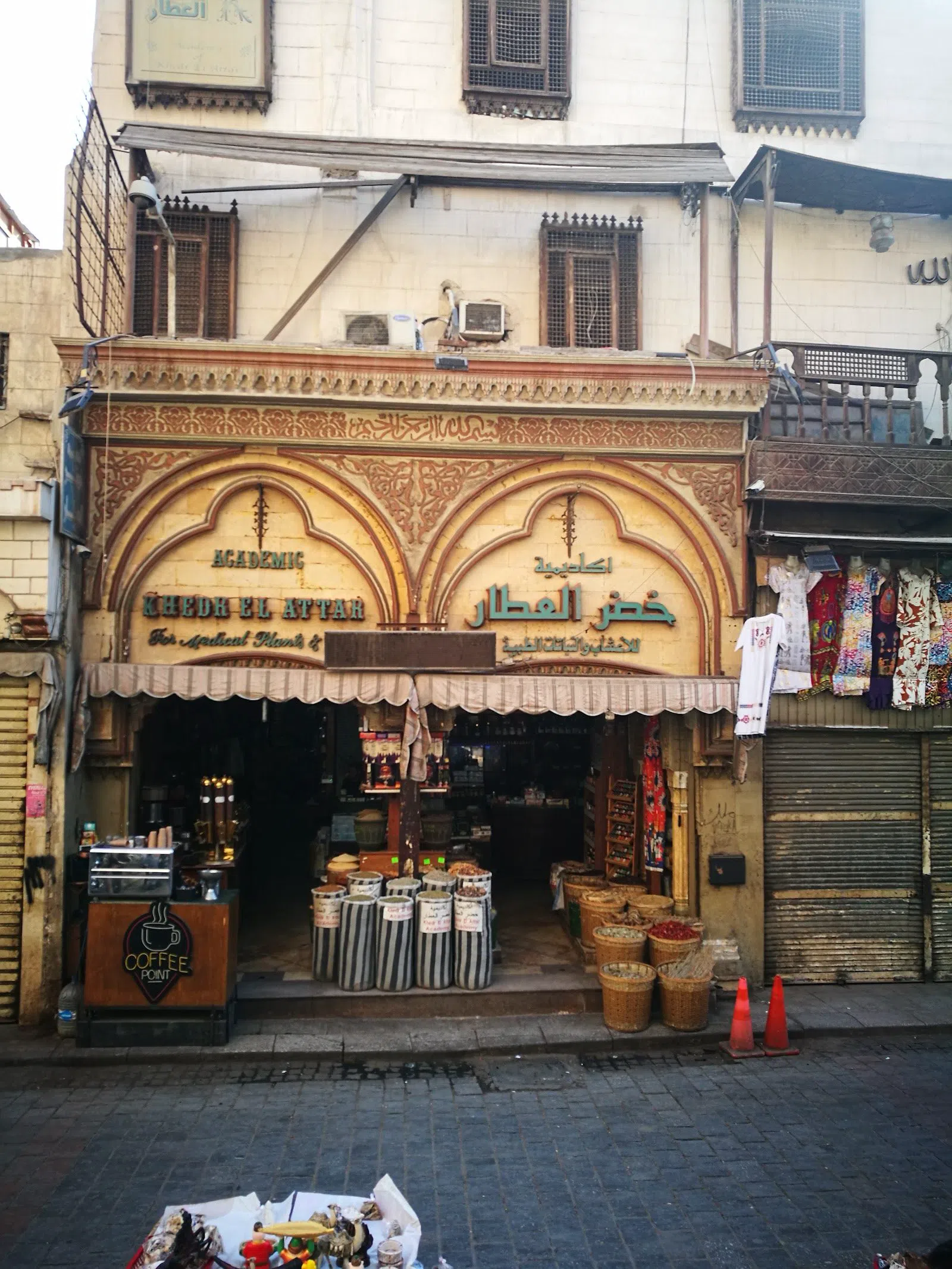
Start at Khedr El Attar (in the spice lanes off the main bazaar), a small, photogenic spice and perfume shop that is many visitors' first haggling lesson. The stock is genuine — saffron, hibiscus, cumin, dried mint, plus the attar (perfume oil) that gives these shops their name — but the opening prices are firmly pitched at tourists. Pay the number you are first quoted and you will pay two to three times what a local would; smile, counter low, and insist on buying spices by weight so you can compare. It is a small shop, comfortable for two or three people at a time; a larger group is better browsing in shifts than crowding the counter.
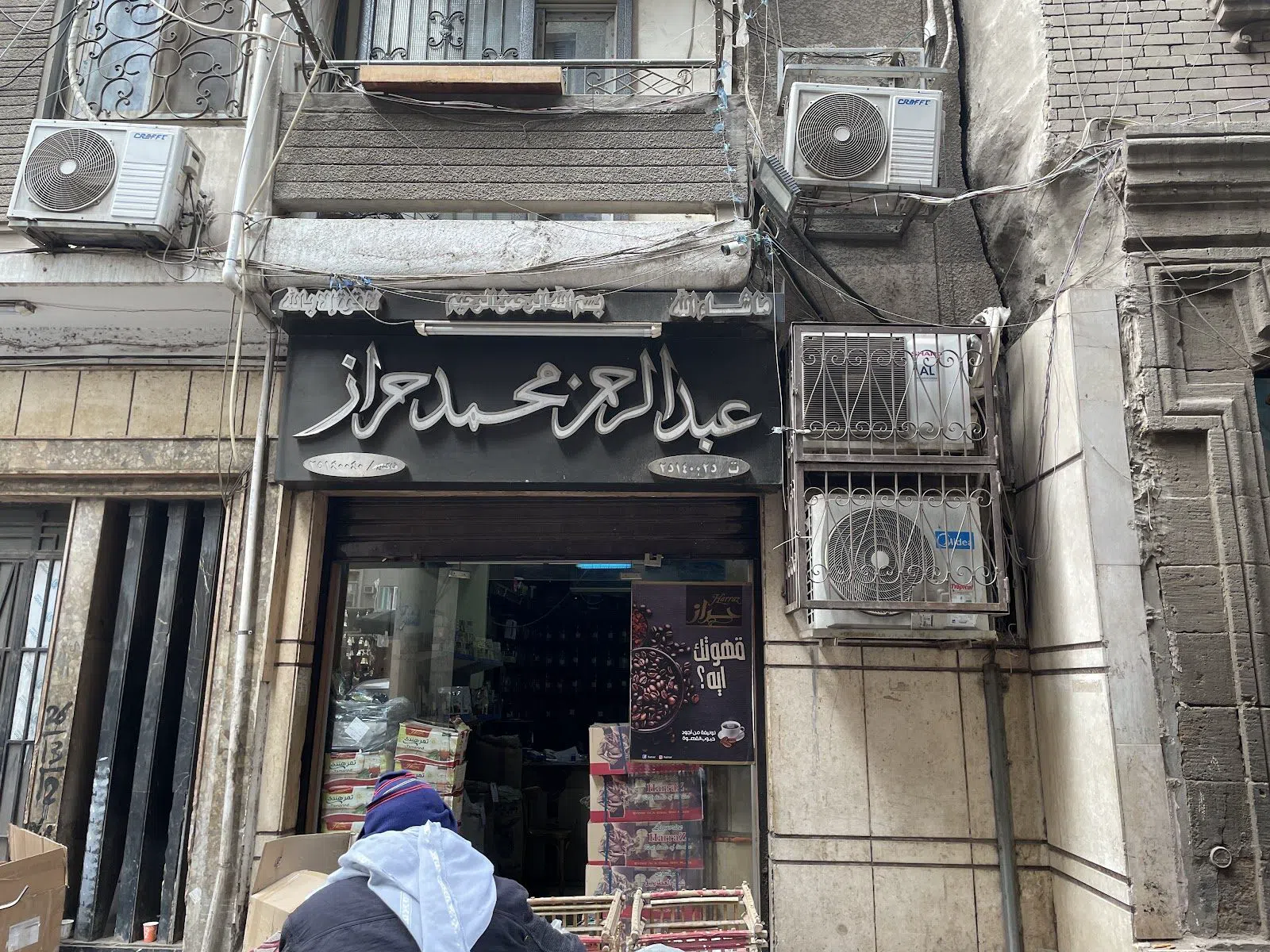
For quality over theatre, walk the few minutes out to Bab el-Khalq to Abd El Rahman Harraz (Harraz Herbalists, on the southern edge of Islamic Cairo). This is a different kind of establishment altogether — a proper herbalist and apothecary trading since 1939, whose founder was known as Cairo's 'Sheikh of the Herbalists'. The staff are used to visitors, the shop is roomy enough for a small group, and crucially the prices are more or less fixed, so there is far less hard bargaining. If you want real medicinal herbs, oils and cosmetics rather than a souk-priced souvenir, this is the more serious address. Think of Khedr El Attar as the fun, negotiable introduction and Harraz as the trustworthy shop you come to when you actually know what you want.
The craft lanes: copper and gold
Two lanes reward a visit even if you buy nothing, because they are still working manufacturing streets.
Haret el-Nahaseen — Coppersmiths' Alley, running through the metalwork quarter — is an open street of small workshops where you can watch trays, pots and the iconic Ramadan fanous lanterns being hand-hammered. As a group you can wander freely here, browsing stall to stall, and buying directly from the makers is both cheaper and more satisfying than buying finished pieces elsewhere. Two things to check before you commit: that a piece is genuinely hand-hammered rather than a stamped import (look for the slight irregularity of hand tooling), and, on anything large, that you have haggled properly. Small trays start around £10; a substantial lantern is £30 and up, and very much negotiable — this is a lane where a hard bargain is expected and respected.
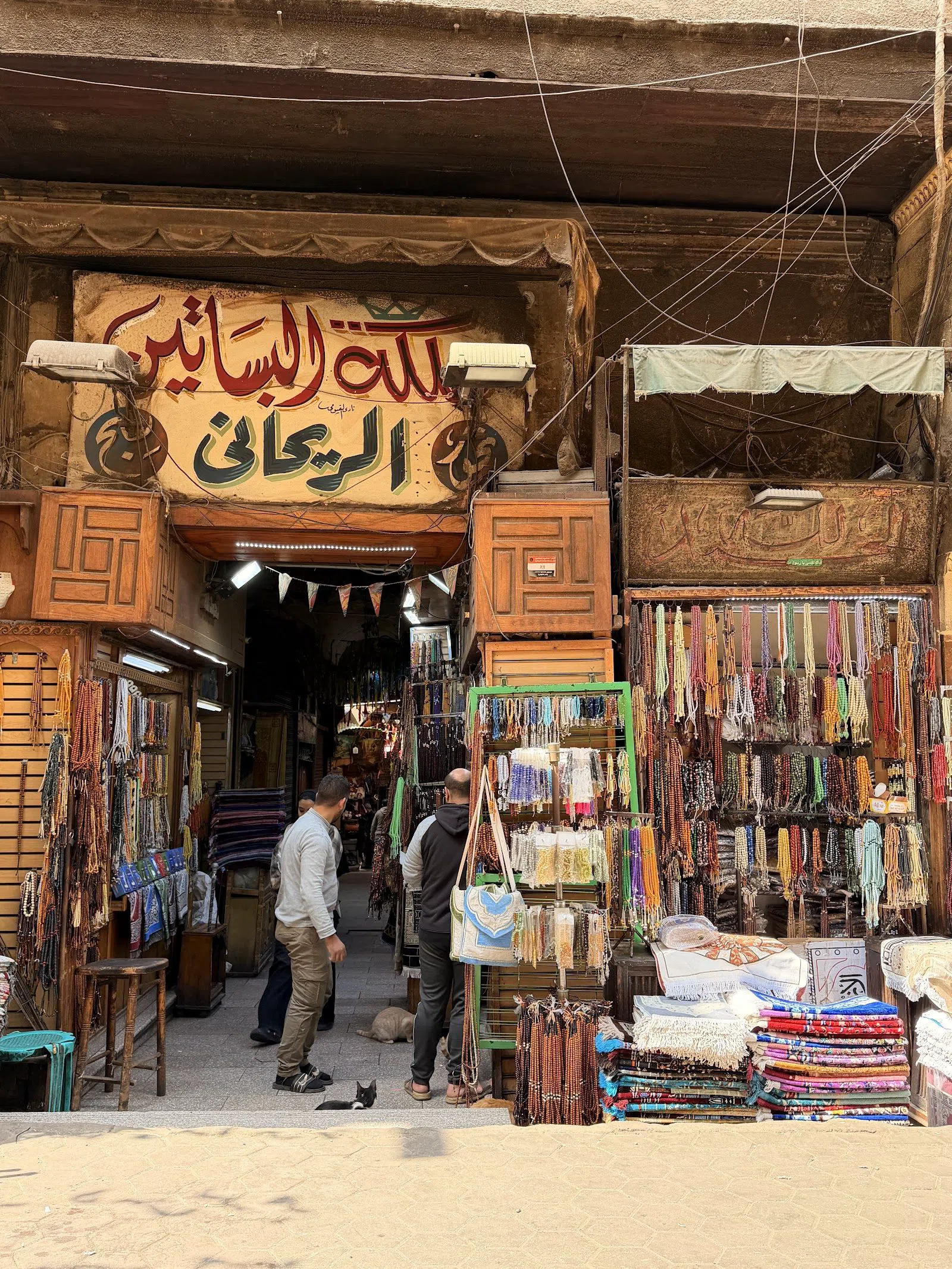
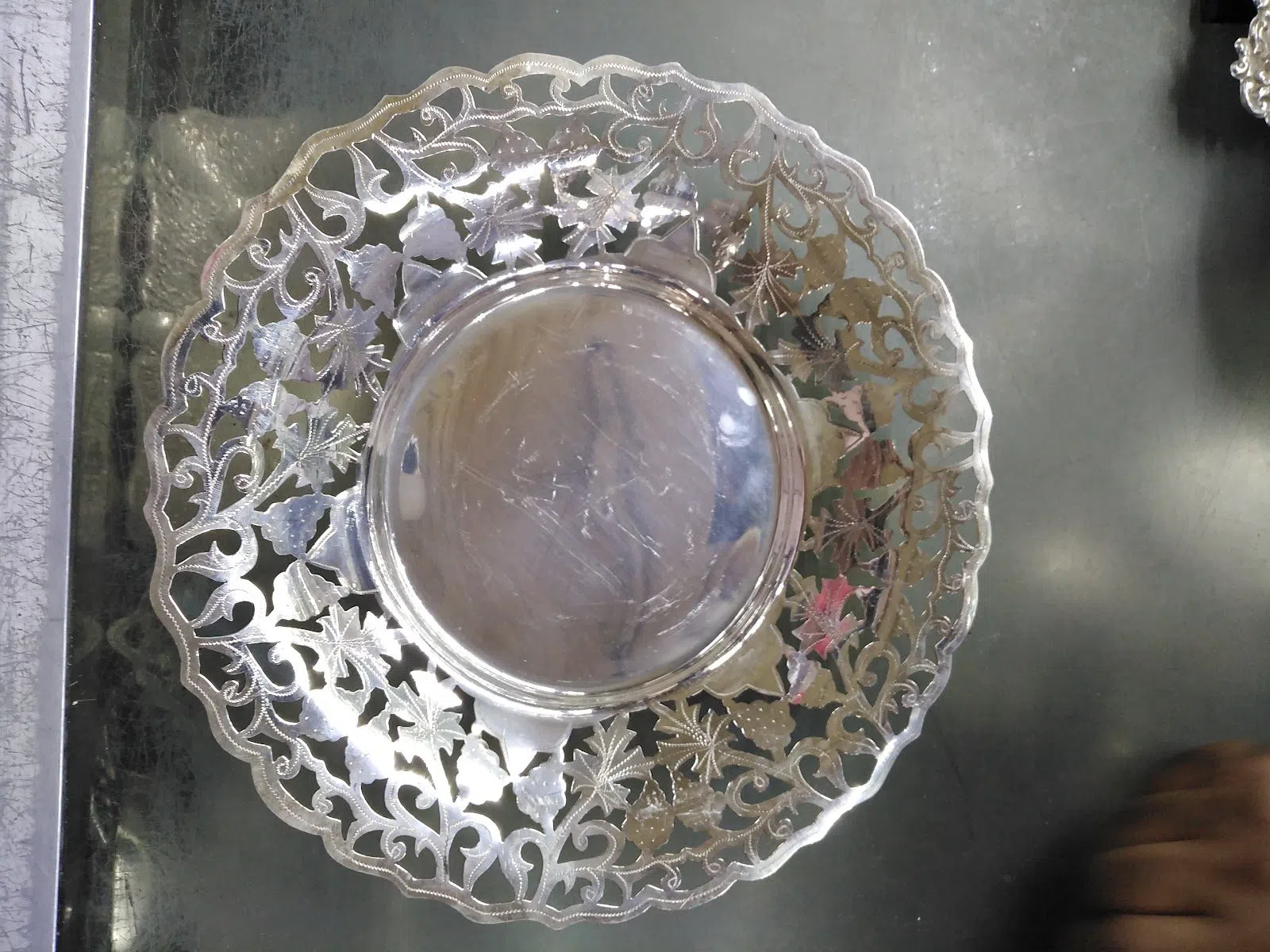
El Sagha — the Gold Souk, a tight lane of jewellers near the market's core — is, perhaps surprisingly, the most honest corner of the whole bazaar. Gold is sold by weight at the day's international rate, which you can check on your phone before you walk in, so there is very little to argue about on the metal itself. What you negotiate is the making charge — the labour on top — and that is a much narrower, more transparent conversation than the free-for-all of the spice stalls. The individual shops are small, so browse the lane together and buy one shop at a time. A personalised cartouche pendant, with a name rendered in hieroglyphs, is the classic keepsake here and a genuinely good-value one once you understand the pricing.
Where to rest, and where to eat
A day in the Khan is a day on your feet in the heat and the crush, and the market's tea houses and restaurants are half the point of coming.
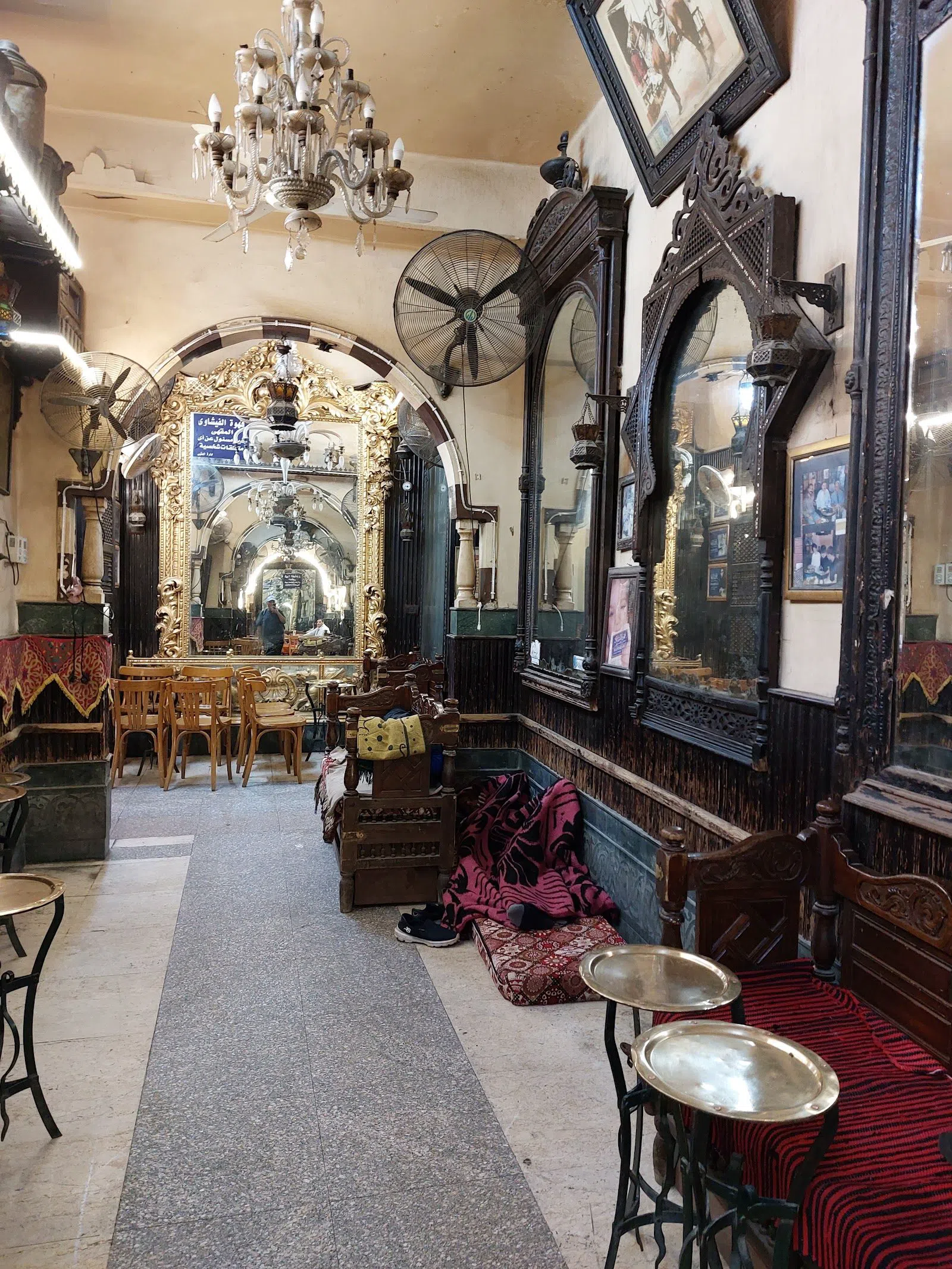
The one non-negotiable stop is El Fishawy (El Fishawi Café, in the heart of the bazaar just off Al-Hussein square), the Khan's 220-year-old social centre and the ahwa — the traditional tea and shisha café — where Naguib Mahfouz, Egypt's Nobel laureate, once held court. It is open twenty-four hours a day, takes no bookings, and is defined by its mirrored walls, brass tables and the controlled chaos of waiters threading through the crowd. It is very group-friendly in spirit — staff will squeeze extra stools in wherever they can — but it is busiest after 8pm, so a party of six or more may wait for a table then. Order mint tea (£1–2) or a shisha (£3–4), settle in, and accept that trinket sellers will circle; a firm smile sends them on. This is the definitive sit-and-watch-the-souk stop and I would build a visit around it rather than treat it as an afterthought.
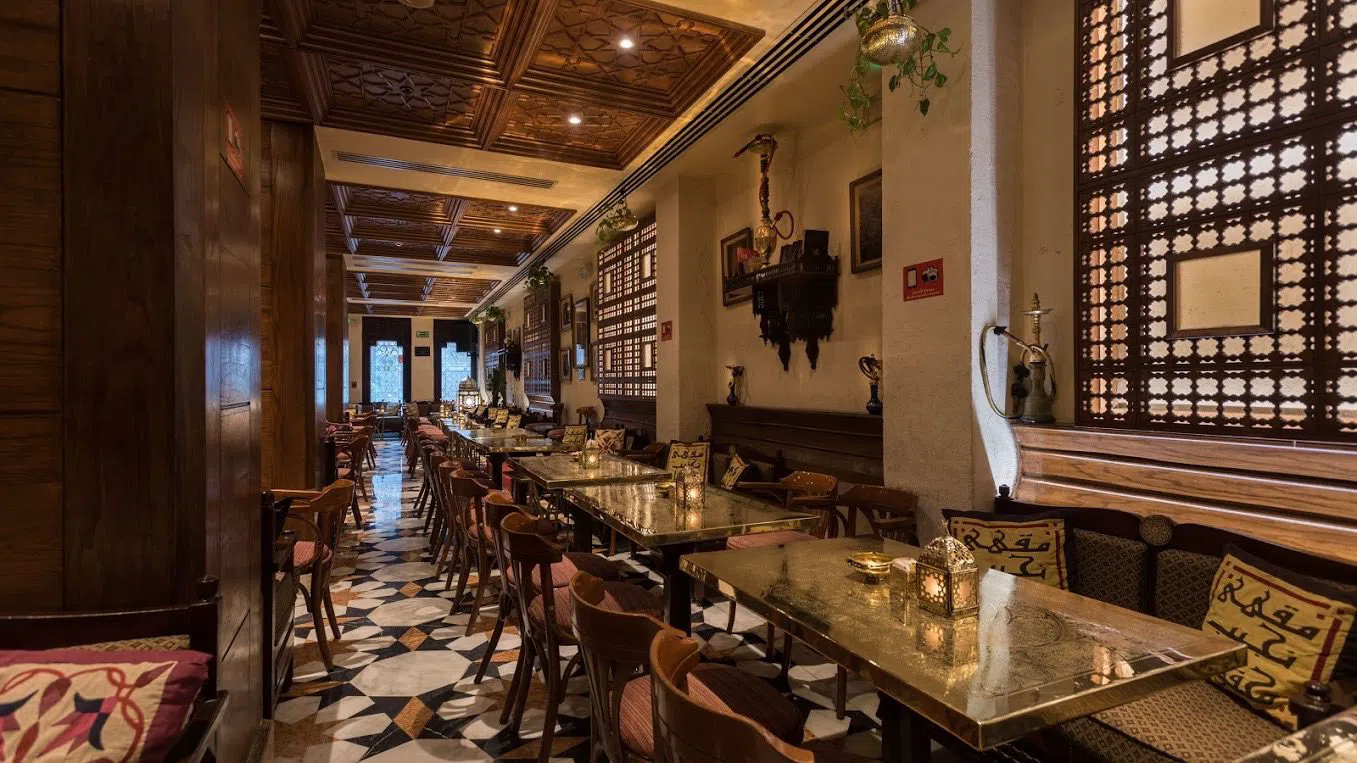
For a proper sit-down meal, the most reliable option inside the bazaar is the Khan El Khalili Restaurant & Naguib Mahfouz Café (run by the Oberoi group, in the market's core). It has taken reservations since it opened in 1989, seats large parties, and — not a small thing in a Cairo summer — is air-conditioned, which makes it a genuine refuge from the crowds. It is the swankiest address in the Khan and priced accordingly (mains roughly £10–20 per person, with a cover or minimum charge), serving stuffed pigeon, kofta and a spread of mezze. If your group wants one dependable, comfortable meal and is happy to book ahead, this is it.
For something earthier and cheaper, walk over to El Dahan (a charcoal-grill kebab house just off Hussein square). It is a long-running local favourite for grilled kofta, kebab and stuffed pigeon — boisterous, casual and takes no bookings, so groups simply pull tables together and dive in. Order the mixed grill and a few mezze to share. It suits a lively group far better than a quiet couple's dinner; the appeal is exactly the noise and bustle.
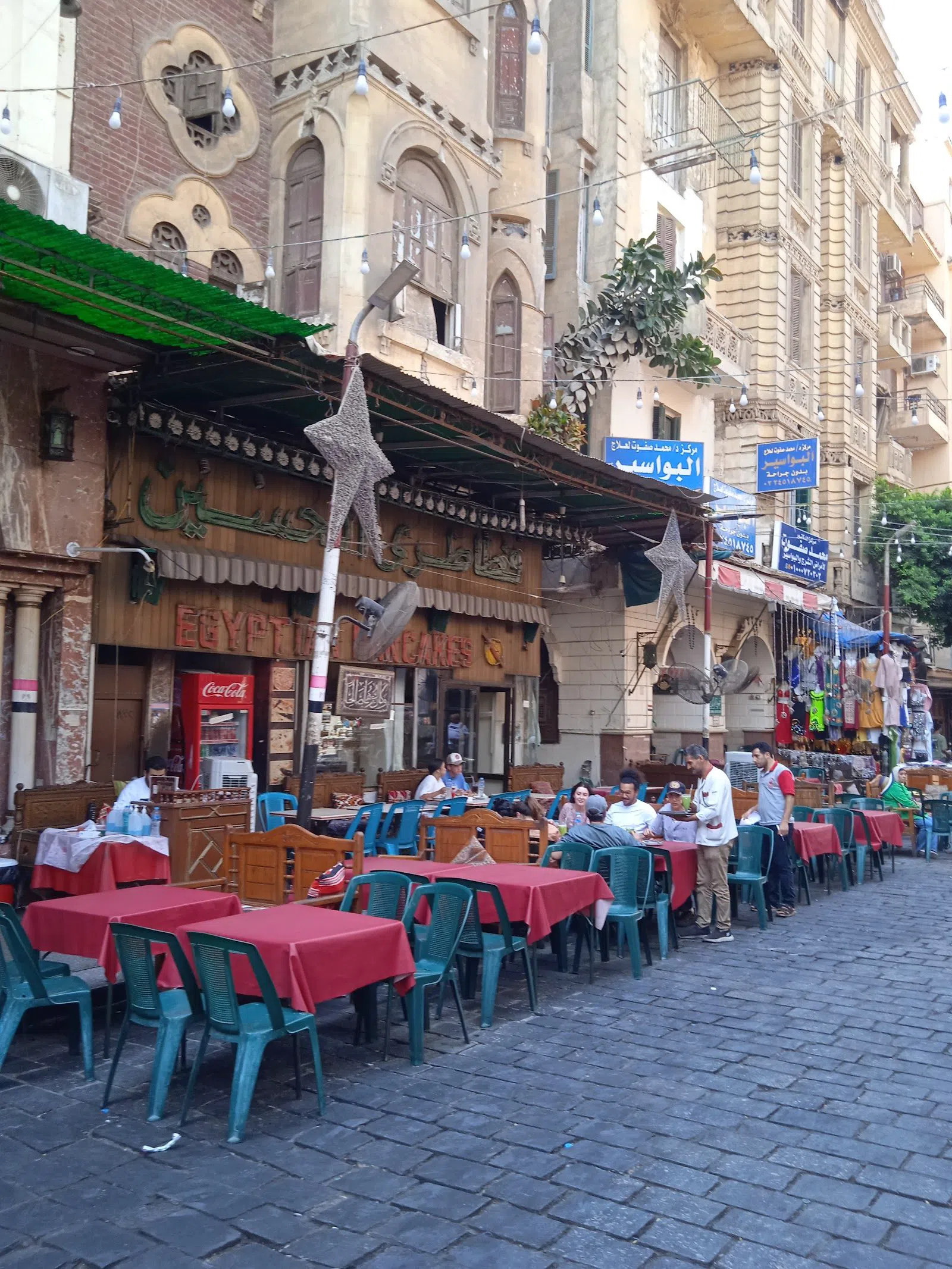
Mid-shop, when you want a quick bite rather than a sit-down, Egyptian Pancakes (a feteer specialist by the bazaar entrance) is a handy landmark and a cheap, crowd-pleasing fill. Feteer is a flaky, many-layered Egyptian pastry, served sweet with honey or savoury with cheese and meat, and here it runs £2–5 a portion. It is a small, popular spot, so a group is best grabbing a table when one frees up or taking slices away.
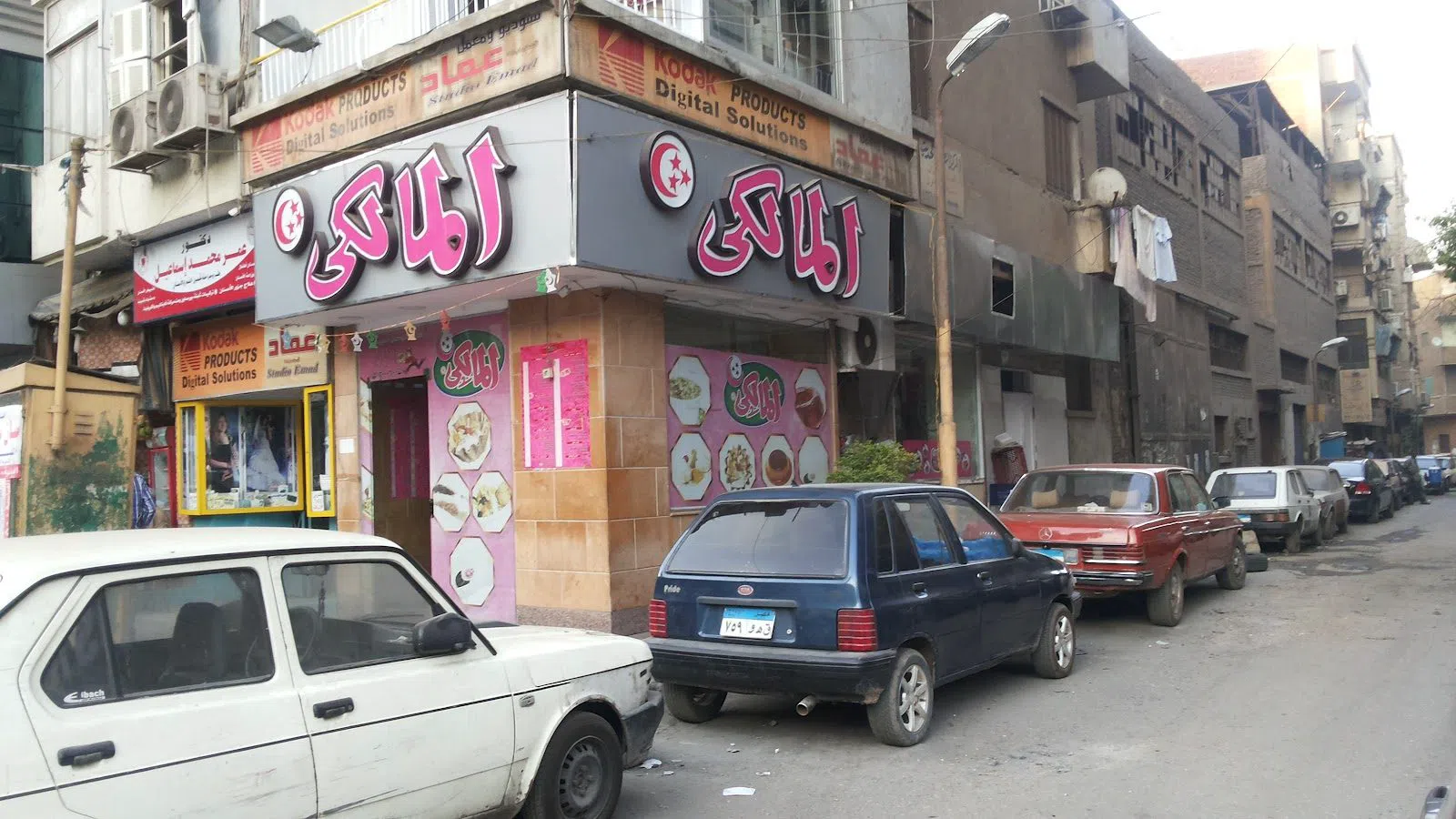
And for the sweet full-stop to a day's crawl, El Malky (a dessert café with outdoor seating on Al-Hussein square) is the classic finish. Its famous creamy rice pudding, eaten under the illuminated facade of the Al-Hussein Mosque, is a fine bit of people-watching for £1–3. The outdoor tables make it easy for a group to pile in, and it is alcohol-free — worth flagging for anyone expecting a bar; the Khan is essentially a dry district, and the pleasure here is tea, sweets and the passing crowd rather than a nightcap.
An evening add-on
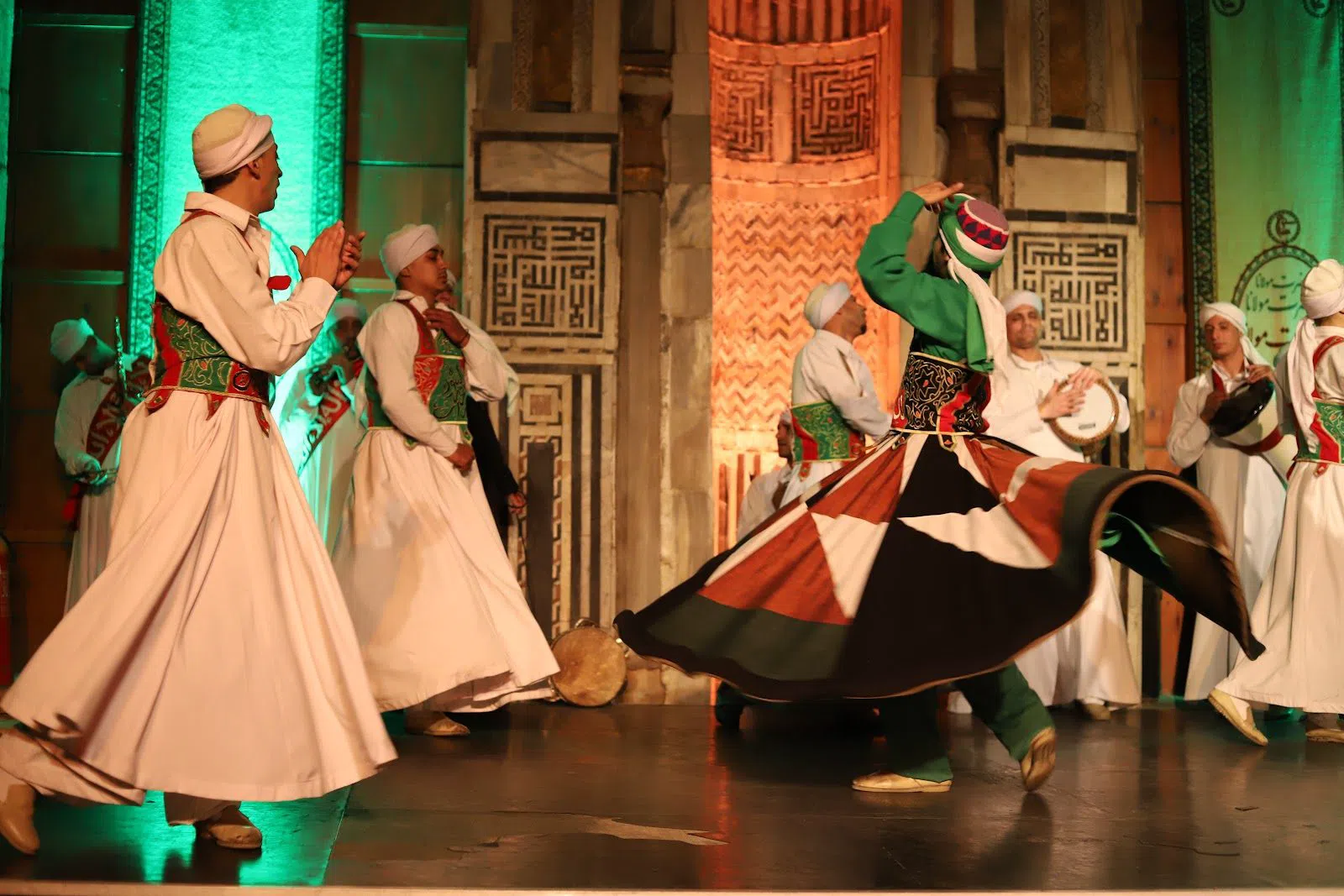
If you have an evening to spare, Wekalet El Ghouri (the Al-Tannoura Heritage Dance troupe, performing in the sixteenth-century Ghuri caravanserai a few minutes' walk from the Khan) is the best free thing in the district. The Tanoura is a whirling Sufi dance, spun out in a restored Mamluk-era inn, and the performances are ticketed but free. They currently run on Saturday, Monday and Wednesday at 8pm, though times change with the season, so confirm locally the same day. Seating is communal, so arrive around 7:15pm if your group wants to sit together. Donations and tips for the performers are welcome and fair given there is no entry charge. It is an ideal group outing and a genuinely memorable hour.
If you would rather be guided
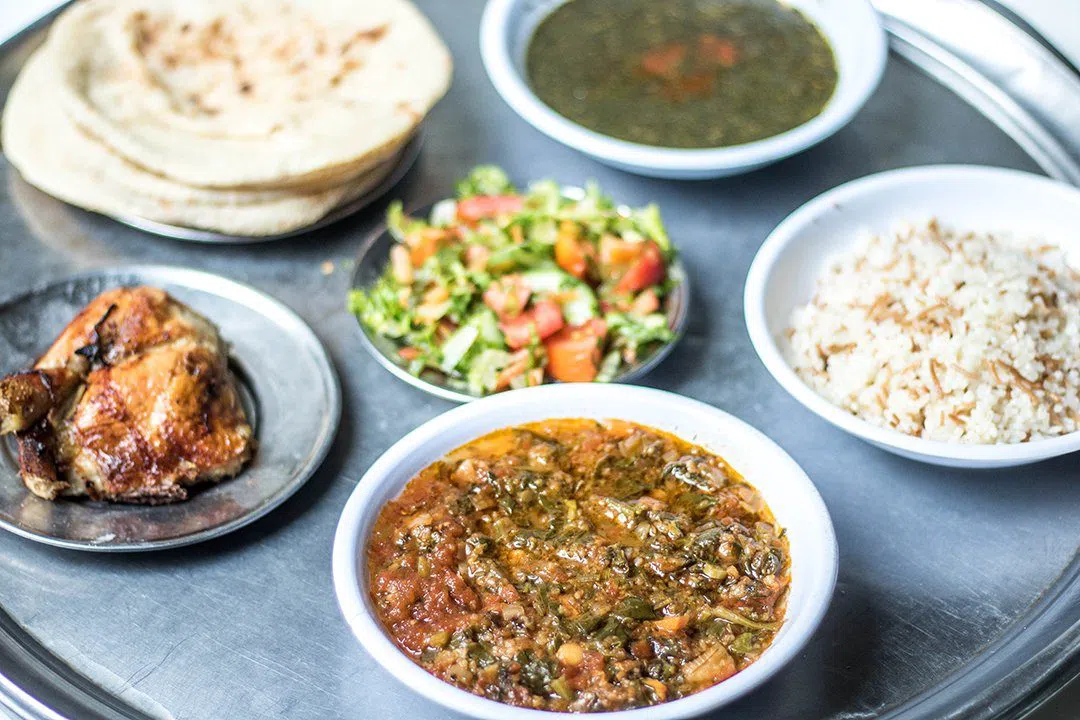
Haggling and navigating the Khan on your own is very doable, but not everyone wants to spend their first hours in Cairo learning market prices the hard way. Bellies En-Route (Cairo's best-known English-language food tour, running through Islamic Cairo and the Khan) is the straightforward answer. Their guides take small groups to where locals actually eat, decode the market as you go, and — usefully — steer you away from tourist pricing. Private group tours are available on request. At roughly £45–60 per person for a half-day it is not cheap, but for a family or a group of friends who want the tastiest, least stressful introduction to the area, it earns its keep. It is purpose-built for small groups rather than couples looking for a quiet outing.
Practical notes
Getting there. The Khan sits in Islamic Cairo, around Al-Hussein square. The most reliable approach is a ride-hailing app (Uber and Careem both work well in Cairo) to Al-Hussein or the mosque; ask to be dropped at the square and walk in, as the lanes themselves are pedestrian-only. The nearest metro is a fair walk away and less convenient than a car for most visitors. If you are staying centrally, factor in traffic — the drive can take far longer than the distance suggests, especially late afternoon.
Cash. Bring cash in small denominations. Card acceptance is patchy on the stalls and non-existent on the tea-house tables, and having small notes makes haggling smoother — it is much easier to close a deal when you can hand over the exact agreed sum. Keep your money somewhere secure and zipped in the crowds of El Muski.
Timing. Mornings, from opening until roughly midday, are the calmest for shopping and photography, with cooler air and thinner crowds. The bazaar comes alive again in the evening; El Fishawy and the square are at their busiest and best after 8pm, which is also when a large group is most likely to wait for a table. Fridays are quieter during midday prayers and busier after. In high summer, plan the air-conditioned Oberoi restaurant or a long tea break for the hottest part of the afternoon.
Budget. The Khan can cost almost nothing or a fair amount, depending on you. A day of tea, a feteer, rice pudding and a kebab-house lunch is easily under £15 a head. Add a copper lantern, a gold cartouche or a guided food tour and it climbs quickly — set a spending limit before you go in and it is easy to stick to.
Where to base yourself. Islamic Cairo has few hotels of note, so most visitors stay in the central districts and travel in; compare options with a Cairo hotel search and read the wider Cairo guide for how the Khan fits into a longer stay. Treat the bazaar as a half- or full-day within a broader Cairo itinerary rather than a destination on its own, and it rewards the time handsomely.
Before you go
Do I really have to haggle in Khan el-Khalili?
On the souvenir, spice and copper lanes, yes — the first price quoted is an opening bid, often two to three times the real rate, and you are expected to counter, usually settling somewhere in the middle. But the Gold Souk (El Sagha) is different: gold is priced by the day's weight rate and you only negotiate the small making charge, and the herbalist Harraz keeps largely fixed prices. Knowing which situation you are in matters more than being a tough bargainer.
How do I get to Khan el-Khalili?
The market is in Islamic Cairo around Al-Hussein square. The easiest approach is a ride-hailing app such as Uber or Careem to Al-Hussein or the mosque, then walk in — the bazaar lanes are pedestrian-only. Allow extra time for traffic, especially in the late afternoon, as the drive can take much longer than the distance suggests.
Is Khan el-Khalili good for groups or better for couples?
It works for both, but some spots suit groups more. El Fishawy café, El Dahan kebab house and the Wekalet El Ghouri dance show are lively and group-friendly, while the Oberoi-run Khan El Khalili Restaurant takes reservations and seats large parties in air-conditioned comfort. Small shops like Khedr El Attar are better browsed a few people at a time. Couples wanting quiet may prefer a morning visit and a booked table.
When is the best time to visit the bazaar?
Mornings, from opening to around midday, are calmest and coolest for shopping and photos. The Khan comes alive again in the evening, with El Fishawy and Al-Hussein square busiest after 8pm — atmospheric, but that is also when a large group is most likely to wait for a table. In summer, plan an air-conditioned lunch or a long tea break for the hottest hours.
Is Khan el-Khalili safe and can I pay by card?
It is a busy, well-trodden market and generally fine, but it is crowded — keep bags zipped and stay together, particularly on El Muski Street. Bring cash in small denominations: card acceptance is patchy on stalls and non-existent at the tea houses, and small notes make closing a haggle far easier.