The Cairo issue
The City of the Dead: Living Among the Tombs in Cairo's Necropolis
Inside Cairo's Northern and Southern Cemeteries, where Mamluk sultans built tombs meant to be lived in - and generations of Cairenes still do.
By Lucas MeyerWalking Cairo, from Old Cairo's churches to Al-Muizz Street
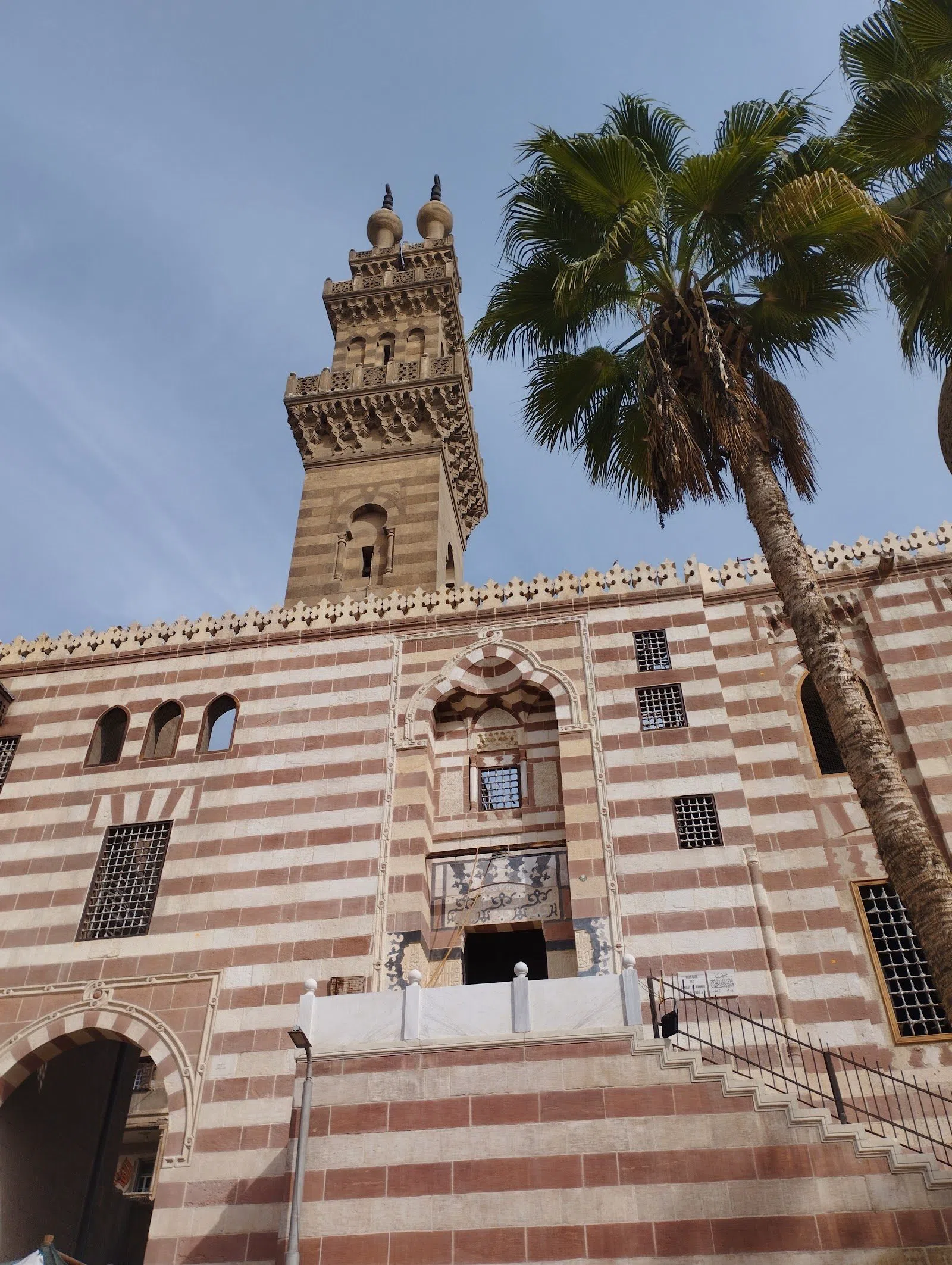
Half a million Cairenes wake up each morning inside a cemetery. Laundry lines stretch between marble headstones in the Southern Cemetery; in the Northern Cemetery, satellite dishes sit bolted to the domes of Mamluk sultans. This is Cairo's City of the Dead — not an abandoned ruin field for guidebook curiosity, but a functioning, historic neighbourhood that happens to be built directly into a necropolis, and in 2026 it remains one of the most misunderstood places in the city.
See It Whole First, From Above
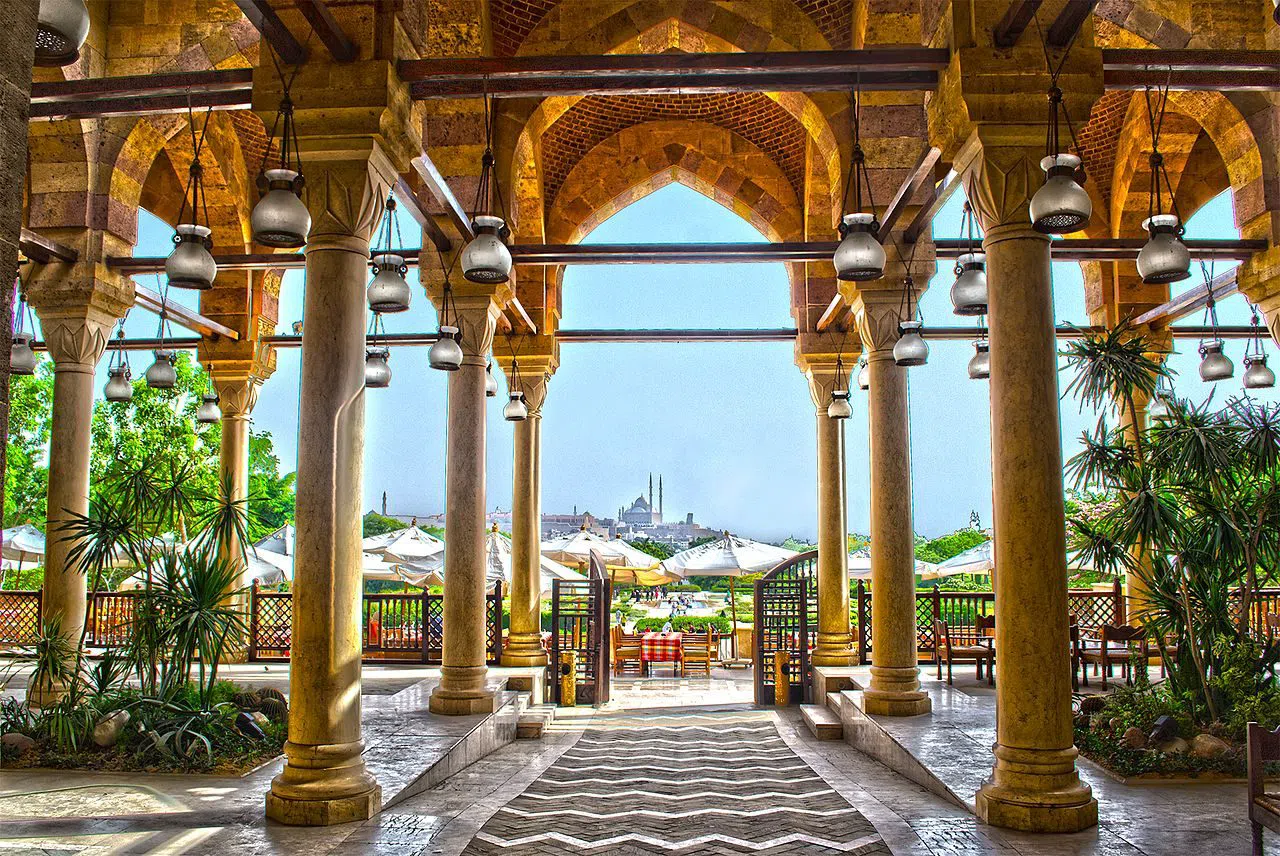
Before walking into either cemetery, get the shape of the place from a distance. Al-Azhar Park (Darb al-Ahmar, on the necropolis's western edge) is a public park built by the Aga Khan Trust for Culture directly on the City of the Dead's doorstep, and its raised lawns are the one spot in Cairo where the whole necropolis reads as a single composition against the Muqattam hills — dome after dome, minaret after minaret, stretching for kilometres. Entry costs a few dollars, the walkways are wide and paved, and there's no restriction on group size, which makes it a sensible first or last stop rather than a detour. Go in the late afternoon, when the light is low and the domes throw shadows east across the rooftops, and you'll leave with the mental map every subsequent alley needs.
Plan your Cairo trip
Live prices from our booking partners.
Free cancellation on many rooms. We may earn a commission when you book.
Why "City of the Dead" Misleads
The name itself is part of the problem. English-language guidebooks tend to reach for one of two clichés: an eerie no-go slum to be glimpsed from a taxi window, or a "hidden gem" to be ticked off in twenty minutes between the Pyramids and the Khan el-Khalili bazaar. Neither holds up on the ground. Cairenes call it al-Qarafa, and it has been continuously inhabited in some form since the Islamic conquest of Egypt in the seventh century, long before the Mamluk sultans who built its grandest monuments arrived in the thirteenth. Successive waves of rural migration into Cairo through the twentieth century settled families in and around the tomb enclosures — some as caretakers paid to maintain a family's mausoleum, others simply because housing was cheap and central — and those families' descendants are still here. It's part of Historic Cairo, inscribed as a UNESCO World Heritage Site since 1979, which sits oddly with how rarely it appears on a standard Cairo itinerary next to the Citadel or Khan el-Khalili. Go expecting a residential district with an unusually high concentration of medieval funerary architecture, not a horror-film backdrop, and the visit makes a great deal more sense.
The Northern Cemetery: A Planned City, Not a Ruin Field
The Northern Cemetery is where the "planned city" argument makes itself. These aren't scattered graves; they're a sequence of royal funerary complexes — mosque, mausoleum, khanqah (Sufi hospice) and sometimes a sabil-kuttab (fountain and school) fused into a single building — commissioned by Mamluk sultans who wanted their tombs to double as active religious institutions, staffed and endowed in perpetuity. That's why families still live in their shadow: the complexes were never meant to be sealed off.
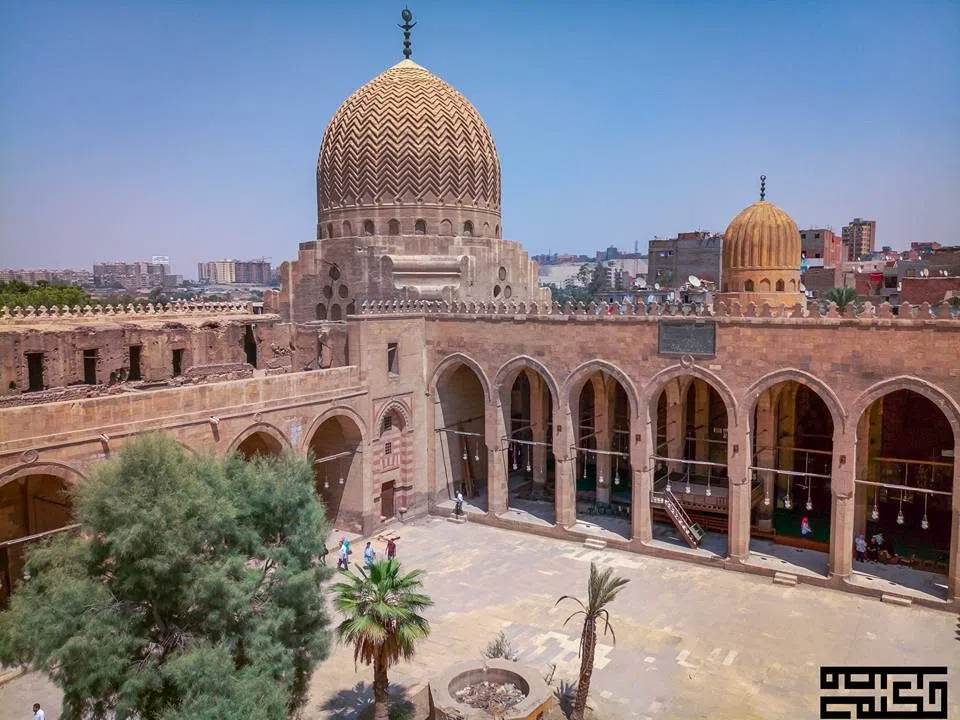
The Khanqah-Mausoleum of Faraj ibn Barquq (Northern Cemetery, off the main necropolis road) is the anchor. It's the single grandest structure out here — twin minarets, twin domes, a vast open courtyard that functioned as a working Sufi hospice for centuries — and it's the clearest physical proof that this "graveyard" was conceived as a city. The courtyard is big enough to absorb a full tour group without anyone feeling herded, and the antiquities ticket is a low, fixed cost, a few dollars.
A short walk away, the Funerary Complex of Sultan Qaitbay (Northern Cemetery) reopened in July 2026 after a two-year, US-funded restoration, and it's now the freshest, most photogenic anchor for any itinerary through here — carved stonework and the intricately patterned dome that appears on Egypt's one-pound note, newly cleaned and structurally stabilised. It's an open monument that welcomes groups, but the lanes around it are narrow, so if you're travelling with more than eight or ten people, split into two or three clusters before you approach rather than trying to funnel everyone through together. Ticket pricing follows the standard antiquities-site structure: a low cost for Egyptian nationals, a higher fixed rate for foreign visitors, still only a few dollars either way.
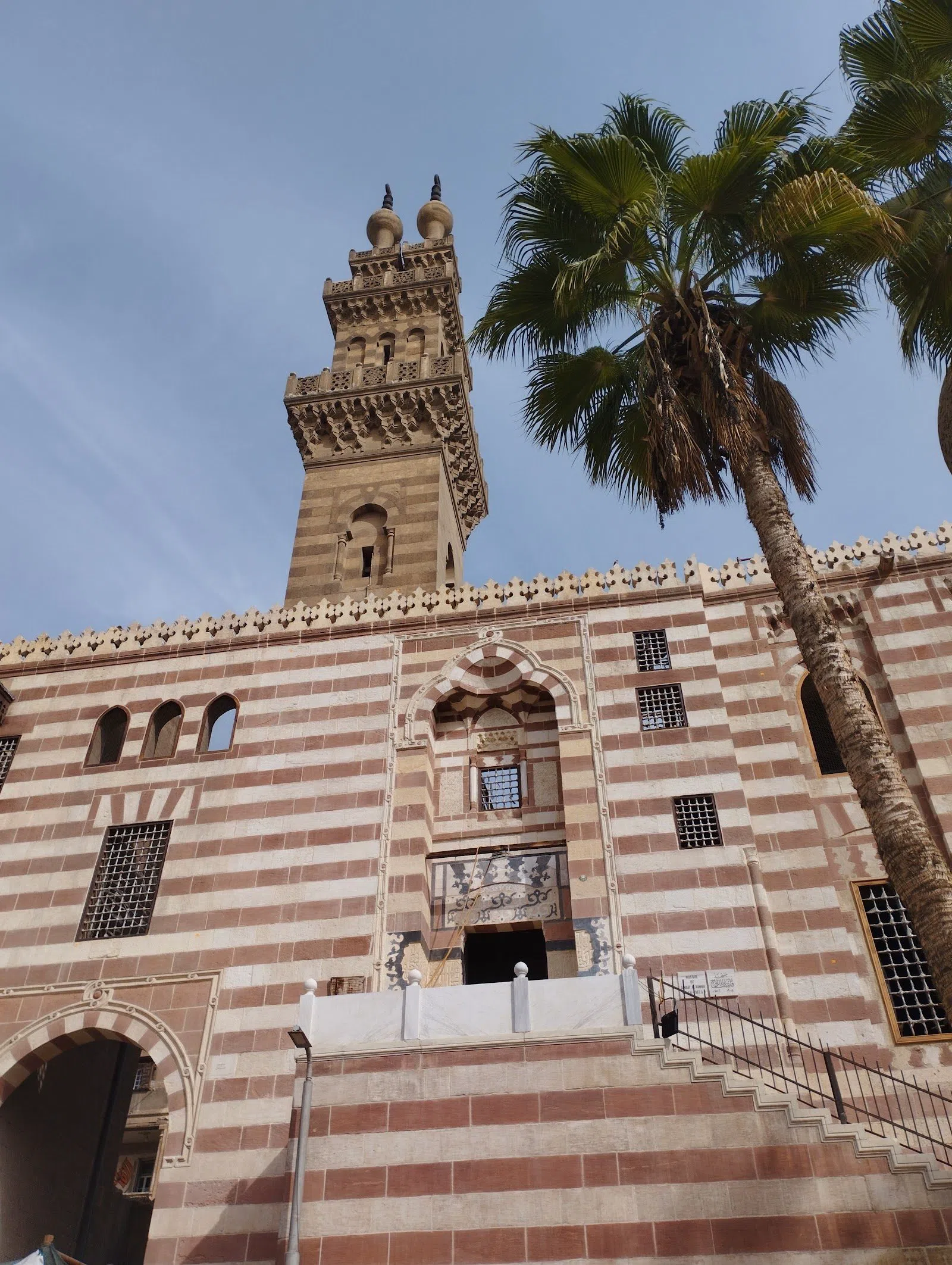
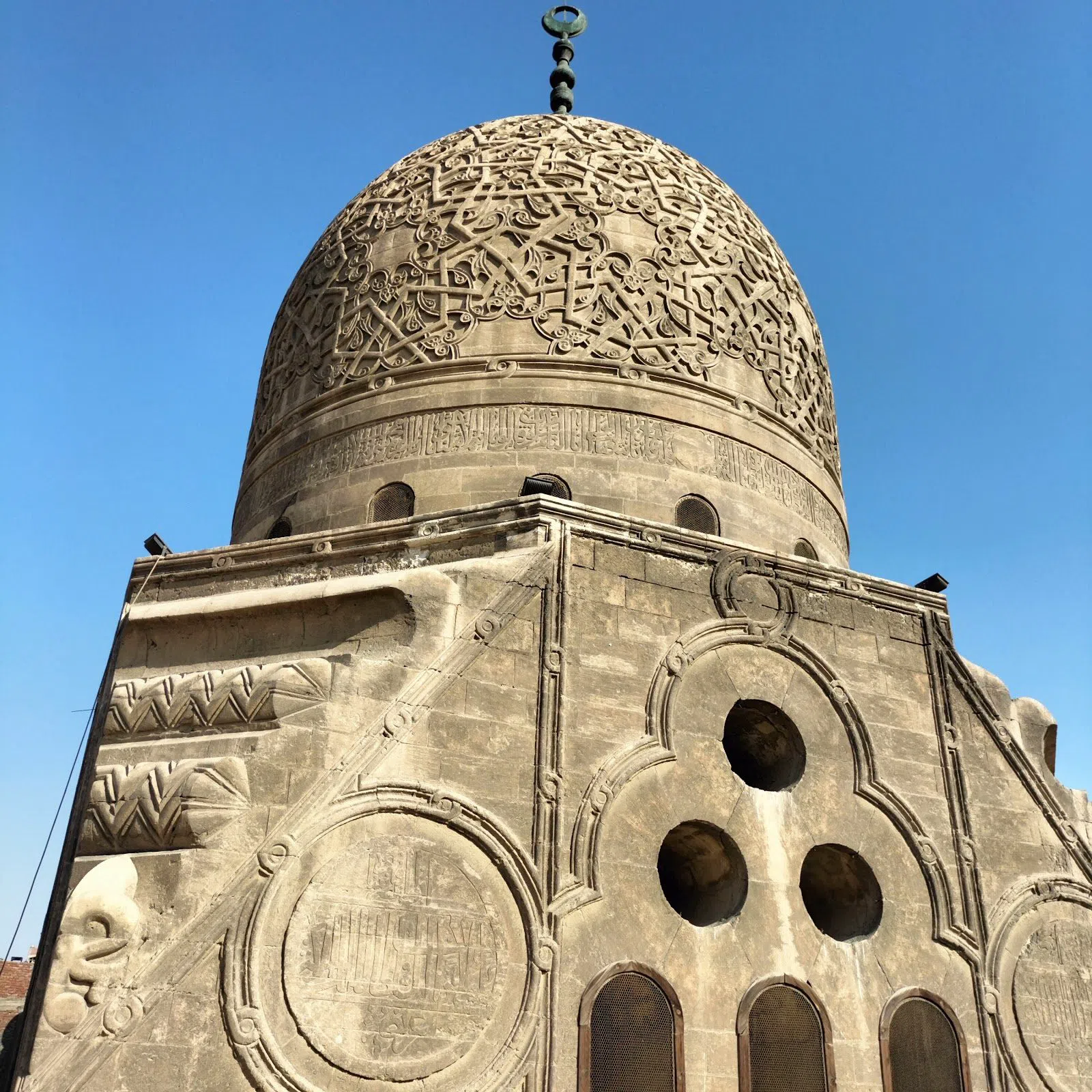
For a quieter counterpoint, the Khanqah-Mausoleum of Sultan Barsbay (Northern Cemetery, a few minutes' walk from Barquq) is worth a look from the street even if you go no further — it's free to view from outside, and the dome and portal are handsome enough to justify the detour. Interior access, though, depends entirely on whether a caretaker is present and willing to let you in for a small tip; there's no ticket booth and no guarantee. It suits couples and small groups who can be flexible about whether they see the inside at all — don't build a large tour group's schedule around getting inside Barsbay.
The Funerary Complex of Amir Qurqumas (Northern Cemetery) is the one most guidebooks skip, which is exactly the point: it's a genuinely under-visited Mamluk complex with none of the crowding you'll find at Qaitbay, free or low-cost to approach, with a caretaker tip customary if you want to go inside. Treat it as exterior-only for planning purposes — the interior is a bonus, not a given — and it works well for small groups precisely because there's no queue to manage.
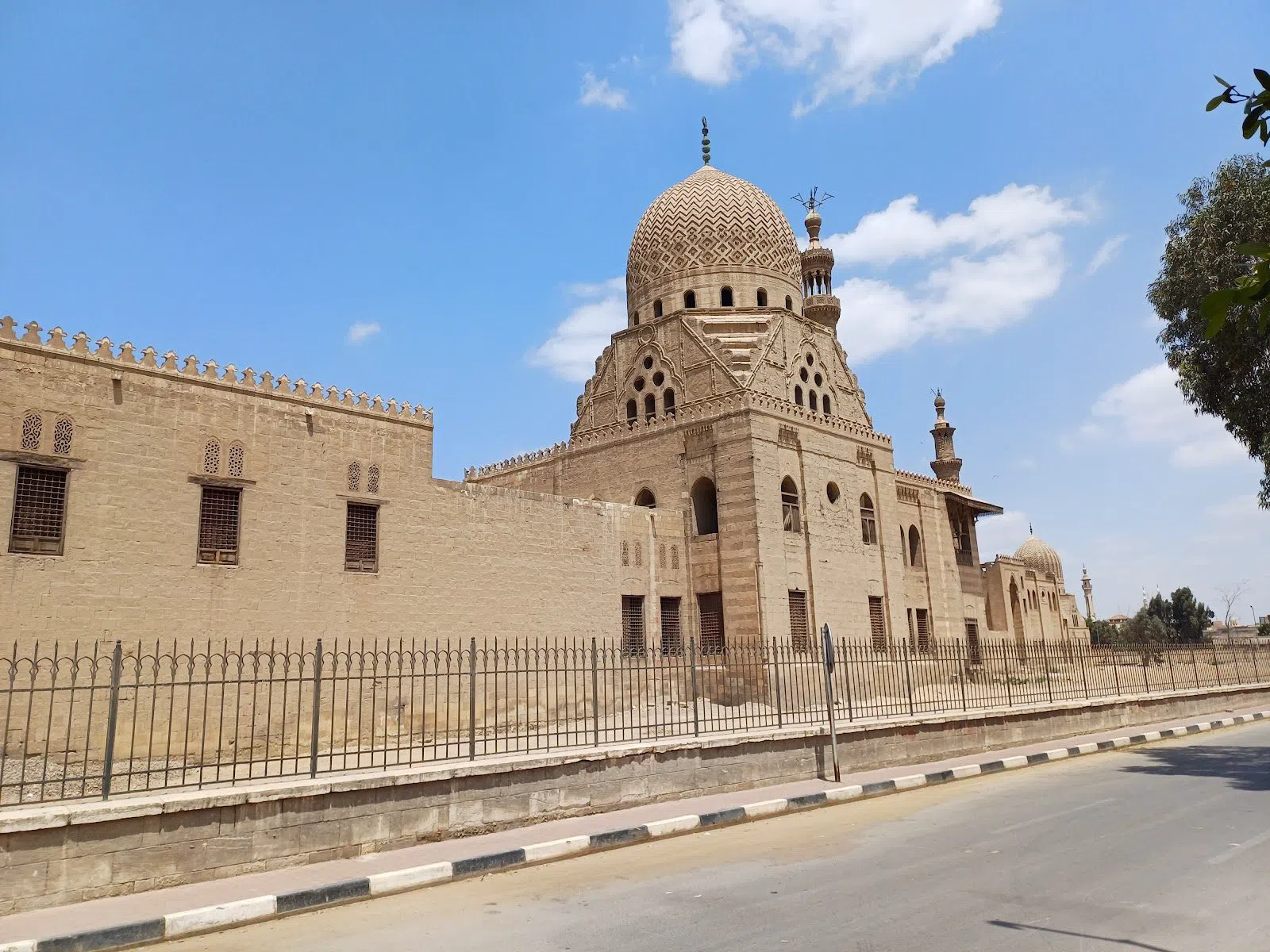
Crossing Into the Southern Cemetery: al-Khalifa
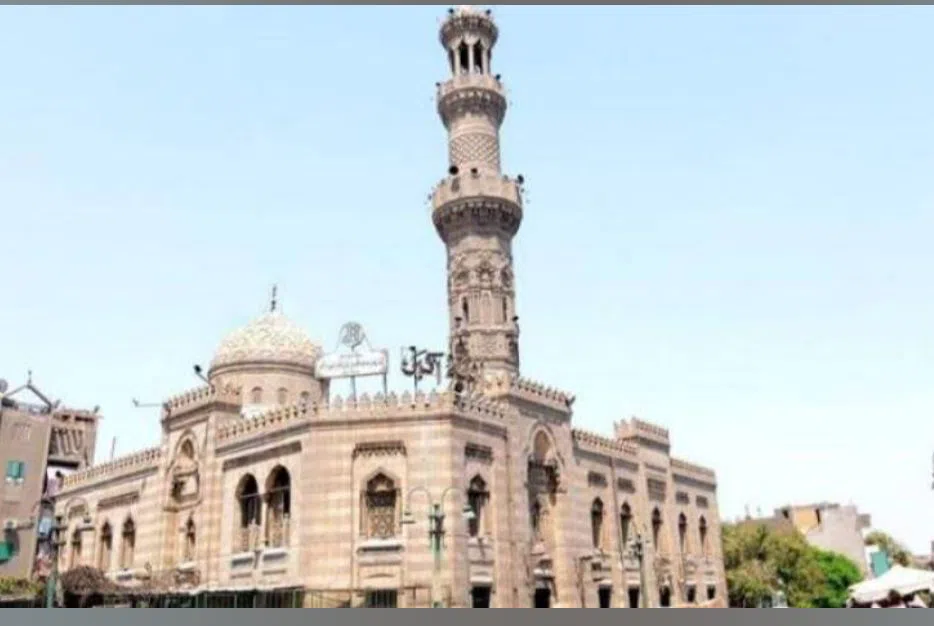
South of the Citadel, the necropolis changes register. This is al-Khalifa, older than the Northern Cemetery and far more residential — narrower lanes, corner shops, kids playing football against tomb walls, washing strung between headstones that are, in some cases, older than most European cathedrals. Where the Northern Cemetery reads as a sequence of set-piece monuments, al-Khalifa reads as a neighbourhood that happens to have monuments in it: the distinction matters for how you plan the visit, since there's less "site to site" walking and more simply being present in a lived-in street. Most visitors enter through the Sayyida Aisha Mosque and Gate (Bab al-Qarafa, at the Southern Cemetery's northern edge), a working mosque and public gateway that literally is the threshold into this half of the City of the Dead. There's no restriction on groups passing through, and it's free — use it as your orientation point rather than a photo stop; the mosque itself is a working place of prayer, not a monument to linger in.
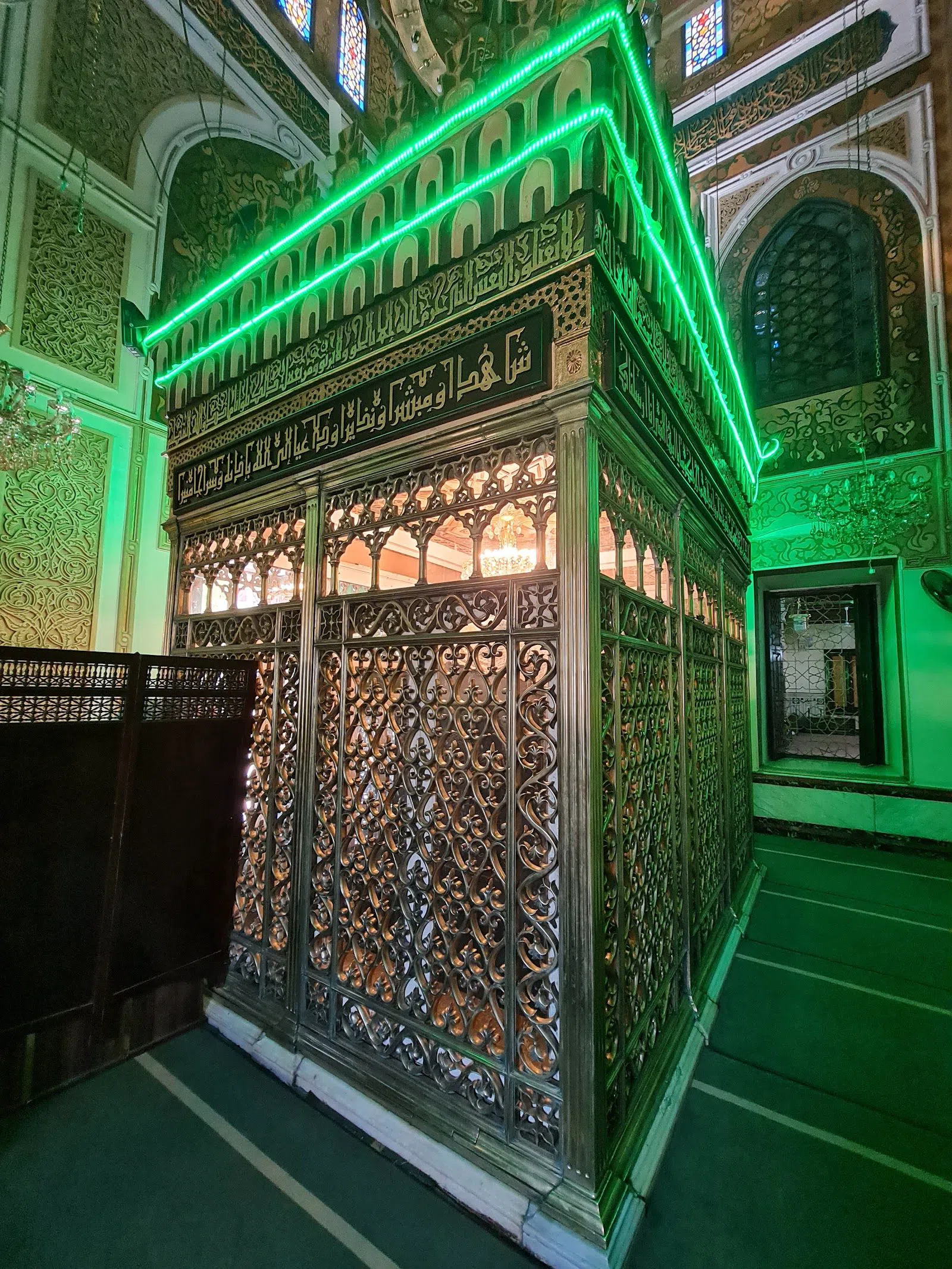
Once inside, the Mausoleum and Mosque of Imam al-Shafi'i (al-Khalifa) is the single best illustration of the whole article's premise: a nearly thousand-year-old shrine to the founder of one of Islam's major schools of jurisprudence, still a fully working mosque, with families praying inside and living pressed right up against its outer walls. It's open to visitors of all faiths and entry is free, donations customary, but it closes briefly around each of the five daily prayer times, so build in slack rather than arriving at a fixed slot — and dress modestly, which for this neighbourhood generally means covered shoulders and knees for everyone, and a headscarf for women entering the prayer hall.
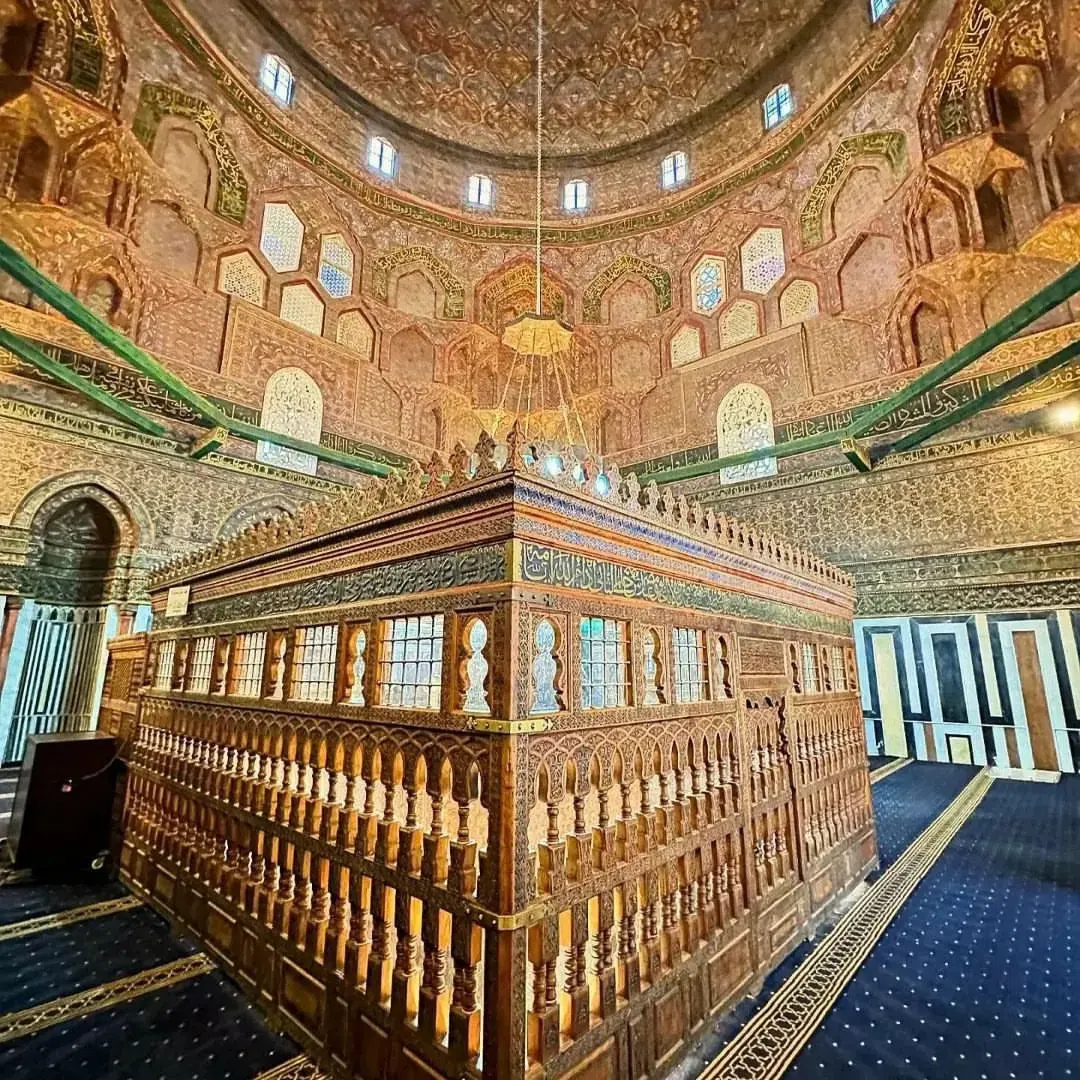
A few minutes further in, the Mausoleum of Shajar al-Durr (al-Khalifa) is easy to walk straight past — it's a small interior chamber, roughly 50 square metres, built for the only woman to rule Egypt in her own right during the Mamluk-Ayyubid transition. It suits small groups and couples rather than tour buses simply on floor-space grounds, and the reward for finding it is a recently conserved mosaic mihrab, one of the only surviving examples of its kind in Cairo. It's free to low-cost to enter, with a caretaker tip common practice.
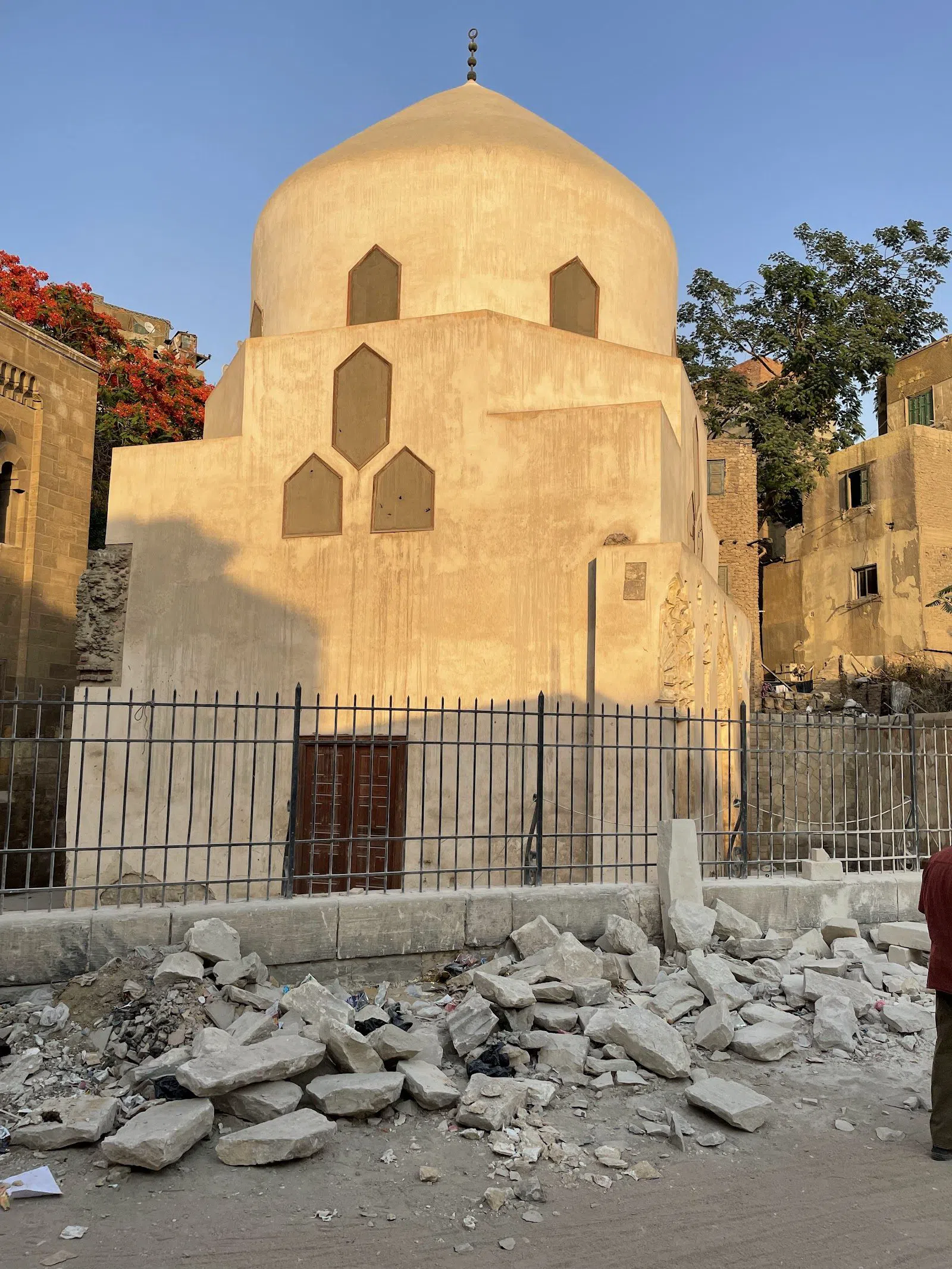
The Mosque of Sayyida Sukayna (al-Khalifa) rounds out the residential picture — a small, working neighbourhood mosque stitched directly into the housing fabric around it, free to enter, welcoming to small groups outside prayer times, modest dress expected. It's not an architectural showpiece on the scale of Barquq or Qaitbay; it's evidence of the opposite claim, that this is an ordinary neighbourhood with an ordinary mosque, which happens to sit among centuries-old tombs.
Craft Still Worked by Hand: Kamal Hodhod Glassblowing
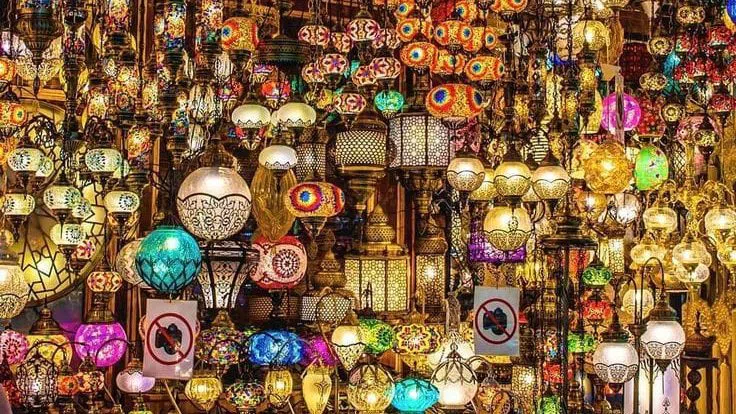
Steps from Qaitbay's tomb, the Kamal Hodhod Glassblowing Workshop (Northern Cemetery, near the Qaitbay complex) is the clearest "living, working neighbourhood" scene in the entire necropolis — a Mamluk-era craft tradition still practised over a real, open furnace, not staged for visitors. Watching is free, and finished pieces typically run a few hundred Egyptian pounds if you want a souvenir. The important caveat: this is a working furnace in a cramped space, not a demonstration booth, so it suits small groups only — two or three at a time near the flame, not a coach party. Give the glassblowers space, ask before photographing anyone directly, and don't expect a polished retail experience; the appeal here is precisely that it isn't one.
Walking It With Someone Who Knows the Streets
Independent visits work well for the major monuments, where ticket booths and open courtyards make self-navigation straightforward. But al-Khalifa's residential lanes, and the etiquette of walking through a neighbourhood where people are genuinely living and grieving, reward local knowledge. Walk Like An Egyptian's City of the Dead Walking Tour is the one dedicated, reputable operator built specifically around this neighbourhood, rather than a generic day-tour reseller bolting a quick stop onto a pyramids itinerary. They run public group departures of around 14 to 15 people as well as private bookings, priced on request in the range typical for a specialist half-day Cairo walking tour. For solo travellers or couples who want context — who's buried where, which families have lived here for generations, what's appropriate to photograph — this is the more honest way in; for groups larger than about fifteen, ask them to split the cohort, since the same narrow-lane logic that applies at Qaitbay applies across the whole neighbourhood.
Planning the Visit
Base yourself in central Cairo or Islamic Cairo — Cairo hotel search covers both — and treat the City of the Dead as a half-day out rather than a rushed hour between other sights; see the Cairo guide for how it fits alongside the Citadel, Khan el-Khalili and the rest of Islamic Cairo.
Getting there. Ride-hailing apps (Uber and Careem both operate in Cairo) are the simplest way in and out; agree the drop point in advance, since street names are inconsistently signed and drivers may know a complex by its popular name rather than its formal one. The Northern and Southern Cemeteries are several kilometres apart with the Citadel between them — plan them as two separate outings, or one long day, not a single continuous walk.
Cash. Bring small-denomination Egyptian pounds. Antiquities tickets at the major sites (Qaitbay, Barquq) are fixed-price and low-cost, but caretaker tips at Barsbay, Qurqumas and Shajar al-Durr are cash-only and informal — nobody carries change for a large note down a cemetery lane.
Timing and dress. Prayer times briefly close Imam al-Shafi'i and pause activity at the smaller working mosques; check a prayer-time app before you set out and build slack around midday and mid-afternoon. Modest dress — covered shoulders and knees, a headscarf for women at the working shrines — is expected throughout, not just at the mosques.
Budget. A half-day covering two or three Northern Cemetery monuments plus Al-Azhar Park runs to only a few dollars in entrance fees and tips; a guided tour with Walk Like An Egyptian adds the cost of the tour itself. Either way, this is one of the least expensive serious sightseeing half-days in Cairo — the cost here is time and courtesy, not money.
Before you go
Is it respectful to visit Cairo's City of the Dead as a tourist?
Yes, provided you treat it as the working neighbourhood it is rather than a curiosity. The monuments described here - Qaitbay, Barquq, Imam al-Shafi'i - are open sites and working mosques that welcome visitors; the residential lanes around them are people's homes, so keep to main paths, ask before photographing individuals, dress modestly, and avoid the area during and immediately after Friday prayers unless you're specifically visiting a mosque.
Can you visit the City of the Dead alone, or do you need a guide?
Both work. The major monuments - Qaitbay, Barquq - have ticket booths and are straightforward to navigate independently. A guide earns their keep in al-Khalifa's residential lanes, where local knowledge and introductions matter more than signage; Walk Like An Egyptian runs the one specialist operation built specifically for this neighbourhood, for solo travellers, couples and groups alike.
How much does it cost to visit the Cairo necropolis?
Very little. Antiquities tickets at sites like Qaitbay and Barquq run a few dollars, with a higher fixed rate for foreign visitors than for Egyptians; smaller sites such as Barsbay and Qurqumas are free to view from outside with a small caretaker tip for interior access. Al-Azhar Park charges a modest entrance fee. A guided walking tour is priced separately, on request.
What should you wear to visit the City of the Dead?
Modest dress throughout, not just inside the mosques: covered shoulders and knees for everyone, and a headscarf for women entering working prayer halls such as Imam al-Shafi'i. Comfortable, closed shoes matter more here than at most Cairo sights, since the lanes are uneven stone and packed earth.
When is the best time to visit, and are there closures to plan around?
Go in the morning or late afternoon to avoid the midday heat, and check prayer times before you set out - Imam al-Shafi'i and the smaller working mosques close briefly around each of the five daily prayers. The Funerary Complex of Sultan Qaitbay only reopened in July 2026 after a two-year restoration, so it's currently in its best condition in years.