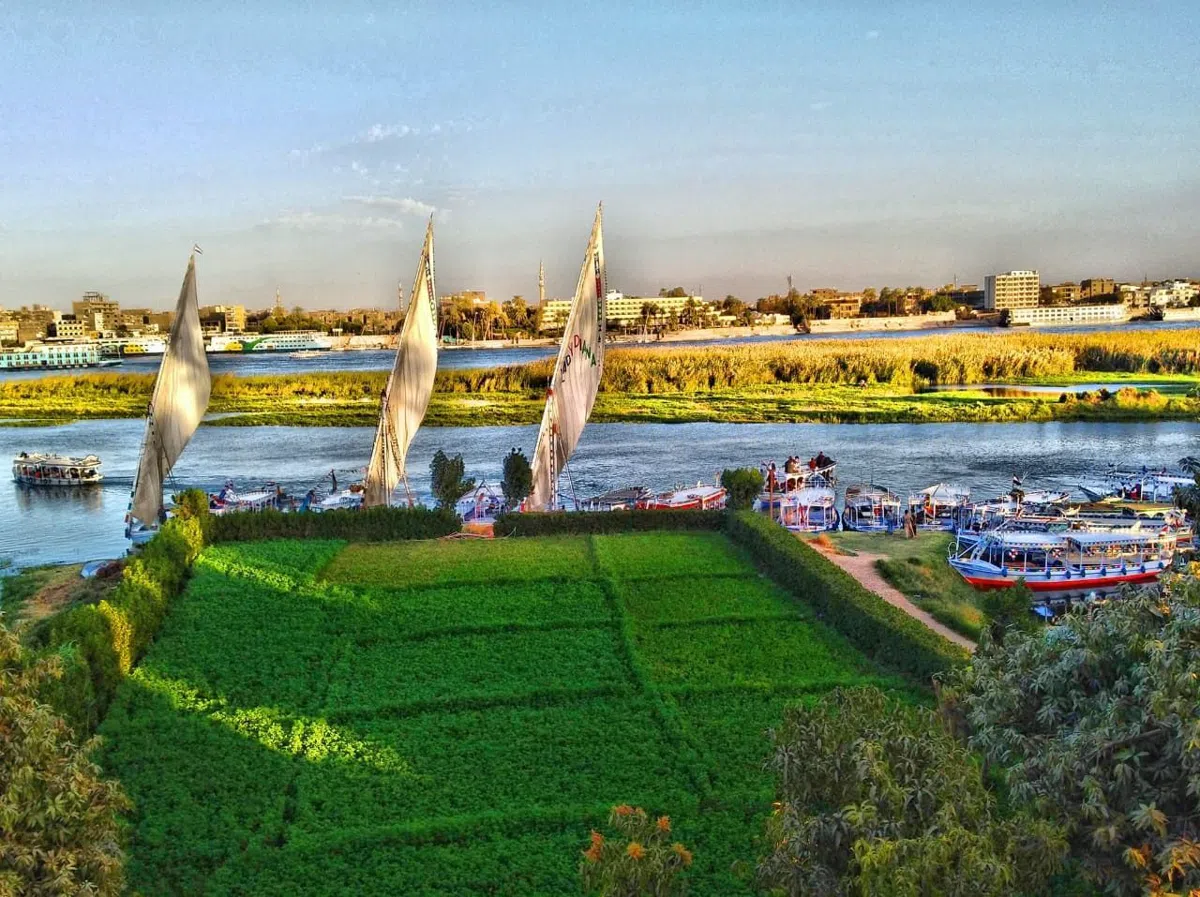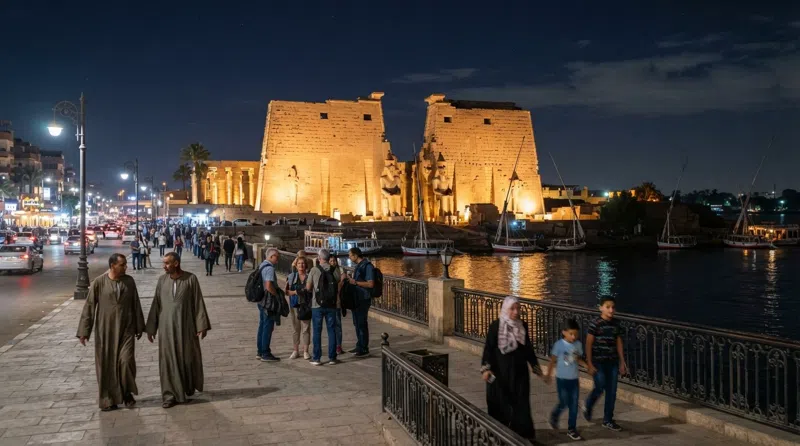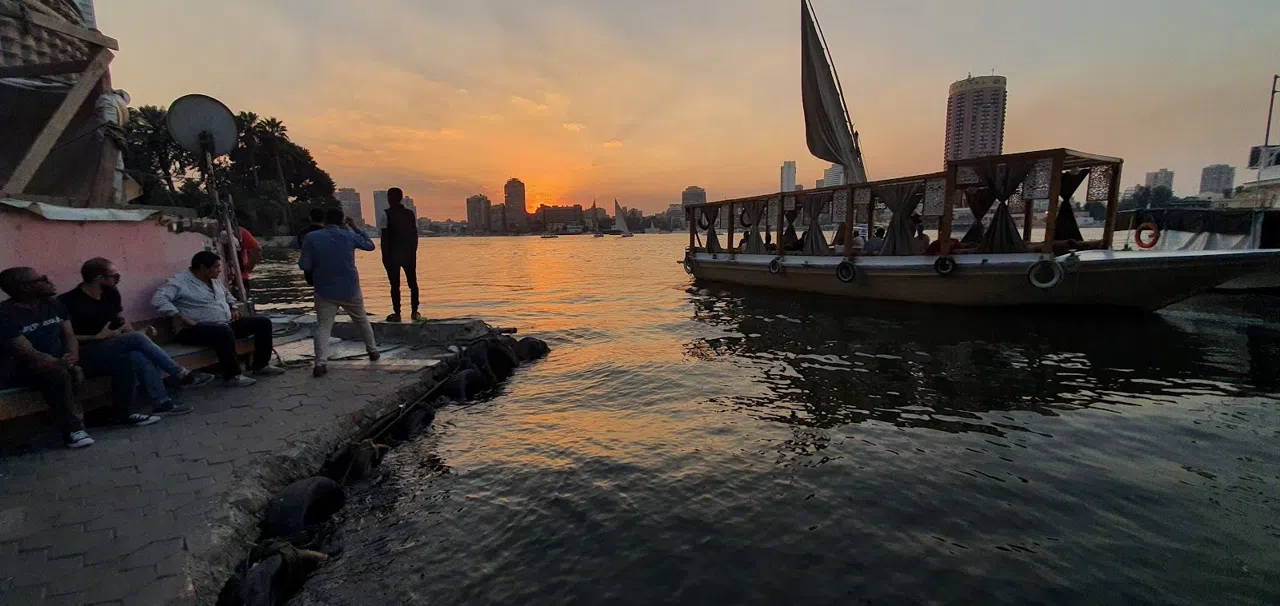
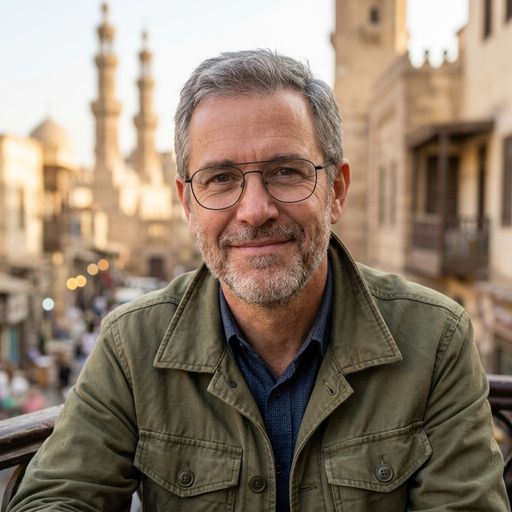
At dusk the Nile turns the colour of hammered brass, and for the length of one sail — usually an hour, sometimes stretched if the wind is kind — Cairo's noise recedes to the creak of a lateen yard and water sliding along a wooden hull. Feluccas have worked this river since long before anyone thought to call it tourism, and the men who still sail them are, more often than not, the second, third or fourth generation to do so from the same stretch of bank. This is not a secret ritual conducted somewhere off the map. It happens in full view of the Corniche every evening, which is exactly why it's worth doing properly, at the right dock, with a captain who knows the river rather than one who's just found a foreigner.
What the Water Shows You
Cairo from the Corniche is a wall of traffic, hotel facades and horns. Cairo from a felucca deck is a different city entirely, and that gap is the actual reason the ritual has survived. From the water you get the minarets of Old Cairo catching the last light side-on rather than head-on, the string of bridges — Qasr El Nil, the 6th of October flyover, the newer crossings further south — lit up one by one as the sky drops from brass to violet, and the slow procession of feluccas themselves crossing and re-crossing your own boat's path, sails catching wind at slightly different angles, which from a rooftop bar just looks like traffic but from the deck looks like choreography. You also get the river's working edge that land-based sightseeing skips entirely: houseboats moored along Zamalek and Maadi, fishermen working small skiffs after the tour boats have cleared out, and the felucca captains themselves calling to one another across the water in a shorthand that's clearly older than any of the hotels behind them. None of it requires a guide or a script. It's simply what an hour of quiet, low, slow movement on the Nile gives you that an hour on its banks doesn't.
Flag One Down: The Corniche Docks
The purest version of the felucca ritual is also the simplest: walk to a public dock, pick a boat, agree a price, and go. It takes five minutes and a bit of nerve, and it's how Cairenes themselves have caught a boat for a century.
Dok Dok Landing Stage, in Garden City on the east bank, is the classic answer to "where do I actually catch a felucca." It's informal by design — there's no ticket booth, no fixed queue, just a run of moored boats and their captains, who will call out as you approach. Feluccas here typically seat six to ten, so a small group fills one boat comfortably; anything larger means chartering two and sailing in convoy, which the captains are used to arranging on the spot. Budget roughly $8–15 per boat per hour, cash only, and settle both the price and the duration before you step aboard — not after. Go at golden hour, expect a short negotiation, and treat the haggling itself as part of the experience rather than an inconvenience; it's the one moment of friction in an otherwise smooth hour on the water.
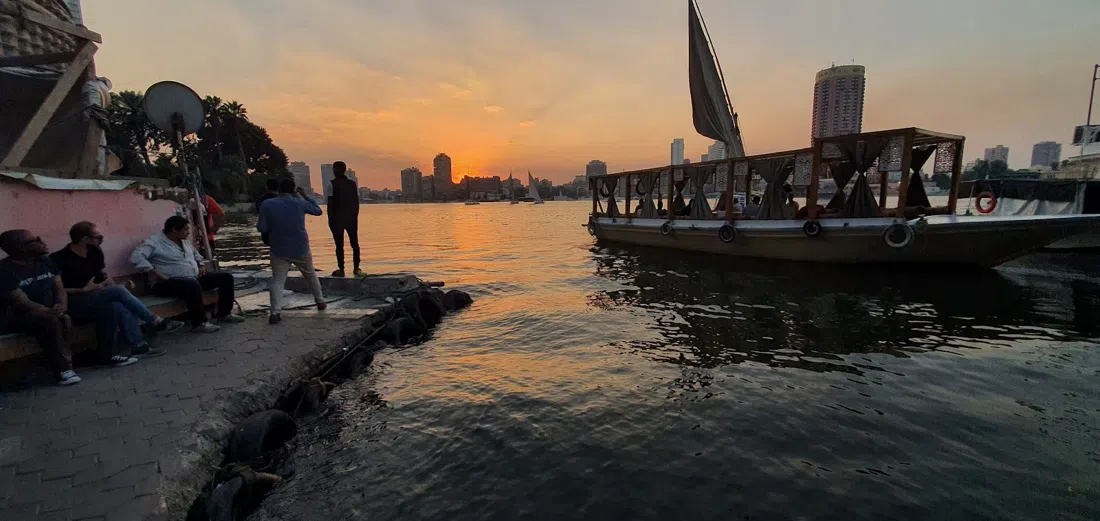
Maadi Corniche felucca fleet, further south in the residential district of Maadi, is the quieter alternative and arguably the more interesting one for anyone curious about who actually sails these boats. The open water along this stretch allows longer, less congested runs than the downtown docks can offer, which suits families and small groups who don't want to be one of a dozen boats crossing the same hundred metres of river at sunset. Pricing tracks Garden City — roughly $8–15 per boat per hour, negotiated on the spot — but the atmosphere is different: this is the closest thing Cairo has to a multigenerational felucca community, with boats often sailed by the sons of the men who built them. It's less transactional, and the captains are more inclined to talk about the river than to sell you anything beyond the sail itself.
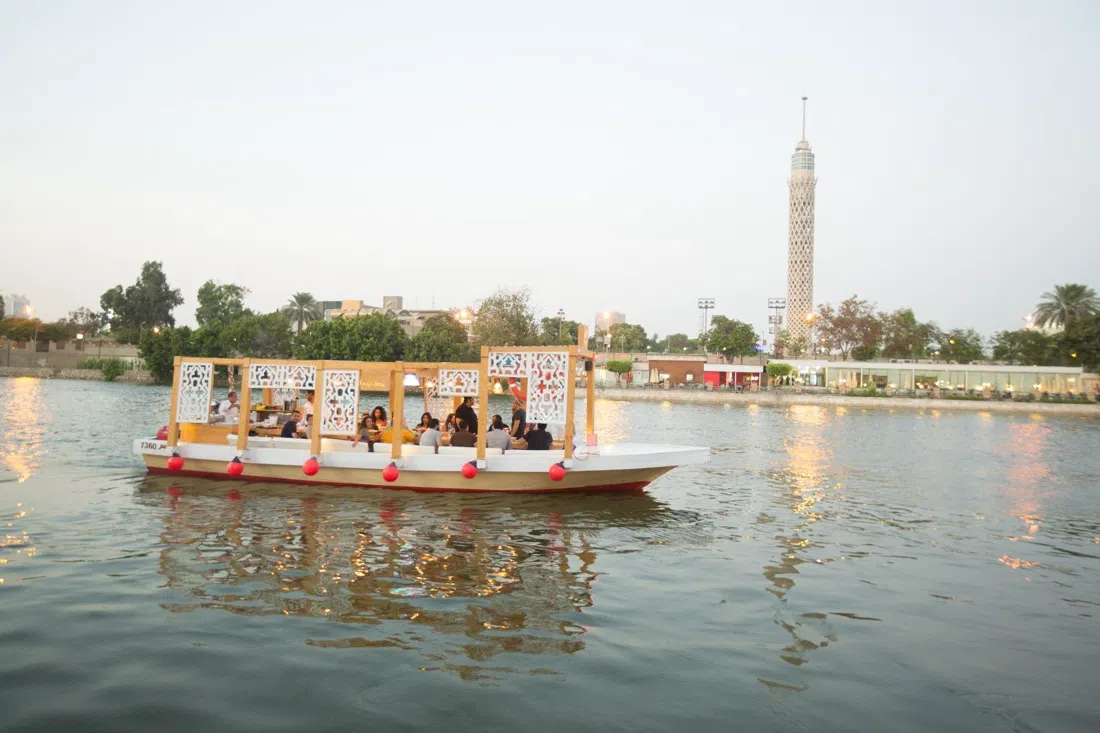
Giza corniche felucca dock, on the Kit Kat / Imbaba stretch of the west bank, is worth seeking out specifically for couples or pairs who want fewer other boats crowding the view. It sees far less tour-bus traffic than Garden City or Zamalek, and because you're sailing from the west bank, the light and skyline work differently — the sunset sits behind the city rather than beside it, which gives a genuinely different photograph than the more famous docks produce. Budget is comparable to the other informal docks, roughly $8–15 per boat per hour, captain-negotiated, cash in hand.
Book Ahead, Skip the Haggle: Operators and Hotel Docks
The one recurring complaint about Cairo's feluccas isn't the sail itself — it's mid-trip haggling, a captain angling for more once you're already on the water. The fix is simple: book with an operator or a hotel that fixes the price before you board.
Ride a Felouka is built around exactly this problem. It runs both private and small-group bookings with the fare locked in at the time of booking — typically $15–25 an hour depending on the package — and it carries a 4.6-star rating on TripAdvisor, with reviewers repeatedly citing the fixed price as the reason they chose it over flagging a boat streetside. It's the sensible middle ground for readers who want the felucca ritual without any of the negotiation.
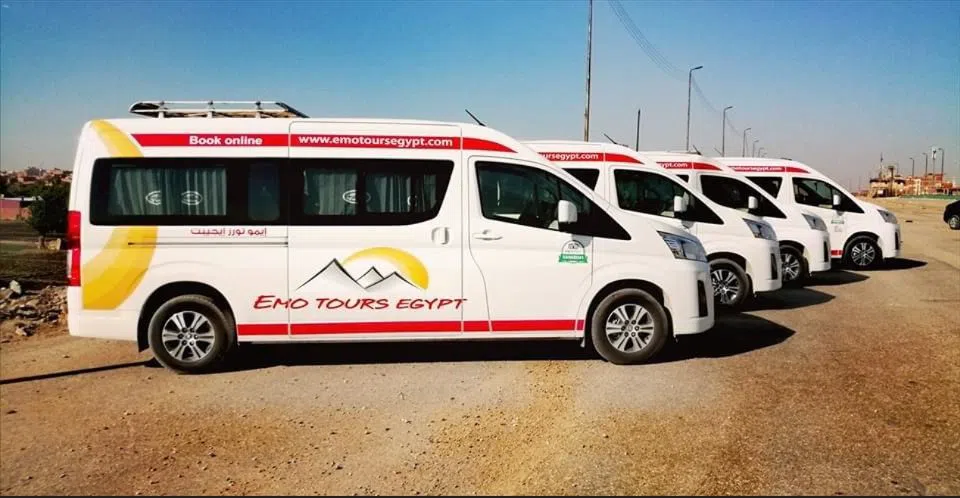
Emo Tours Egypt goes a step further and bundles hotel transfer with the sail, running both private and small-group departures for roughly $20–35 per person, covering pickup plus a one-hour sail. Reviews consistently praise punctual, English-speaking guides; the one recurring gripe is Cairo traffic delaying the pickup, not anything about the sail itself, so build in slack either side of your booking rather than scheduling it tight against a dinner reservation.
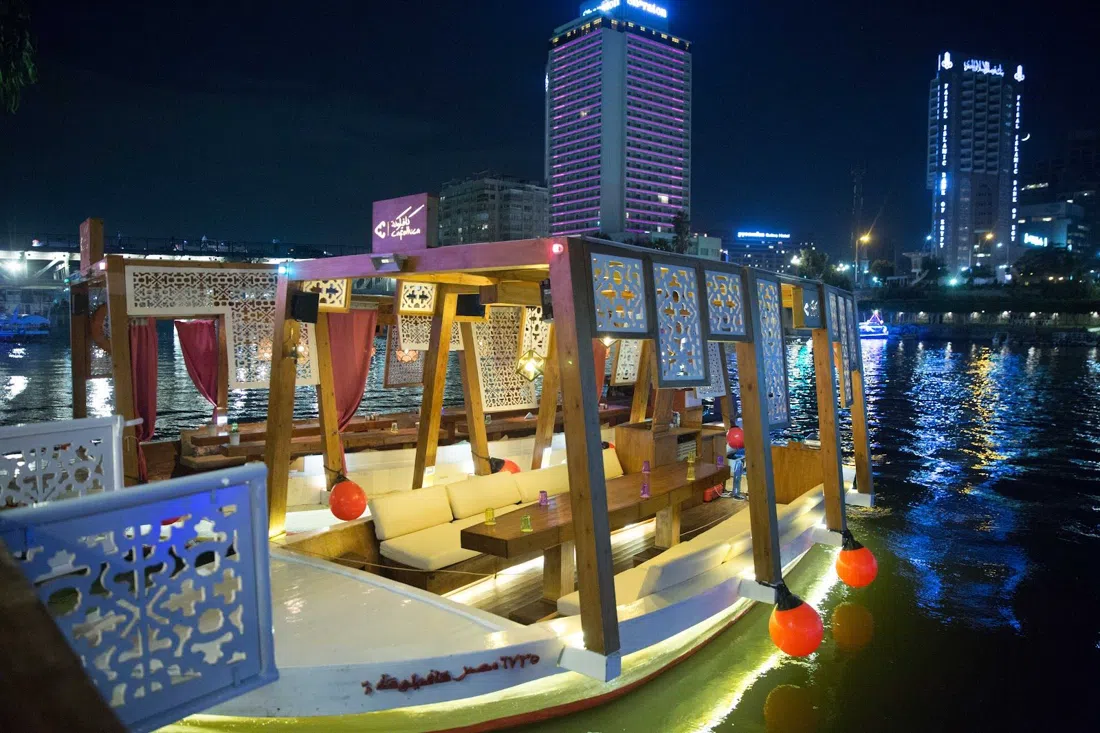
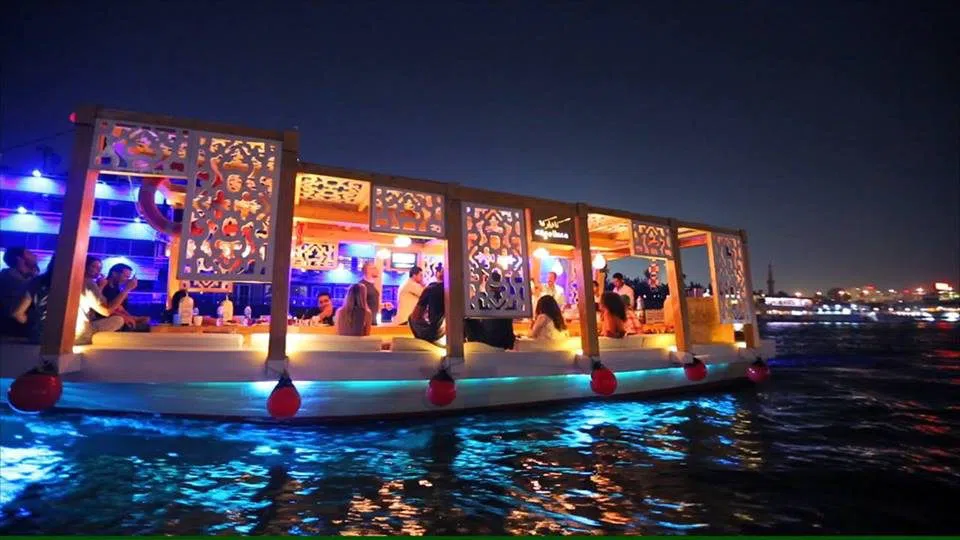
Cafelluca is the polished, fixed-price end of the market — a felucca sailing and dining club rather than a bare boat charter. Set menus require a minimum of six people, and because the brand runs multiple docks simultaneously, it comfortably handles larger private bookings that a single informal captain couldn't. Expect to pay roughly EGP 460–780 or more per person depending on the package, plus service charge. What you're trading for that price is a proper menu, reliable booking, and zero haggling — a bit of the rough-hewn, flag-it-down authenticity gives way to something closer to a restaurant that happens to move.
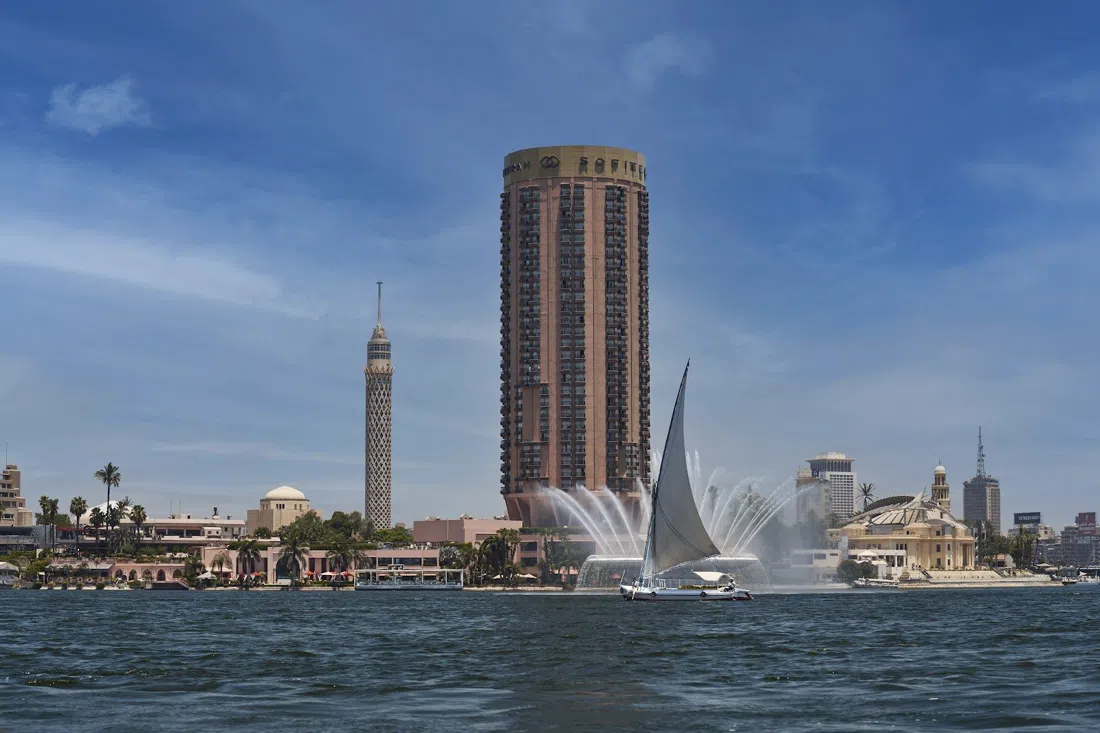
For anyone staying centrally who'd rather not negotiate at all, the two hotel docks are the cleanest handoff. The Sofitel Cairo Nile El Gezirah felucca dock, on Gezira Island, has concierge staff who arrange private charters for anyone from couples to larger groups; it's mid-range and typically pricier than flagging a boat directly on the Corniche, but you're paying for a vetted captain and a no-hustle booking rather than a bargain. Across the river, the Cairo Marriott Hotel Zamalek felucca dock offers the same service from the Zamalek side — hotel-arranged private charters at a similar mid-range price point, and the natural choice if you're already staying at or near the Marriott rather than making a special trip to Garden City.
History on the Water: Manial and the Nilometer
Not every felucca sail is purely scenic. The Manial (Rhoda Island) felucca dock is usually booked as part of a combined half-day covering the Nilometer, Manial Palace, and a sail — sold as a guided combo rather than a bare charter, and priced budget-to-mid-range accordingly. The Nilometer is the reason this stop earns its place in a felucca article at all: for over a thousand years, Egypt's entire tax system was pegged to the river's flood height as measured on Rhoda Island, which is a useful reminder that the Nile built Cairo through its water level long before it built Cairo's view. It's a good half-day for readers who want context with their sail rather than just a sunset — pair the palace and the Nilometer with the boat, rather than treating any one of the three as the main event.
Qursaya Island: The River As It Actually Is
Every dock covered so far is, one way or another, a tourist product — informal or polished, but built around visitors. The Qursaya Island felucca crossing, near Giza and the Imbaba stretch of the west bank, is the opposite. Qursaya is a residential island, home to farmers and fishing families, not an attraction, and it shouldn't be treated as one: groups should be small and genuinely respectful of the fact that people live there. The crossing itself costs only a few Egyptian pounds — arrange a longer sail separately with the boatman if you want one — and it isn't sold as a sunset cruise at all. What it offers instead is the rawest possible glimpse of what the Nile actually is for the people who live on it: a working crossing, not a photo opportunity. It belongs in this piece as a counterpoint to everything else on this list — worth knowing about, worth observing quietly, but not something to book or perform for.
Practical Notes
Timing. Golden hour in Cairo runs roughly 30–45 minutes before sunset, which shifts through the year — around 5:30–6pm in winter, closer to 7–7:30pm in summer. Arrive at whichever dock you've chosen at least 15 minutes ahead of that window; the light disappears faster than it feels like it will, and the best sail is the one that starts as the sun is still visibly dropping, not after it's already gone.
Cash. The informal docks — Dok Dok, Maadi, Giza — run entirely on cash, in small denominations; captains rarely carry change for a large note, so break bills before you arrive. Hotel docks and registered operators can usually take cards through the hotel or the booking platform, but confirm this at booking rather than assuming it.
Budget. Informal, captain-negotiated docks run $8–15 per boat per hour — a price for the whole boat, not per person, which makes them the best value for a group of four to six. Fixed-price operators like Ride a Felouka run $15–25 an hour; Emo Tours' transfer-plus-sail package runs $20–35 per person; Cafelluca's dining packages run EGP 460–780-plus per person before service. As a rule, the informal docks are cheapest per head for a group willing to negotiate, and the booked options cost more for the certainty of a fixed price and no on-water renegotiation.
Getting there and getting a bed. Garden City, Zamalek and Gezira Island are all walkable from central Cairo hotels and a short taxi or rideshare from anywhere else on the east bank; Maadi and the Giza/Imbaba docks are further out and worth booking a taxi both ways rather than hoping to find one streetside after dark. If you're still working out where to stay before deciding which dock suits you, start with Cairo hotel search — proximity to Garden City or Zamalek makes the informal, flag-it-down docks far more convenient than they are from further-flung neighbourhoods. For the rest of the city beyond the river, the Cairo guide covers what to do on land once the boat's back at the dock.