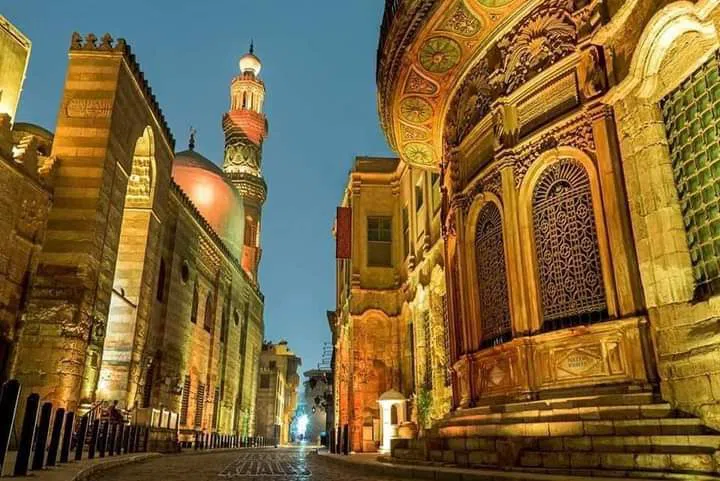
The call to prayer arrives from a dozen directions at once, slightly out of sync, and from the pinch point at Bayn al-Qasrayn you can see most of the minarets sending it. Islamic Cairo is not really a monument you enter. It is roughly a square kilometre of working city, a medieval street plan still carrying deliveries, funeral processions and schoolchildren past the tombs of Mamluk sultans. Walked north to south it reads as one continuous run of architecture from the ninth century to the twentieth. The walking itself is free; you only pay to go inside.
What you are actually walking through
The quarter is the old city: the Fatimid foundation of the tenth century, the Mamluk building boom that followed, and Ottoman houses layered on top, still bounded north and south by its gates. There is no single entrance, no citywide pass and no queue in the European sense. What you buy are individual interiors along a route, and what you get for a full day is the habit of looking up: at joggled stone facades, at stalactite vaulting over doorways, at carved wooden screens on the upper storeys, and above all at minarets, which are how you navigate here when the lanes stop making sense.
It is not a preserved old town with smooth paving and interpretive panels. It is loud, dusty and uneven underfoot, motorbikes use the pedestrian street when they think they can get away with it, and the shopkeepers in the bazaar sell hard. That friction is most of the reason the place is worth two days rather than one photo stop. If you are still assembling the rest of the trip, the wider Cairo guide sets this quarter against the other half-days worth having.
The spine from Bab al-Futuh to Bab Zuweila
Everything starts on Sharia al-Muizz li-Din Allah (Al-Muizz Street), the pedestrian spine running through al-Gamaliya. Begin at the northern gate, Bab al-Futuh, and walk south to Bab Zuweila: about a kilometre, and a good two to three hours if you go inside things rather than photographing doorways. The street is free to walk, and a single EGP 220 combined ticket covers the monuments along it. Vehicles are barred through the middle of the day but do creep in early and late, which is one argument for mid-morning over dawn. Walking groups of fifteen to twenty are routine, though the lane narrows to a few metres at Bayn al-Qasrayn and guides split larger parties there.
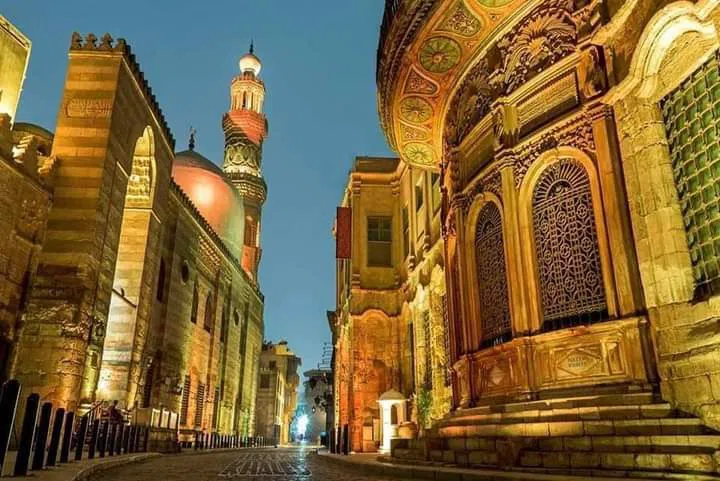
That pinch point is where you stop. The Qalawun Complex at Bayn al-Qasrayn is the most impressive interior on the street and the best-value ticket in the quarter, because the same EGP 220 (EGP 110 for students, foreign rates) also gets you into al-Nasir Muhammad, Sultan Barquq, Bishtak Palace and several of the street sabils. The mausoleum chamber is enclosed and echoey, so guided parties are briefed outside and brought in quietly. On your own, stand still in it for five minutes before you start taking pictures.
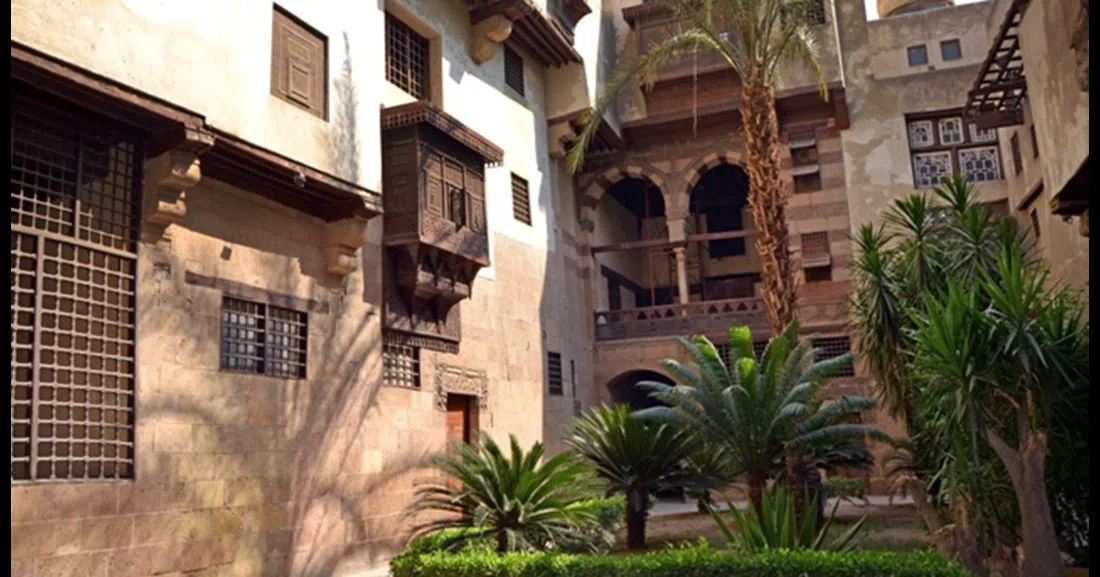
A few hundred metres further south, a signposted side lane leads to Bayt al-Suhaymi in al-Gamaliya, off the spine, which is why plenty of visitors walk straight past it. It is a merchant house, ticketed separately at EGP 220 adults and EGP 110 students, and it is the clearest demonstration in the city of how a building stayed cool without machinery: shaded courtyard, screened windows, air moved rather than chilled. It is also a genuine escape from the street noise. The rooms and wooden stairs are small, so large parties have to go through in sections; couples and solo walkers get much more out of it than a coach group will.
Climbing for the view
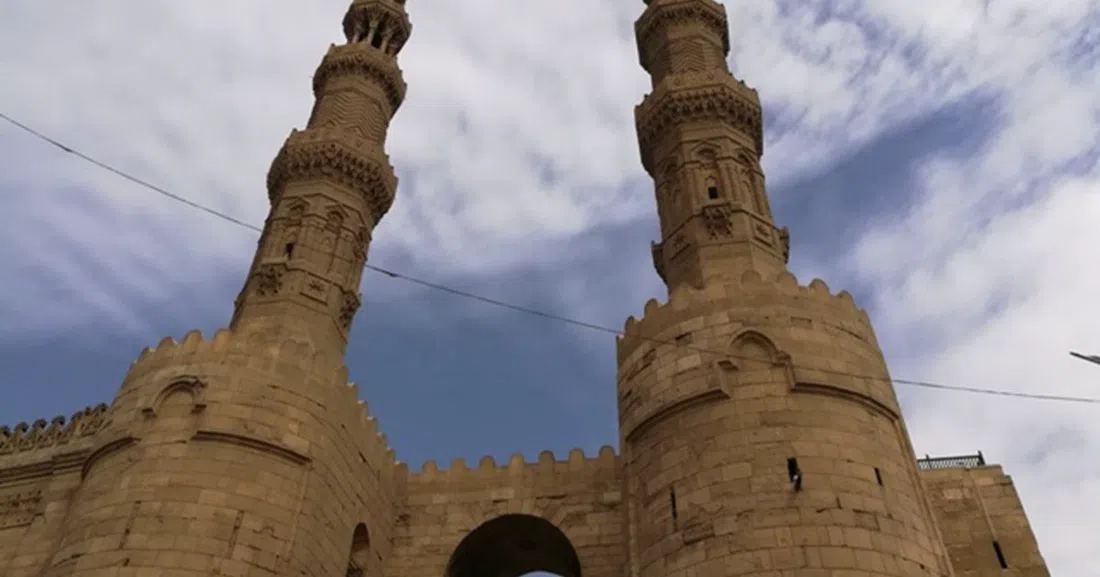
At the southern end of the street, Bab Zuweila and the Mosque of Sultan al-Mu'ayyad Shaykh offer the closest thing to an aerial view of the quarter that you can legally buy: EGP 100 for adults, EGP 50 for students, at foreign rates. The minaret balconies put you above the rooftops with minarets in every direction, which is when the street plan you have been walking finally resolves into a shape. The stair is single-file and one-way, so attendants send people up in batches of three or four, and there is no lift. Skip it outright if you have vertigo, bad knees or any trouble in tight spaces.
The bazaar, the coffeehouse and the sit-down meal
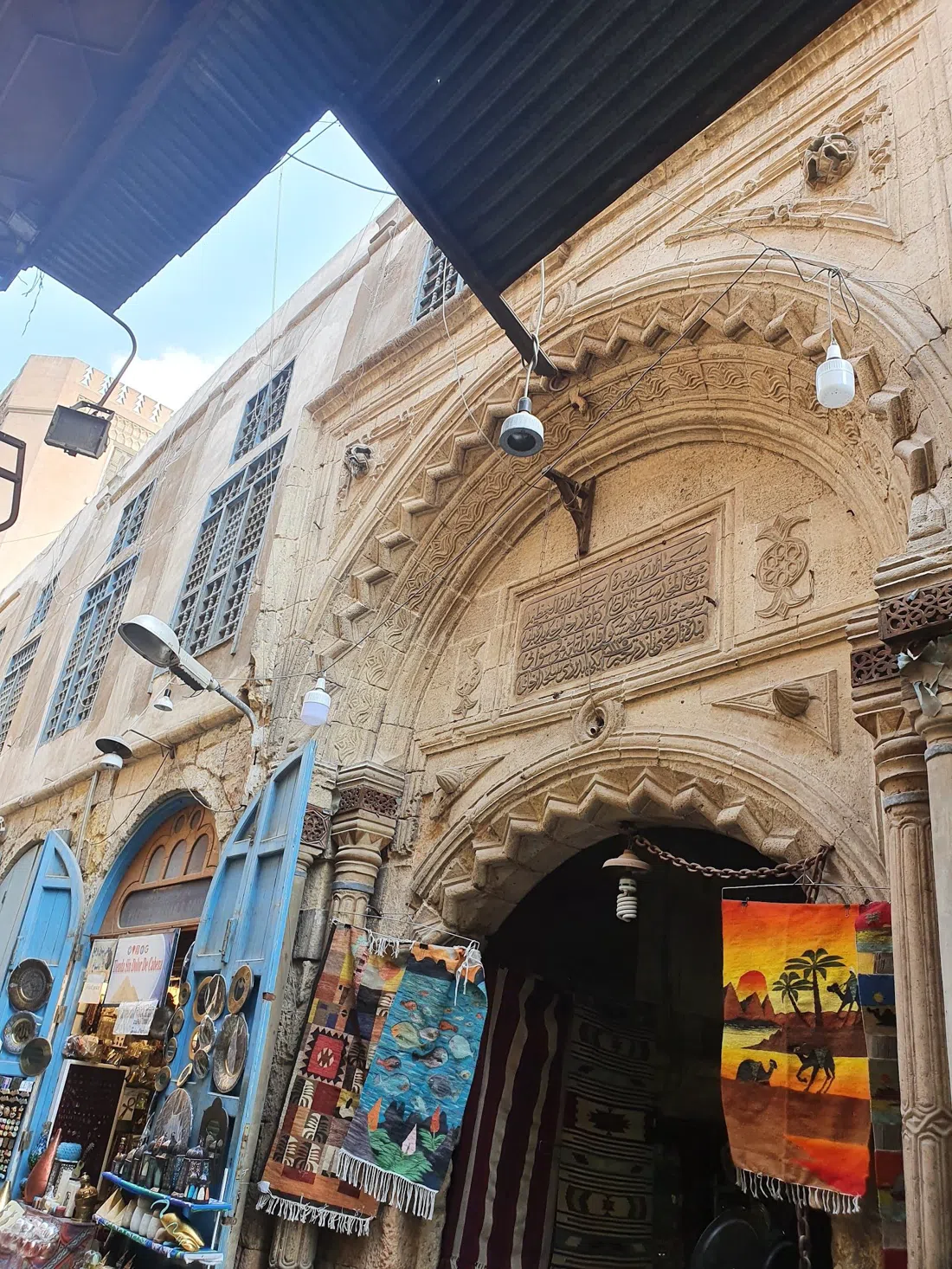
Khan el-Khalili sits just off Al-Muizz around al-Hussein, and it is free to enter; what it costs you is patience. Most shops open around 10 or 11am and trade until late, with a lull around Friday midday prayers. Come between 9 and 11am for space and sellers who are still willing to talk rather than pitch, or after dark for the lantern light, though the hard selling is sustained either way. Guides keep parties tight in the narrow lanes and use the wider al-Hussein end as the regroup point, which is a decent tactic even for a family of four.
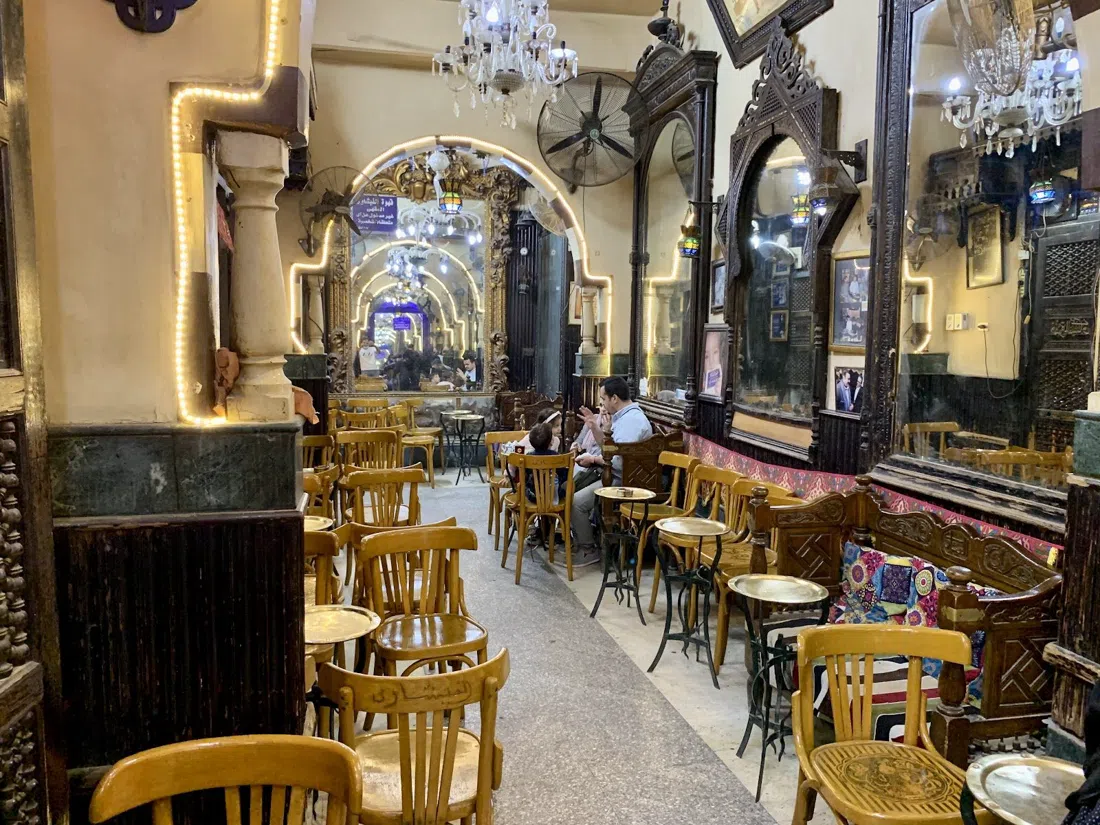
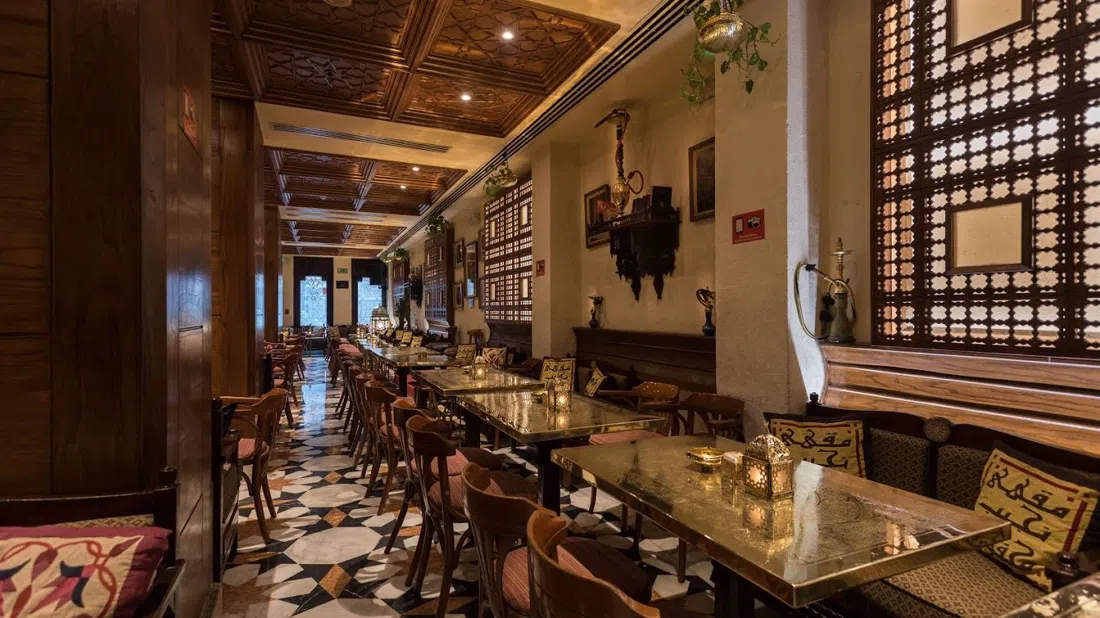
Inside the lanes, El Fishawy Café spills its tables along a passage off the main Khan run. It has been trading since 1797 and stays open around the clock, which makes it the one dependable stop at odd hours: mint tea or shisha for roughly EGP 100 to 200 a head. There is no reservation system and no real table plan, so a large group ends up split across the alley while staff push tables together where they can. Check what you are being charged before you order, because pricing for visitors is loose and the waiters work fast.
When a group needs air conditioning, proper toilets and a bill agreed in advance, the stop is Khan El Khalili Restaurant & Naguib Mahfouz Café on El Badistan Lane. It is Oberoi-run, open 11am to 2am, takes block bookings and coach parties, and charges roughly EGP 300 to 600 for a main. It is polished rather than authentic and priced accordingly, and it is also the only room in the bazaar that reliably solves the midday problem of fourteen tired people and one toilet.
Al-Azhar and the tentmakers
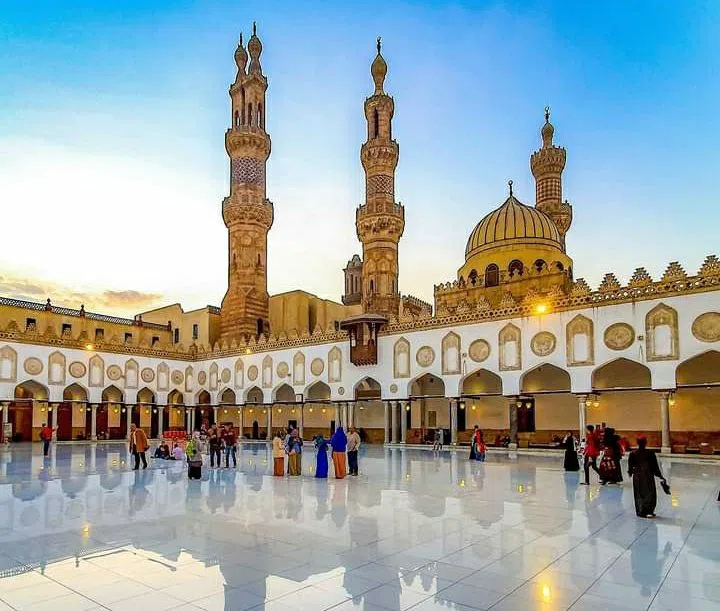
Across the road from the bazaar, Al-Azhar Mosque has been a functioning centre of learning since 970, which is why it feels unlike the ticketed monuments: people are studying, sleeping and praying in it. Non-Muslim visitors are welcomed outside prayer times and groups are accepted, but entry pauses for each of the five daily prayers, so build in slack rather than a fixed slot. There is no ticket as such: worshippers enter free and visitors are usually asked for around EGP 50. Shoulders and knees covered for everyone, hair covered for women; cover-ups are normally lent at the door.
Immediately south of Bab Zuweila, in al-Darb al-Ahmar, Souq al-Khayamiya (Street of the Tentmakers) is the best place in the quarter to watch a craft being made rather than sold. It is free to browse, and stitched appliqué panels run from a few hundred EGP into the thousands. Only a handful of true khayamiya stitchers are still working, so some of what hangs here is bought in. The lane is narrow and the workshops are one- or two-person spaces, so a party over about a dozen simply blocks it. Go in threes and fours, or not at all.
An evening in a 16th-century wikala
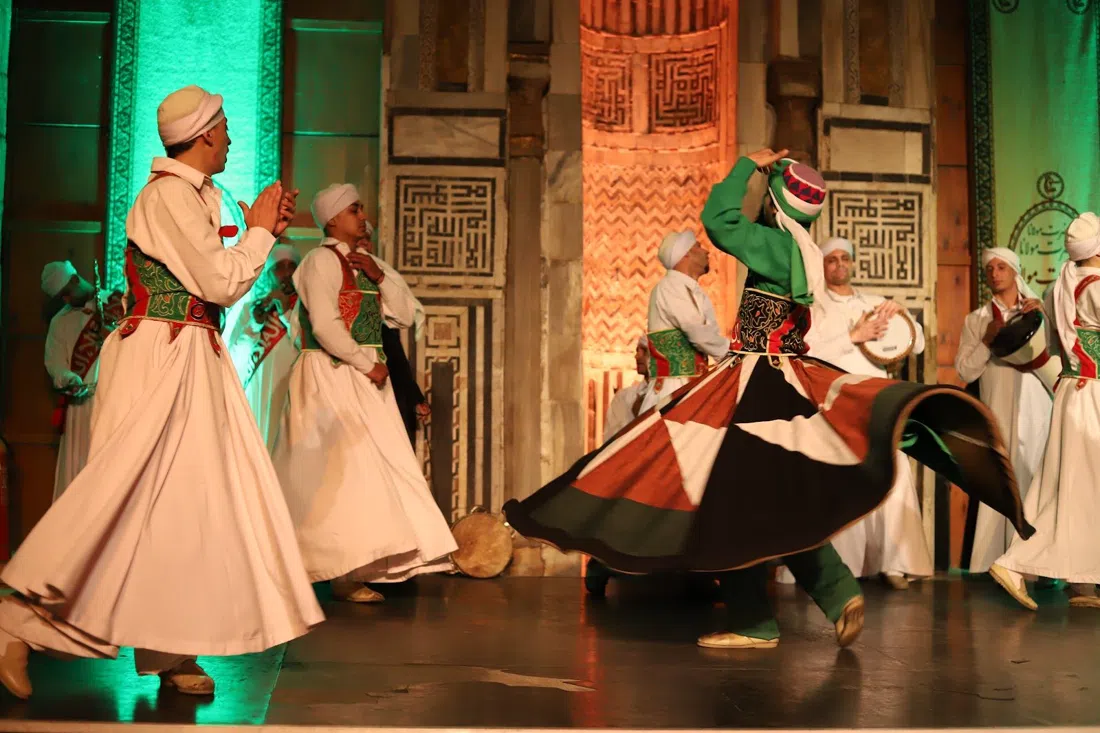
The one genuinely local evening event inside the quarter is at Wekalet El Ghouri Arts Center, a restored sixteenth-century caravanserai off Al-Muizz near al-Azhar. The Al-Tannoura troupe has been performing its whirling and Sufi-derived repertoire in the courtyard there for decades, at around EGP 100 to 200 paid on site. Seating is unreserved, so the best galleries fill first and arriving thirty minutes early is the difference between a good view and a pillar. Performances have been running at 8pm on Saturday, Monday and Wednesday; confirm the night before if you are building an evening around it, because the schedule moves.
The quiet southern half
The second day belongs to the south, and it opens with the counterweight to everything above. The Mosque of Ibn Tulun in Sayyida Zeinab is Cairo's oldest mosque surviving in its original form, from 879, and the emptiest, quietest space in the city: a vast brick courtyard with arcades on all four sides and almost nobody in it. Entry is free; shoes come off or get covered at the edge of the arcade, and you should expect to tip EGP 50 to 100 if you climb the spiral minaret. Treat that climb as a bonus rather than a plan, because access is at the attendant's discretion and has been closed during conservation work.
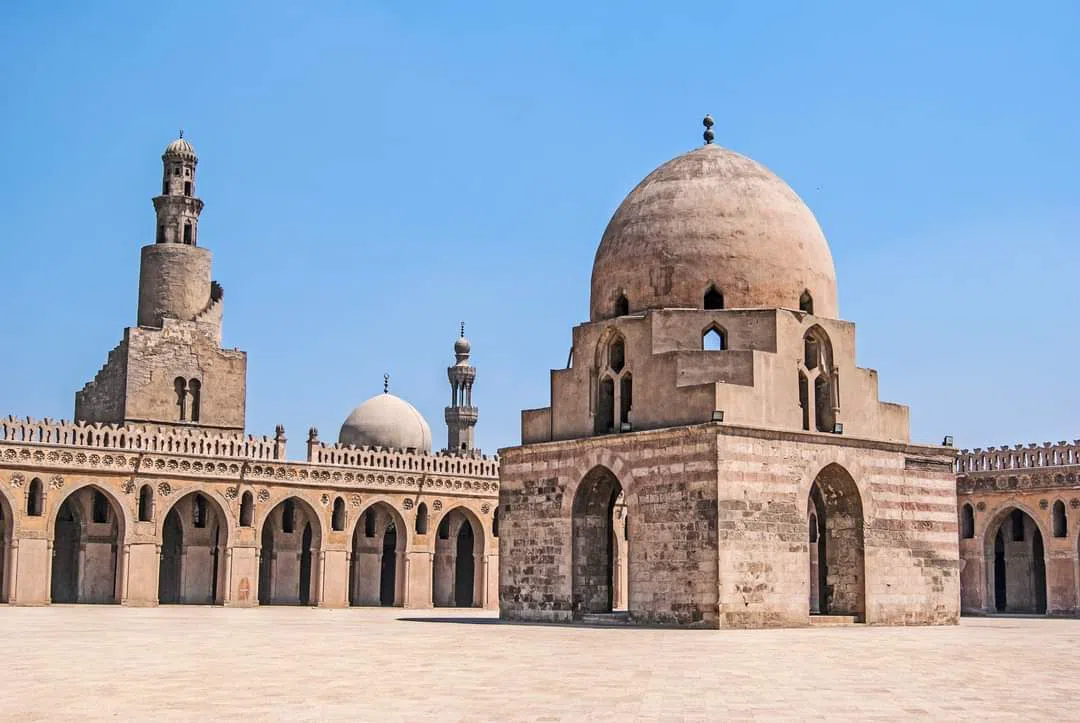
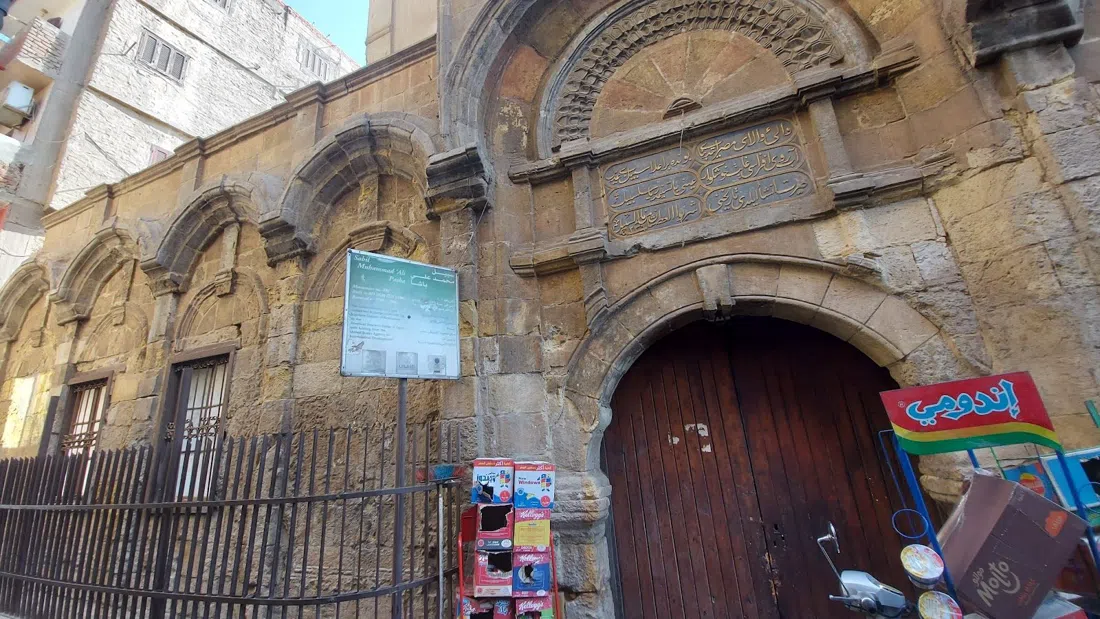
Physically attached to it is the Gayer-Anderson Museum (Bayt al-Kritliyya), two knitted-together Ottoman houses that at EGP 100 for adults and EGP 50 for students make the best-value interior in the quarter. The two sites are effectively one stop. Rooms and staircases are genuinely tight, so groups go round in small clusters; the ticket window shuts at 4pm, and photography is fine without flash.
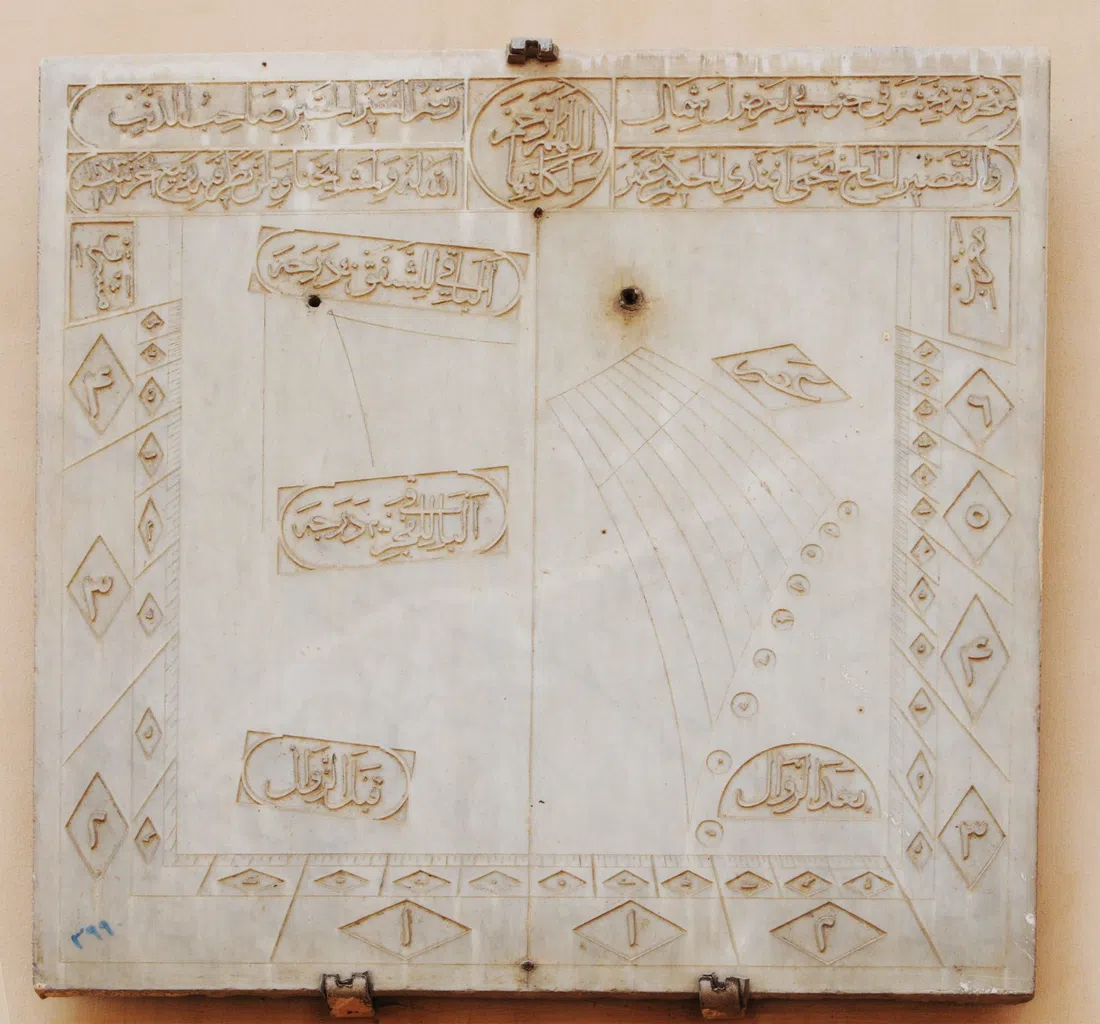
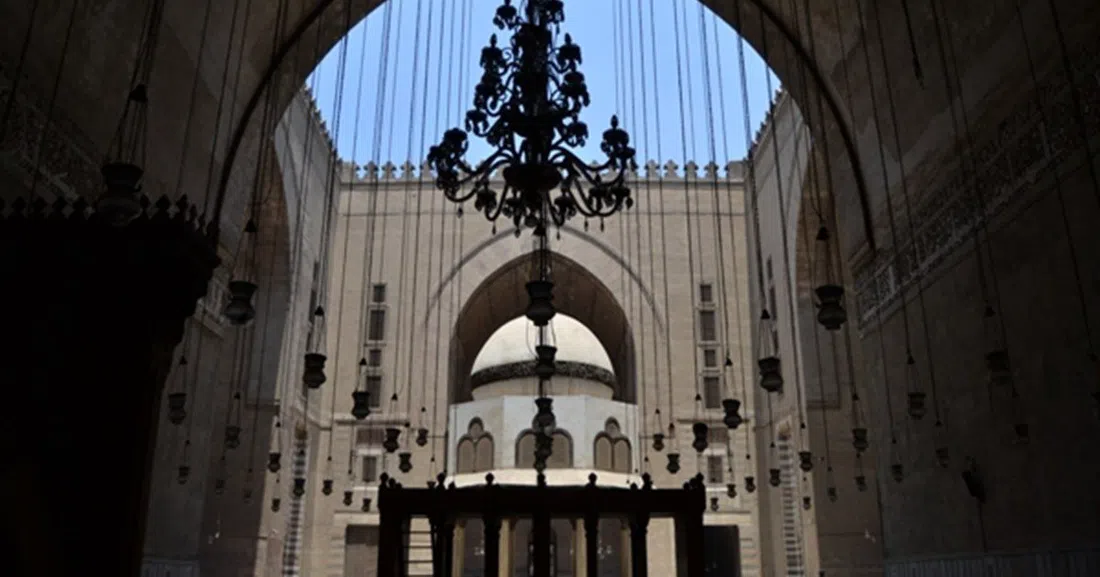
About fifteen minutes' walk east brings you to Salah al-Din Square and the Mosque-Madrasa of Sultan Hassan, the most overwhelming piece of architecture here and the one that photographs worst, because the scale only works when you are standing in it. EGP 220 adults, EGP 110 students, and the same ticket covers the far more ornate twentieth-century Al-Rifa'i Mosque across the square, where several of Egypt's royals and the last Shah of Iran are buried. The courtyard is enormous and handles groups easily; guides brief in the shade of the qibla iwan, which is also where you should sit for ten minutes.
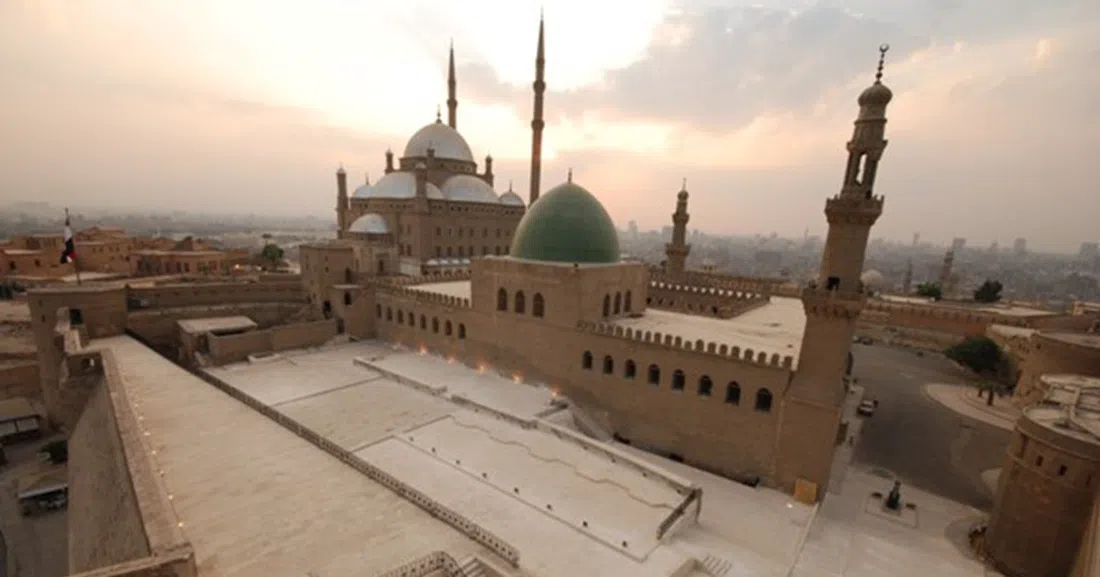
Directly above it, the Citadel of Salah al-Din (with the Mosque of Muhammad Ali) is the highest public viewpoint over the quarter and the obvious pairing with Sultan Hassan below. It was built for volume (coach parking, wide ramps, cart service inside), which makes it the easiest group site in the city, and it is also by far the most expensive ticket at EGP 550 adults and EGP 275 students, with the mosque and on-site museums included. Open 8am to 5pm with last entry at 4pm. The terrace view is much clearer in winter than through summer dust, which is worth knowing before you spend the money on it.
Where the whole quarter makes sense
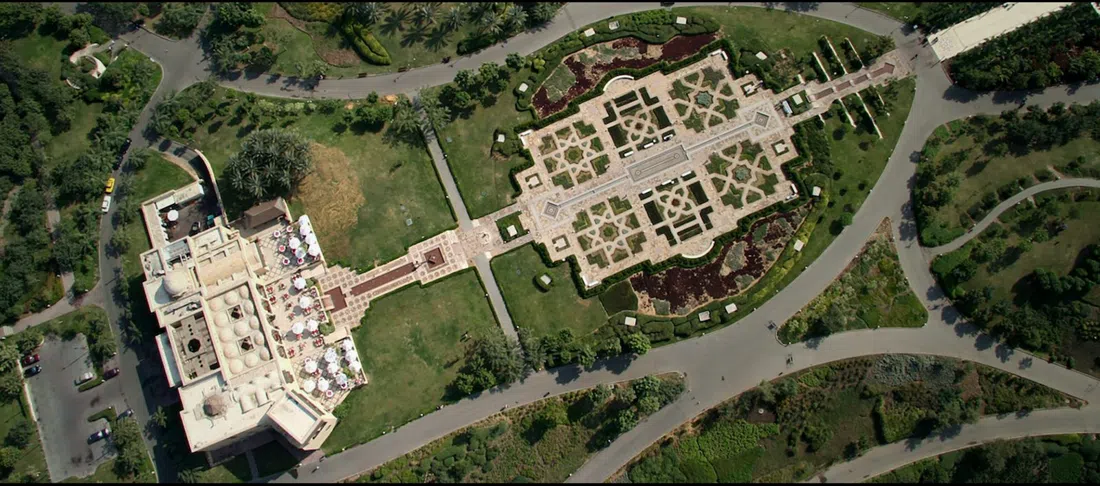
Two stops are worth keeping for the end of the walking. Al-Azhar Park, on the al-Darb al-Ahmar side of the old wall, was built by the Aga Khan Trust on what had been a rubbish mound, and at EGP 25 to 30 entry it is the best-priced view in Cairo: the Citadel, Sultan Hassan and a forest of minarets seen from a lawn. The hill-top restaurant takes bookings and is where larger parties are seated, with mains around EGP 250 to 500. It stays open until 10pm, it is the only stop here that suits small children, and it is the right place to end a day on your feet.
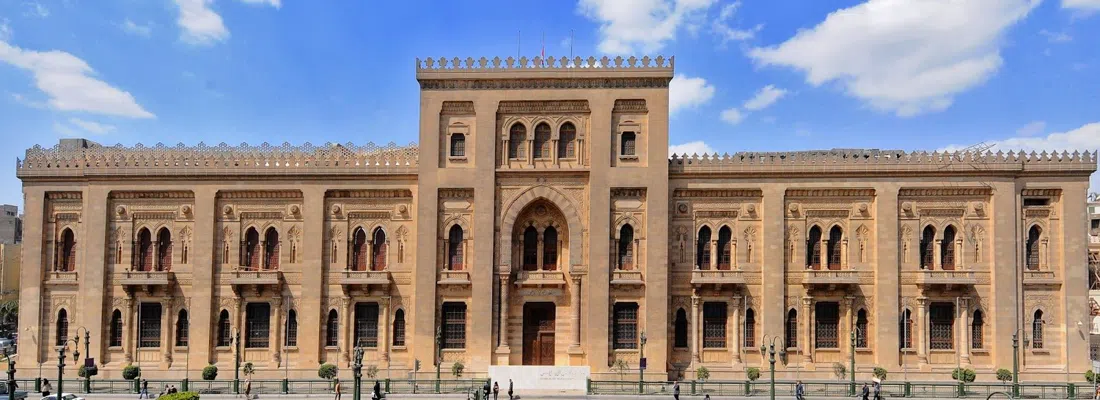
The other is the Museum of Islamic Art at Bab al-Khalq, about a kilometre southwest of Bab Zuweila, the largest collection of Islamic art anywhere and the thing that explains the doorways, lamps and minbars you have been squinting at on the street. Go before or after Al-Muizz, not instead of it. Tickets are EGP 340 adults and EGP 170 students; it opens 9am to 5pm with the window closing at 4pm and a Friday prayer break, and the galleries are purpose-built with a cloakroom and step-free routes. No food or drink in the halls. Most visitors sleep downtown or by the river and taxi in each morning; if you have not fixed a base yet, a Cairo hotel search is the first decision, because a twenty-minute approach instead of an hour buys you the cool part of the morning.
How long it takes
The quarter takes two half-days, not one. Day one, north: Al-Muizz end to end with Qalawun and Bayt al-Suhaymi inside, the Bab Zuweila minaret, then the bazaar and a late lunch. That is five to six hours at a walking pace, more if you stop for tea. Day two, south: Ibn Tulun and Gayer-Anderson together, Sultan Hassan and Al-Rifa'i, then up to the Citadel, finishing at Al-Azhar Park, about five hours, with the climb to the Citadel the only real effort.
If you only have a half-day, do Al-Muizz from Bab al-Futuh to Bab Zuweila, go inside Qalawun, climb the minaret and end in the bazaar. That is three to four hours and loses nothing essential.
Tickets, doors and what to wear
Everything here is sold at the door. There are no timed slots, no online-only monuments and no real queues except a short wait for the minaret stair; the bottleneck is closing time, not crowds, and several ticket windows shut a full hour before the sites do. Carry EGP in small notes for tickets, tips, tea and the attendant who unlocks a stair, and bring student ID if you want the reduced rate, which is roughly half throughout.
A guided walk is a reasonable alternative to doing it yourself, and the case for one is architectural rather than logistical: someone reading the facades aloud changes what you see. There are 529 traveller reviews across the guided options for this quarter, and the top-rated one runs at 4.9 out of 5 from 277 reviews. It operates five days a week, Monday, Tuesday, Wednesday, Thursday and Saturday, so check that your day is one of them before you plan around it. Some departures of that tour are already fully sold out on scattered dates including 1, 3, 5, 6, 7 and 8 October 2026; other dates are still bookable. If you are walking it unguided, nothing needs booking in advance at all.
Dress for working mosques, not museums: shoulders and knees covered for everyone, hair covered for women at Al-Azhar, shoes off or covered inside. Wear socks you are happy to walk in, and shoes you can slip off ten times without sitting down.
Is it worth it
Yes, and more than the pyramids do on a second visit. This is the only part of Cairo where the medieval city is still being used for its original purposes, and the density of first-rank architecture inside one walkable kilometre has few equals anywhere. The honest caveats are physical: it is hot, dusty and hard on feet and knees, the bazaar sells at you relentlessly, and the two best views both involve narrow one-way stairs with no lift.
It suits anyone who likes buildings, anyone happy to be told no at a door and try the next one, and small groups of two to six, who can get into the tight houses and the tentmakers' workshops without choreography. It suits large groups only with planning: the Citadel, Sultan Hassan, Ibn Tulun and Al-Azhar Park absorb numbers easily, while Bayt al-Suhaymi, the khayamiya lane and the minaret stair do not. It suits families least, unless the day ends early at Al-Azhar Park.
Best time to go
Start at 8 or 9am. The light is low on the stone facades, the bazaar is not yet trading properly, and Al-Muizz is at its calmest before the mid-morning delivery traffic that the vehicle ban is meant to stop. Use 9 to 11am for the shops if you want to be able to browse, and keep the middle of the day for interiors, the Museum of Islamic Art or a long lunch in air conditioning. Come back to the lanes after dark, when the lanterns are lit and El Fishawy is still going.
By day of the week: Friday midday is quiet in the bazaar around prayers and the museum takes a prayer break, so treat Friday morning as a mosque-and-street day rather than a shopping one. Al-Azhar pauses visitor entry five times a day, every day. And if the Al-Tannoura performance matters to you, aim at a Saturday, Monday or Wednesday evening and confirm the night before.
By season: winter is the better call, mostly for visibility. The Citadel terrace and the Bab Zuweila balconies look out over a much clearer city than they do through summer dust, and walking a kilometre of stone street in high summer heat is genuinely punishing. During Ramadan the hours shift and the quarter is at its busiest after sunset, so re-check opening times for anything you are building a day around.
Practical notes
Getting there. The metro is the fastest approach: Bab al-Shaaria or Ataba for the northern end of Al-Muizz, Mohamed Naguib for the Museum of Islamic Art at Bab al-Khalq, Sayyida Zeinab for Ibn Tulun. From any of them it is a ten- to fifteen-minute walk in. Taxis and ride-hailing work well and cost little, but they cannot take you through the middle of Al-Muizz, so agree a drop at a gate: Bab al-Futuh going in, Bab Zuweila or al-Azhar coming out. Between the southern sites, walking beats driving. Ibn Tulun to Sultan Hassan is about fifteen minutes, Sultan Hassan up to the Citadel ten to fifteen uphill.
Cash. Assume EGP cash everywhere except the larger museum and the two proper restaurants. Keep EGP 50 and 100 notes for tickets, minaret tips and the tea you will be offered in shops.
Budget. Going inside everything on this route comes to roughly EGP 1,775 per adult across two days, with students paying about half: the EGP 220 Al-Muizz combined ticket, Bayt al-Suhaymi at EGP 220, Bab Zuweila at EGP 100, Gayer-Anderson at EGP 100, Sultan Hassan at EGP 220, the Citadel at EGP 550, the Museum of Islamic Art at EGP 340 and the park at EGP 25 to 30. A tighter single day of Al-Muizz, Qalawun and the minaret runs about EGP 320 plus food. Tea at El Fishawy is EGP 100 to 200 a head, a sit-down lunch in the bazaar EGP 300 to 600, and the evening performance EGP 100 to 200 on the door.
Timing in one line. Mosques and streets in the early morning, interiors and the museum at midday, minaret or Citadel terrace in the late afternoon, and the park or the lantern-lit lanes at dusk.